Jaishankar delivers opening remarks at Quad FM Meeting
Synopsis
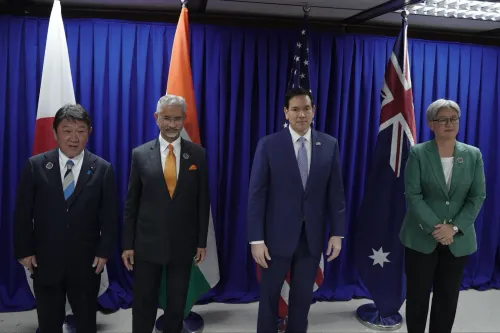
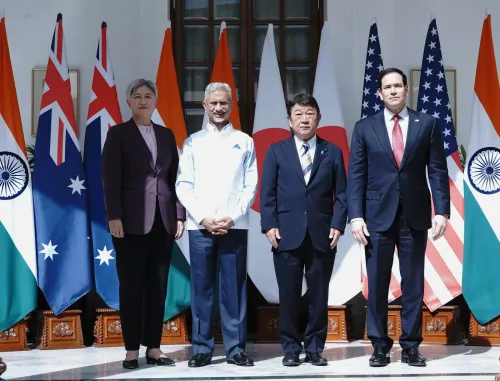
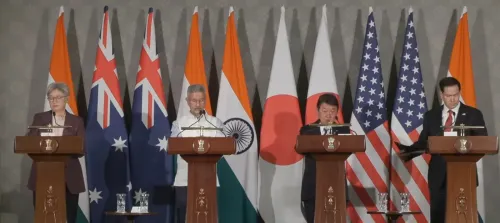
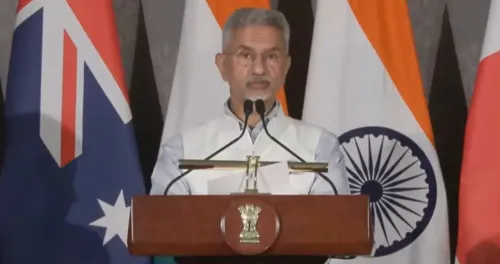
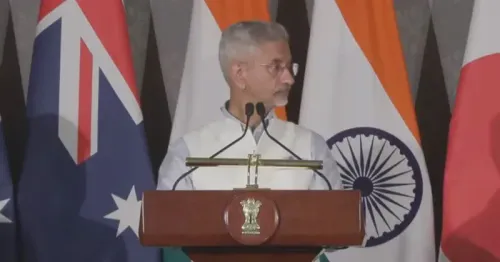
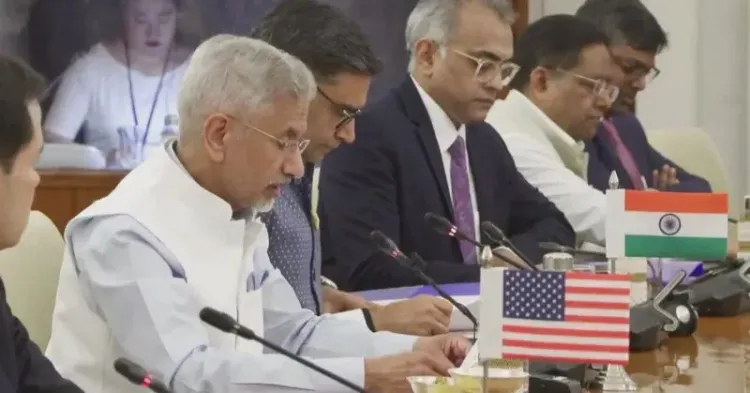
Union External Affairs Minister Dr. S. Jaishankar delivered his opening remarks at the Quad Foreign Ministers' Meeting on 26 May 2026, as India, Australia, Japan, and the United States convened to coordinate Indo-Pacific policy. The minister shared a live broadcast of his address, signalling New Delhi's continued commitment to the quadrilateral format.
Key Takeaways
Jaishankar delivered India's opening remarks at the Quad Foreign Ministers' Meeting on 26 May 2026 .
The Quad comprises India , Australia , Japan , and the United States , revived at ministerial level in 2019 .
The grouping has evolved into a structured platform with working groups on health, infrastructure, and critical technologies.
India frames its Quad participation as advancing a free, open, and rules-based Indo-Pacific , not as an alliance directed at any country.
Outcomes from this ministerial meeting are expected to shape the agenda for any subsequent Quad Leaders' Summit .
A joint statement or chair's summary from the meeting is anticipated and will be closely watched by regional partners.
Union External Affairs Minister Dr. S. Jaishankar delivered his opening remarks at the Quad Foreign Ministers' Meeting on Tuesday, 26 May 2026, representing India alongside counterparts from Australia, Japan, and the United States. The minister shared a live broadcast of his address on his official X account, underscoring the meeting's significance as a platform for coordinating Indo-Pacific policy among the four democracies.
Context
The Quadrilateral Security Dialogue, commonly known as the Quad, brings together India, Australia, Japan, and the United States to coordinate on shared interests across the Indo-Pacific region. The grouping was revived at the ministerial level in September 2019 on the margins of the UN General Assembly — the first such gathering in over a decade — and has since evolved into one of the most consequential multilateral formats in the region. Dr. Jaishankar, who has been India's Union Minister of External Affairs since 2019, has been a central figure in shaping India's engagement with the Quad since its revival.
The Foreign Ministers' Meeting sits within a broader architecture that includes Leaders' Summits, the first of which was held virtually in March 2021, followed by in-person summits in 2021, 2022, and 2023. The ministerial track allows the four nations to align diplomatic positions and review progress on working-group deliverables before they are elevated to the leaders' level.
Policy Backdrop
India has consistently used Quad ministerial engagements to advance coordination on maritime security, supply-chain resilience, and critical technology standards. Over successive meetings, the format has matured from ad-hoc consultations into a structured platform with dedicated working groups covering health security, infrastructure financing, and emerging technologies. These engagements complement India's bilateral strategic partnerships and its engagement with ASEAN-centred regional mechanisms.
For New Delhi, the Quad represents a vehicle for advancing a free, open, and rules-based Indo-Pacific without the binding obligations of a formal alliance. Dr. Jaishankar has articulated India's view that the grouping is 'not directed against any country' but is instead aimed at building positive regional capacity — a framing that has become central to India's public diplomacy on the Quad.
Stakeholders and Impact
The four Quad members collectively represent a substantial share of global economic output and military capability, giving their joint statements and initiatives considerable weight in shaping regional norms. Indo-Pacific partners, particularly smaller island and littoral states, watch Quad ministerial outcomes closely for signals on infrastructure financing alternatives, maritime domain awareness cooperation, and humanitarian assistance frameworks.
The foreign ministries of all four nations — India's Ministry of External Affairs, the US State Department, Japan's Ministry of Foreign Affairs, and Australia's Department of Foreign Affairs and Trade — are the primary institutional actors. Business communities with stakes in semiconductor supply chains, clean energy, and digital infrastructure also track Quad working-group deliverables as indicators of future regulatory and investment directions.
What's Next
Attention will now turn to any joint statement or chair's summary released following the meeting, which typically outlines agreed priorities and new initiatives for the coming year. Analysts will scrutinise the language on maritime security, technology governance, and regional connectivity to gauge how the four nations are calibrating their collective posture in the Indo-Pacific in 2026.
The outcomes of this Foreign Ministers' Meeting are expected to inform the agenda for any subsequent Quad Leaders' Summit, making Dr. Jaishankar's opening remarks a significant early signal of the direction the grouping intends to take in the months ahead.
Point of View
Shifting the conversation from symbolism to deliverables. New Delhi's continued leadership posture within the grouping signals that India sees the Quad as a durable pillar of its multi-alignment strategy, not a transient diplomatic convenience. The release of a joint statement will be the real test of how aligned the four capitals remain on the most contested Indo-Pacific flashpoints.
NationPress
9 Oct 2026
Frequently Asked Questions
What is the Quad Foreign Ministers' Meeting?
The Quad Foreign Ministers' Meeting is a ministerial-level gathering of the top diplomats of India, Australia, Japan, and the United States, held to coordinate positions on Indo-Pacific security, technology, and connectivity. It was first revived in September 2019 after a gap of over a decade.
What did Jaishankar say at the Quad meeting on 26 May 2026?
Dr. S. Jaishankar delivered his opening remarks at the Quad Foreign Ministers' Meeting on 26 May 2026 and shared a live broadcast of his address on X. The specific content of his remarks has not been separately detailed beyond the broadcast he posted.
Which countries are part of the Quad?
The Quad, or Quadrilateral Security Dialogue, consists of India, Australia, Japan, and the United States. The grouping focuses on maintaining a free, open, and rules-based Indo-Pacific region.
When was the Quad revived?
The Quad was revived at the ministerial level in September 2019 on the sidelines of the UN General Assembly. The first Quad Leaders' Summit was held virtually in March 2021, followed by in-person summits in 2021, 2022, and 2023.
What issues does the Quad focus on?
The Quad focuses on maritime security, supply-chain resilience, critical technology standards, health security, and infrastructure financing in the Indo-Pacific region. It operates through dedicated working groups and regular ministerial and leaders-level meetings.