Jaishankar at QUAD FMM: Maritime, Minerals, Energy Pacts Sealed
Synopsis
At the Quad Foreign Ministers' Meeting on 27 May 2026, Dr. S. Jaishankar and his counterparts from the US, Australia, and Japan finalised the Quad Critical Minerals Framework, launched an Indo-Pacific Maritime Surveillance Initiative, agreed on a pilot port project in Fiji, and announced a new Quad energy security initiative.
Key Takeaways
Indo-Pacific Maritime Surveillance Initiative and a Common Operating Picture in the maritime domain were agreed upon by all four Quad nations.
An expert panel on Port Infrastructure is to be considered, with a pilot port project confirmed for Fiji and cooperation planned on undersea cables .
The Quad Critical Minerals Framework was finalised, and a separate bilateral India-US Critical Minerals Framework was signed at the same meeting.
A new Quad Indo-Pacific Energy Security initiative was announced, covering technology, management, policy, market analysis, and emergency response.
A Joint Statement and Factsheet were released detailing all initiatives and their scope.
The Quad signalled intent to work with 'other like-minded countries' on critical minerals, expanding the framework beyond its four core members.
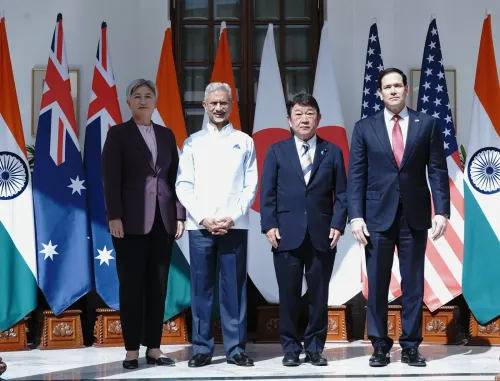
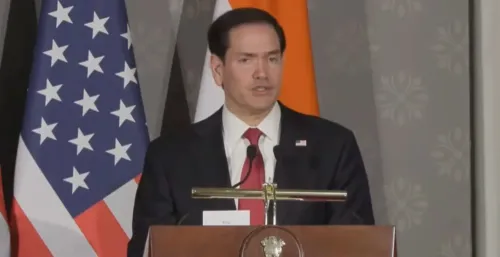
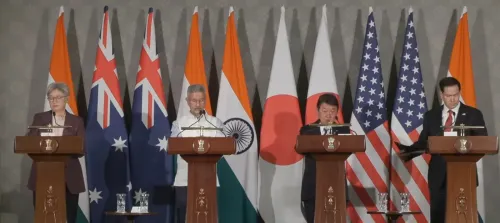
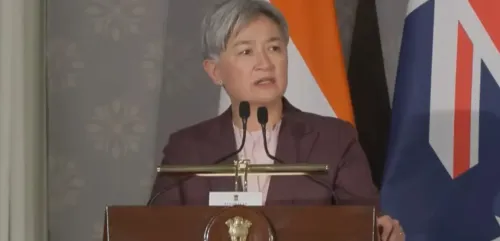
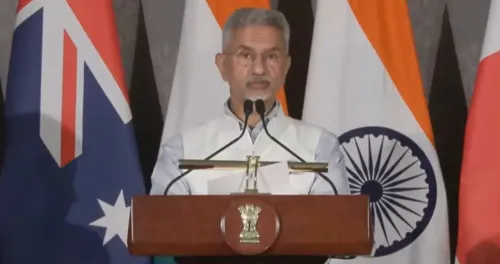
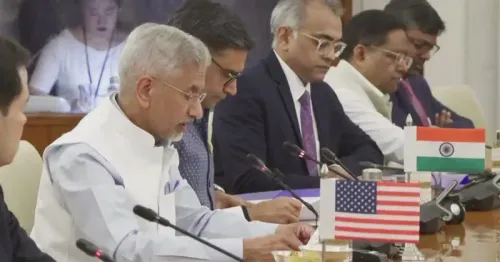
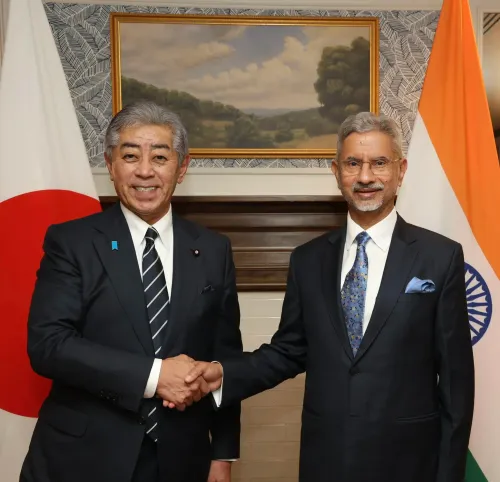
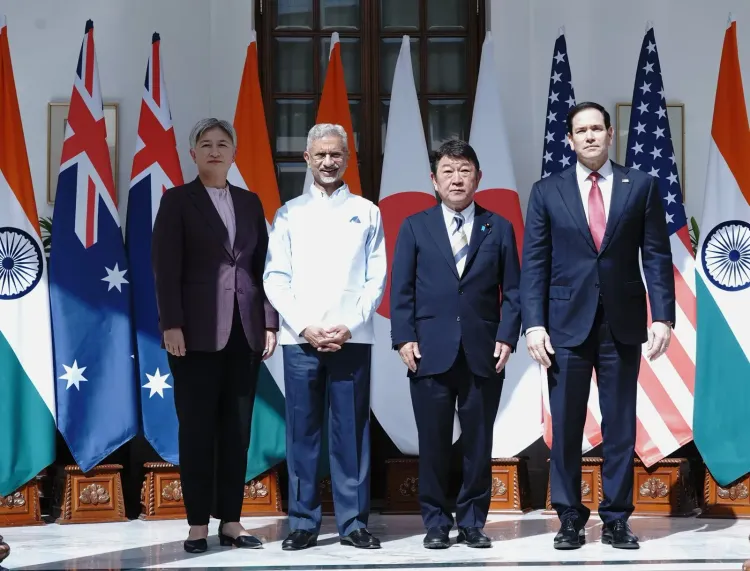
Union External Affairs Minister Dr. S. Jaishankar concluded a productive Quad Foreign Ministers' Meeting (FMM) on Tuesday, 27 May 2026, alongside US Secretary of State Marco Rubio, Australian Foreign Minister Penny Wong, and Japanese Foreign Minister Takeshi Iwaya, announcing a set of landmark initiatives spanning maritime surveillance, critical minerals, and energy security across the Indo-Pacific.
Context
Posting on X, Dr. Jaishankar outlined three major takeaways from the meeting. The four nations agreed on an Indo-Pacific Maritime Surveillance Initiative and a Common Operating Picture in the maritime domain — a shared real-time awareness framework designed to strengthen collective monitoring of sea lanes across the region. The ministers also agreed to consider an expert panel on Port Infrastructure, collaborate on a pilot port project in Fiji, and cooperate on undersea cables.
The second takeaway was the finalisation of the Quad Critical Minerals Framework, alongside the signing of a separate India-US Critical Minerals Framework — a bilateral agreement to deepen cooperation on mineral exploration, processing, and trade. Dr. Jaishankar noted that 'Quad is working with other like-minded countries in this sector,' signalling outreach beyond the four core members.
Policy Backdrop
The Quadrilateral Security Dialogue, revived in 2017 after a decade-long dormancy, has steadily evolved from a consultative forum into an action-oriented grouping. Regular Foreign Ministers' meetings have been held since 2019 to operationalise decisions taken at the leaders' level. The 2021 Quad summit in Washington launched dedicated working groups on maritime domain awareness and supply-chain resilience, while critical minerals and energy security entered Quad communiqués prominently from the 2023 Hiroshima summit onward.
The third initiative announced at this meeting — the Quad Indo-Pacific Energy Security initiative — covers technology, management, policy, international market analysis, and emergency response exercises, reflecting the grouping's expanding footprint into economic and infrastructure domains beyond traditional security cooperation.
Stakeholders and Impact
The decisions carry direct implications for Pacific island nations, with Fiji identified as the site of a pilot port project — an acknowledgement that port infrastructure in the Pacific has become a strategic flashpoint. Undersea cable cooperation adds a digital-connectivity dimension to the Quad's maritime agenda, given the critical role such cables play in global communications and data flows.
The India-US Critical Minerals Framework, signed on the sidelines, deepens a bilateral strand within the multilateral architecture. Critical minerals — including lithium, cobalt, and rare earths — are central to clean-energy transitions and defence supply chains, and diversifying their sourcing away from single-country dependencies has been a stated priority for all four Quad governments.
What's Next
A Joint Statement and Factsheet released following the meeting provide further details on timelines and the scope of each initiative. Progress on the Fiji pilot port project and the undersea cable cooperation is expected to be tracked at the next Quad leaders' summit. The expert panel on Port Infrastructure, once constituted, will be a key body to watch for concrete deliverables in the Pacific infrastructure space.
With the India-US Critical Minerals Framework now signed and the broader Quad framework finalised, attention will turn to implementation mechanisms — particularly how supply-chain mapping, joint processing investments, and emergency-response protocols will be operationalised across the four member states and partner countries.
Point of View
Not just working-group mandates. The simultaneous signing of a bilateral India-US Critical Minerals Framework alongside the multilateral Quad framework is a deliberate layering strategy: it locks in a deeper bilateral strand while preserving the collective architecture. For India, anchoring itself at the centre of three distinct Quad pillars — maritime, minerals, and energy — in a single meeting signals a maturing of its Indo-Pacific engagement from reactive to agenda-setting. The energy security initiative's inclusion of emergency response exercises is particularly notable, suggesting the Quad is now stress-testing its coordination mechanisms, not merely announcing them.
NationPress
19 Sept 2026
Frequently Asked Questions
What is the Quad Foreign Ministers' Meeting?
The Quad Foreign Ministers' Meeting is a regular diplomatic gathering of the foreign ministers of India, the United States, Australia, and Japan to advance the goals of the Quadrilateral Security Dialogue, which focuses on a free, open, and stable Indo-Pacific region.
What was decided at the Quad FMM on 27 May 2026?
The four ministers agreed on an Indo-Pacific Maritime Surveillance Initiative, a Common Operating Picture in the maritime domain, a Quad Critical Minerals Framework, an India-US Critical Minerals Framework, and a Quad Indo-Pacific Energy Security initiative, along with a pilot port project in Fiji.
What is the India-US Critical Minerals Framework?
The India-US Critical Minerals Framework is a bilateral agreement signed between India and the United States to cooperate on the exploration, processing, and trade of minerals critical to technology and clean energy supply chains, signed alongside the broader Quad Critical Minerals Framework.
Why is Fiji significant for the Quad?
Fiji was selected as the site for a Quad pilot port project under the maritime infrastructure cooperation agenda, reflecting the grouping's strategic focus on strengthening port and connectivity infrastructure across Pacific island nations.
What is the Quad Indo-Pacific Energy Security initiative?
It is a new Quad initiative announced on 27 May 2026 covering energy technology, management, policy, international market analysis, and emergency response exercises to enhance collective energy security across the Indo-Pacific region.