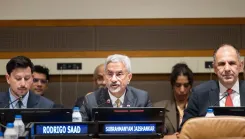
Quad Foreign Ministers meet in New Delhi, unveil maritime and energy pacts
Synopsis
The Quad's New Delhi ministerial wasn't a routine diplomatic gathering — it produced a Critical Minerals Framework, a new Indo-Pacific Energy Security Initiative, and a commitment to build port infrastructure in Fiji. With a US-hosted Fuel Security Forum to follow, the four-nation grouping is moving from statements to structures.
Key Takeaways
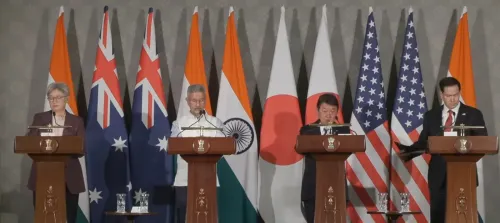
The Quad Foreign Ministers' Meeting was held in New Delhi on 26 May 2025 , attended by ministers from India , Australia , Japan , and the US .
US Ambassador Sergio Gor called the outcomes 'strong, concrete results', citing new pacts on maritime surveillance , domain awareness , and coast guard coordination .
A Critical Minerals Framework was announced to strengthen supply chains in mining , processing , and recycling .
The Quad will collaborate with Fiji on critical port infrastructure development.
A new Indo-Pacific Energy Security Initiative was launched; the US Department of Energy will host a Quad Fuel Security Forum later in 2025.
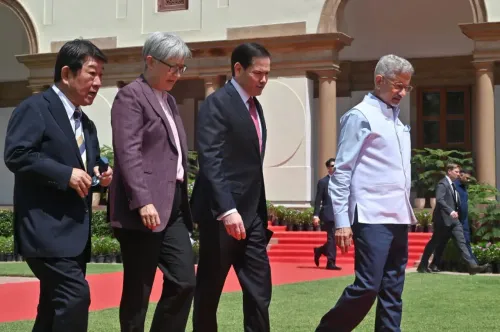
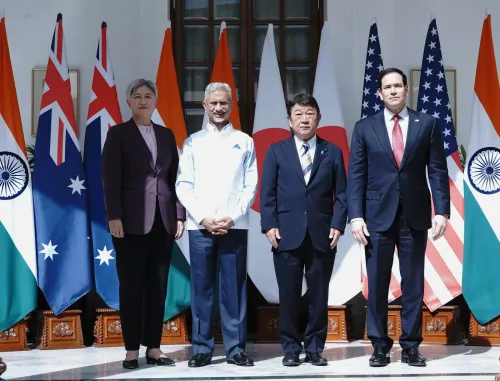
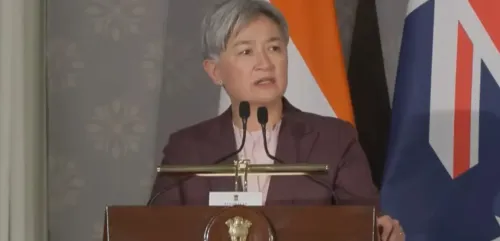
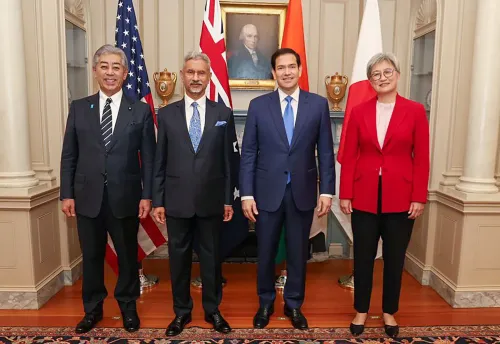
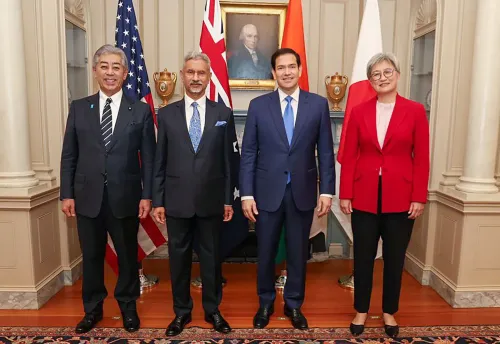
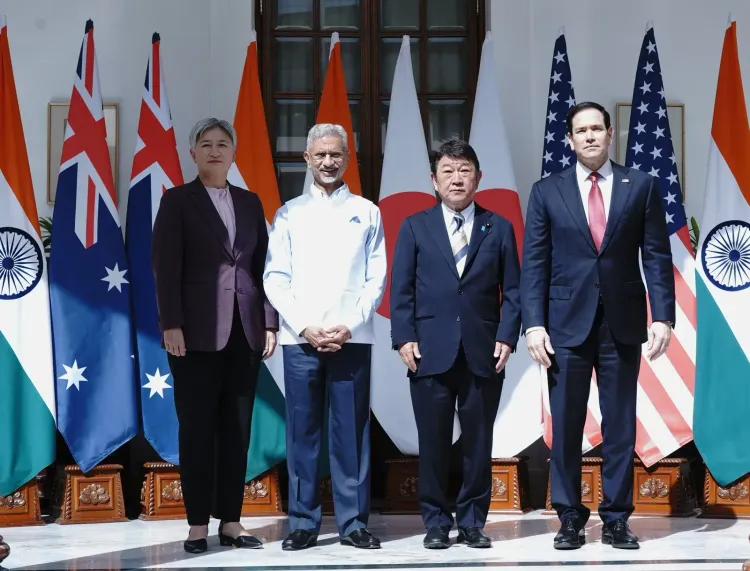
External Affairs Minister S. Jaishankar hosted the Quad Foreign Ministers' Meeting in New Delhi on Tuesday, 26 May, alongside US Secretary of State Marco Rubio, Australian Foreign Minister Penny Wong, and Japanese Foreign Minister Toshimitsu Motegi. The meeting produced a slate of concrete agreements spanning maritime security, critical minerals, port infrastructure, and energy resilience across the Indo-Pacific.
Key Deliverables from the Meeting
US Ambassador to India Sergio Gor described the outcome as delivering 'strong, concrete results', citing new initiatives on maritime surveillance, domain awareness, and coast guard coordination among the headline announcements. Gor shared the top deliverables in a post on X, underlining the breadth of cooperation agreed upon.
Among the notable outcomes, the four nations announced they will collaborate with Fiji to advance critical port infrastructure — a move that signals the Quad's expanding engagement with Pacific island nations.
Critical Minerals Framework
The Quad unveiled a Critical Minerals Framework aimed at strengthening supply chains across mining, processing, and recycling. According to Gor, the framework is designed to reduce vulnerabilities and support long-term economic security for all four member nations. This comes amid intensifying global competition over rare earth and critical mineral access, with China dominating much of the current processing capacity.
Indo-Pacific Energy Security Initiative
A new Indo-Pacific Energy Security Initiative was also announced, expanding Quad cooperation on technology, energy resilience, and emergency preparedness. Gor stated that 'energy security is national security', and confirmed that the US Department of Energy will host a dedicated Quad Fuel Security Forum later this year. The initiative reflects a broader push to insulate the region from energy supply shocks.
Background and Context
The Quad — comprising India, Australia, Japan, and the United States — was originally convened during the 2004 Indian Ocean tsunami to coordinate humanitarian response. The first formal Quad Foreign Ministers' meeting took place in 2019, and the grouping has since evolved into a significant multilateral platform focused on a free, open, and inclusive Indo-Pacific. Tuesday's meeting is the latest in a series of high-level engagements that have progressively expanded the Quad's operational and strategic agenda.
With a Quad Fuel Security Forum scheduled and the Critical Minerals Framework now formalised, the next phase of implementation will test whether these agreements translate into durable supply chain and security architecture across the region.
Point of View
Backed by a US Department of Energy forum, suggest the grouping is building durable mechanisms rather than issuing communiqués. The Fiji port infrastructure commitment is also worth watching — it signals the Quad is actively contesting influence in the Pacific, a theatre where strategic competition has accelerated sharply. The real measure of success will be whether the minerals framework includes enforceable supply-chain transparency, or whether it remains aspirational language dressed as policy.
NationPress
26 Sept 2026
Frequently Asked Questions
What was decided at the Quad Foreign Ministers' Meeting in New Delhi?
The Quad Foreign Ministers' Meeting on 26 May in New Delhi produced agreements on maritime surveillance, coast guard coordination, a Critical Minerals Framework, Fiji port infrastructure collaboration, and a new Indo-Pacific Energy Security Initiative. US Ambassador Sergio Gor described the outcomes as 'strong, concrete results'.
What is the Quad Critical Minerals Framework?
The Critical Minerals Framework is a newly announced Quad initiative designed to strengthen supply chains across mining, processing, and recycling of critical minerals. It aims to reduce member nations' vulnerabilities and support long-term economic security amid global competition for rare earth resources.
What is the Indo-Pacific Energy Security Initiative announced by the Quad?
It is a new cooperative initiative expanding Quad engagement on energy technology, resilience, and emergency preparedness across the Indo-Pacific region. The US Department of Energy will host a dedicated Quad Fuel Security Forum later in 2025 as part of this effort.
Who attended the Quad Foreign Ministers' Meeting on 26 May?
The meeting was attended by Indian External Affairs Minister S. Jaishankar, US Secretary of State Marco Rubio, Australian Foreign Minister Penny Wong, and Japanese Foreign Minister Toshimitsu Motegi, all convening in New Delhi.
What is the Quad and when was it formed?
The Quad is a four-nation grouping comprising India, Australia, Japan, and the United States, committed to supporting a free, open, and inclusive Indo-Pacific. It was originally convened during the 2004 Indian Ocean tsunami for humanitarian coordination, with the first formal Foreign Ministers' meeting held in 2019.