Quad foreign ministers in New Delhi pivot to trade, energy security and Indo-Pacific supply chains
Synopsis
The Quad stopped talking and started listing deliverables — five concrete initiatives on critical minerals, port infrastructure, maritime surveillance, and energy security, announced in New Delhi with India in the chair. With Rubio calling it a 'partnership of action' and Wong flagging the Strait of Hormuz threat directly, this is the most operationally focused Quad ministerial yet.
Key Takeaways
Quad foreign ministers met in New Delhi on 27 May 2025 , hosted by India as current Quad chair.
Five major initiatives announced covering maritime surveillance , port infrastructure , critical minerals , regional maritime coordination and energy security .
EAM Jaishankar stressed zero tolerance for terrorism; Secretary Rubio described the Quad as a 'partnership of action.' Australian FM Wong flagged the economic risk of an Iranian closure of the Strait of Hormuz for Indo-Pacific energy security.
Japanese FM Motegi reaffirmed commitment to a 'free and open Indo-Pacific' amid structural shifts in the global order.
Implementation timelines for the five initiatives were not immediately disclosed; a leaders-level summit is expected later in the year.
The Quad foreign ministers convened in New Delhi on Tuesday, 27 May 2025, announcing five major initiatives spanning maritime surveillance, port infrastructure, critical minerals, regional maritime coordination and energy security — marking a decisive shift toward operational cooperation within the grouping. India, hosting the meeting in its capacity as current Quad chair, set the agenda around economic resilience and supply chain stability across the Indo-Pacific.
Key Initiatives Announced
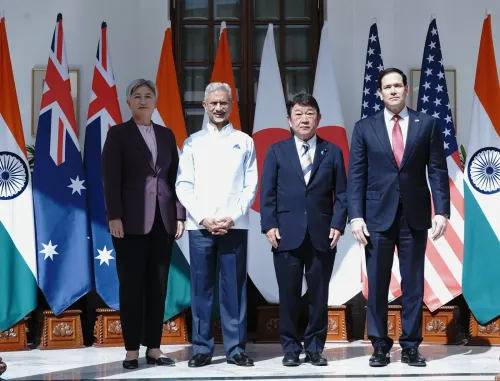
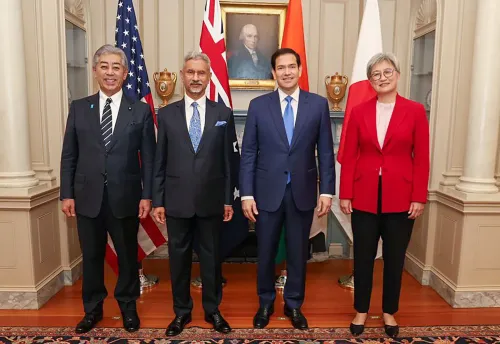
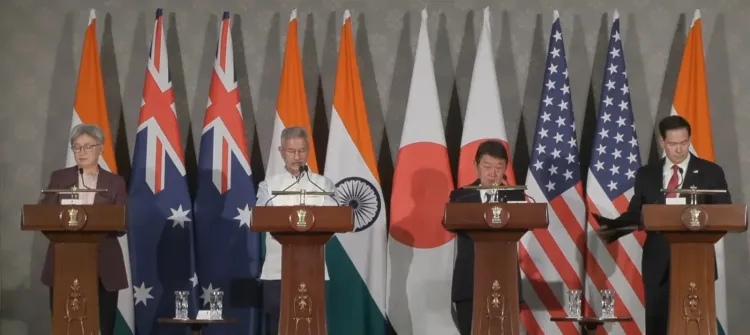
External Affairs Minister S. Jaishankar, US Secretary of State Marco Rubio, Australian Foreign Minister Penny Wong and Japanese Foreign Minister Toshimitsu Motegi attended the meeting. The four nations unveiled a package of measures covering critical minerals access, port infrastructure development, and enhanced maritime domain awareness — areas where the Quad has long signalled intent but delivered limited operational output.
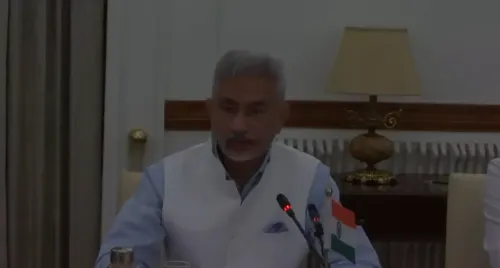
Jaishankar framed the Indo-Pacific as the centrepiece of future global economic activity. 'As democratic nations, we also devoted attention to countering the common threat of terrorism. There must be zero tolerance for terrorism and nations have the right to defend themselves,' he said, adding a security dimension to what was primarily a trade and energy agenda.
From Forum to Action: What Rubio Said
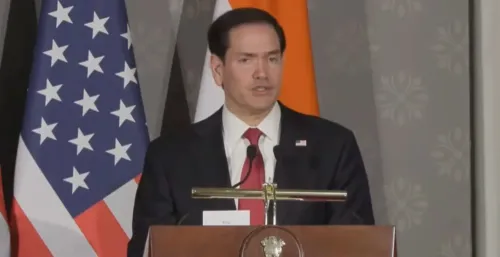
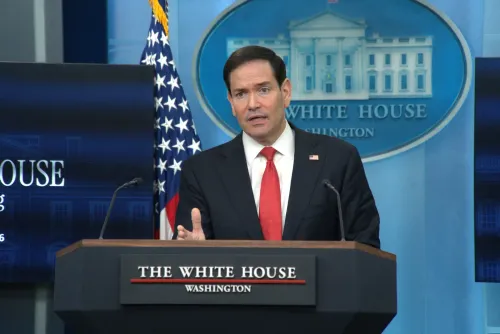
Rubio described the Quad's evolution in unambiguous terms. 'Our goal collectively has been to turn this from a forum in which we meet and talk about problems to one where we actually do something about it,' he said, framing the meeting as a turning point toward a 'partnership of action.' The statement reflects a broader US push to operationalise multilateral groupings rather than let them function as diplomatic talking shops.
Energy Security and the Strait of Hormuz
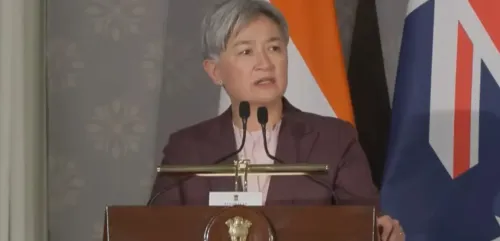
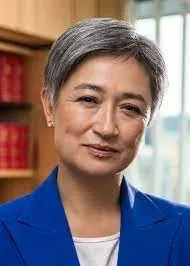
Wong drew direct attention to the economic stakes of West Asian tensions for Indo-Pacific nations. 'We know the consequences for our region of the Iranian closure of the Strait of Hormuz and what that means for our energy security, for our economies and for our people,' she said. The remarks underline growing concern among Quad members about chokepoint vulnerability in global energy supply chains — a risk that falls disproportionately on energy-import-dependent economies like India and Japan.
Motegi, for his part, said the meeting reflected the Quad's commitment to advancing a 'free and open Indo-Pacific' amid what he described as structural shifts in the global order — language that implicitly addresses China's expanding maritime footprint without naming it.
Why This Meeting Matters
The Quad has progressively expanded its cooperation architecture since its revival in 2017, but critics have argued it remained long on declarations and short on deliverables. Tuesday's five-initiative package — particularly the focus on critical minerals and port infrastructure — signals an attempt to change that calculus. This comes amid rising geopolitical uncertainty, disrupted global supply chains, and intensifying competition for rare earth and critical mineral resources across the Indo-Pacific. Notably, the meeting's emphasis on resilient supply chains aligns closely with India's own domestic push to position itself as an alternative manufacturing hub.
What Comes Next
Implementation timelines for the five initiatives were not immediately disclosed. The Quad is expected to hold a leaders-level summit later in the year, where progress on these ministerial commitments will likely be reviewed. Analysts will watch whether the critical minerals and port infrastructure pledges translate into binding agreements or remain aspirational frameworks.
Point of View
The Quad will have earned Rubio's 'partnership of action' label. If not, the gap between declaration and delivery will become the story.
NationPress
26 Sept 2026
Frequently Asked Questions
What did the Quad foreign ministers announce in New Delhi?
The four Quad nations — India, the US, Australia and Japan — announced five major initiatives covering maritime surveillance, port infrastructure, critical minerals, regional maritime coordination and energy security. The meeting was hosted by India in its capacity as current Quad chair.
Who attended the Quad foreign ministers' meeting?
External Affairs Minister S. Jaishankar represented India, alongside US Secretary of State Marco Rubio, Australian Foreign Minister Penny Wong and Japanese Foreign Minister Toshimitsu Motegi.
Why did Australia raise the Strait of Hormuz at the Quad meeting?
Australian Foreign Minister Penny Wong flagged the economic consequences of a potential Iranian closure of the Strait of Hormuz, through which a significant share of global energy supplies transit. The remark highlighted the direct energy security risk that West Asian tensions pose to Indo-Pacific economies.
What is the significance of India chairing the Quad in 2025?
As the current Quad chair, India set the agenda for this ministerial meeting, reflecting its growing centrality in Indo-Pacific diplomacy. The chairmanship gives New Delhi influence over the grouping's priorities at a time when supply chain resilience and critical minerals access are top global concerns.
What happens next after the Quad ministerial meeting?
Implementation timelines for the five announced initiatives were not immediately disclosed. A Quad leaders-level summit is expected later in 2025, where progress on the ministerial commitments will likely be reviewed.