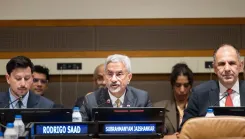
Quad Foreign Ministers meet in New Delhi on May 26: Penny Wong arrives for talks
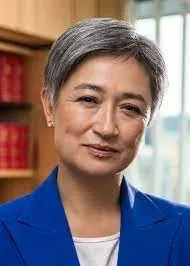
Synopsis
For the first time with Marco Rubio as US Secretary of State at the table, the Quad foreign ministers convene in New Delhi on 26 May — with Australian FM Penny Wong calling the grouping 'vital' amid global uncertainty. The agenda spans critical minerals, maritime security, and supply chain resilience, making this more than a diplomatic courtesy call.
Key Takeaways
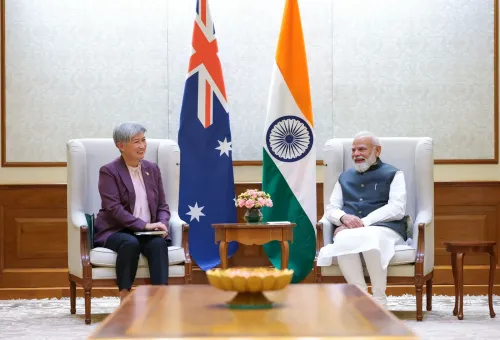
Australian FM Penny Wong arrived in New Delhi on 25 May for the Quad Foreign Ministers' Meeting on 26 May .
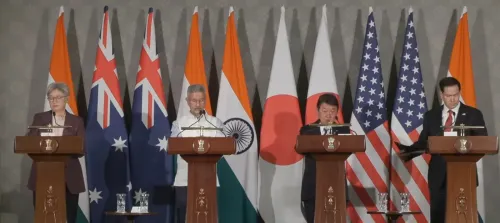
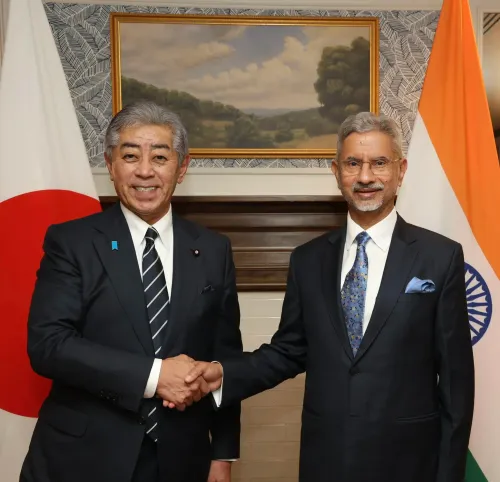
The meeting will be attended by EAM S.
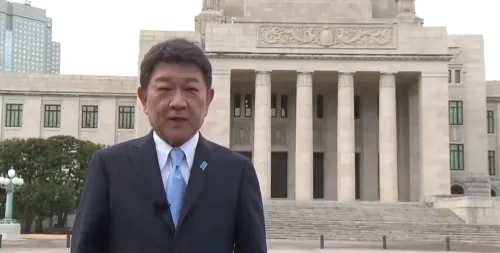
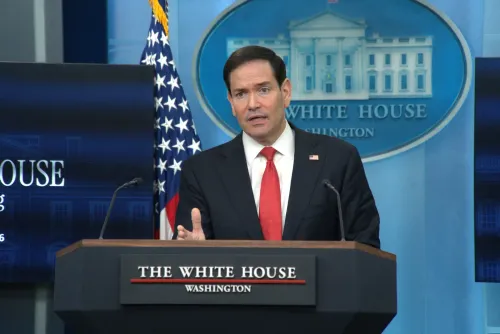
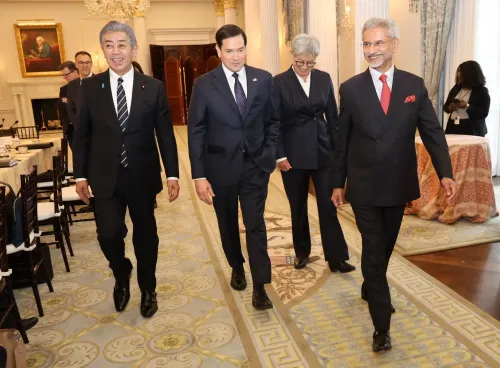
Jaishankar , US Secretary of State Marco Rubio , and Japanese FM Toshimitsu Motegi .
Wong will also hold the 17th Australia-India Foreign Ministers' Framework Dialogue with Jaishankar.
Key agenda items include maritime security, critical minerals supply chains, infrastructure development, and emerging technologies.
The meeting builds on discussions held in Washington, DC on 1 July 2025 and reflects the Quad's vision for a free, open, and inclusive Indo-Pacific .
Australian Foreign Minister Penny Wong arrived in New Delhi on Monday, 25 May to attend the Quad Foreign Ministers' Meeting on 26 May and hold bilateral talks with External Affairs Minister S. Jaishankar, as the four-nation grouping sharpens its focus on Indo-Pacific security and regional cooperation.
Wong's Visit and Bilateral Agenda
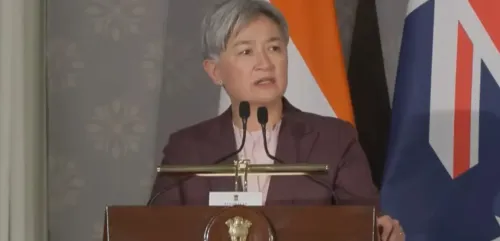
Ahead of her arrival, Wong described the Quad as 'a vital partnership,' saying: 'In these uncertain times, the Quad is a vital partnership — four nations working together to shape a peaceful, stable and prosperous future for the Indo-Pacific region.' During her stay, she will also hold the 17th Australia-India Foreign Ministers' Framework Dialogue with Jaishankar, underscoring what she called a bilateral partnership that 'has never been more consequential.'
Australia and India are Comprehensive Strategic Partners, with deepening cooperation spanning trade and investment, defence and maritime security, climate and energy transition, strategic technology, and education and skills development.
Who Is Attending the Quad Meeting
At the invitation of EAM Jaishankar, Wong will be joined by Japanese Foreign Minister Toshimitsu Motegi and US Secretary of State Marco Rubio for the ministerial session on 26 May. The Quad — comprising Australia, India, Japan, and the United States — last convened at the foreign ministers' level in Washington, DC on 1 July 2025.
Key Areas on the Agenda
According to the Ministry of External Affairs, ministers will exchange views on advancing Quad cooperation across priority areas including maritime security, resilient supply chains, critical and emerging technologies, infrastructure development, climate action, and humanitarian assistance and disaster relief. The session will also review progress on ongoing Quad initiatives and assess recent developments across the Indo-Pacific.
Wong noted that the four countries are 'delivering concrete outcomes on shared interests including maritime security, critical minerals supply, infrastructure development and disaster relief' — signalling that the meeting is expected to move beyond declarations toward implementation reviews.
Strategic Context
The New Delhi meeting comes amid heightened regional tensions and a broader recalibration of Indo-Pacific alignments. This is notably the first Quad foreign ministers' gathering since Marco Rubio assumed office as US Secretary of State, lending additional diplomatic weight to the session. The Ministry of External Affairs described the visit as reflecting 'continued high-level engagement among Quad partners' and their 'shared vision for a free, open and inclusive Indo-Pacific region.'
Wong also signalled Canberra's longer-term intent, saying the Albanese Government would 'continue to strengthen Australia's relationships and work even harder in new and existing coalitions like the Quad as we keep building Australia's future in an ever less stable world.'
What to Watch
The joint outcome statement expected after the 26 May meeting will be closely watched for any new commitments on critical minerals supply chains — a sector where India, Australia, Japan, and the US have been building a coordinated alternative to Chinese dominance. Any language on the South China Sea or the Taiwan Strait would also signal the grouping's willingness to name specific flashpoints.
Point of View
But the proof will be in what the joint statement actually commits to on critical minerals. With Rubio now representing Washington, the meeting also signals whether the current US administration views the Quad as a strategic priority or a legacy obligation. India, hosting for the first time at this level in this cycle, has every incentive to push for substance over symbolism — particularly on defence co-production and technology transfer, two areas where bilateral progress has lagged the headline partnership.
NationPress
26 Sept 2026
Frequently Asked Questions
What is the Quad Foreign Ministers' Meeting in New Delhi about?
The Quad Foreign Ministers' Meeting on 26 May in New Delhi will bring together the top diplomats of Australia, India, Japan, and the United States to review Indo-Pacific security, critical minerals supply chains, maritime cooperation, and emerging technology frameworks. It builds on discussions held in Washington, DC on 1 July 2025.
Who is attending the Quad meeting in New Delhi?
Australian FM Penny Wong, US Secretary of State Marco Rubio, and Japanese FM Toshimitsu Motegi will attend at the invitation of External Affairs Minister S. Jaishankar. It is the first such gathering with Rubio as the US representative.
What is the Australia-India Foreign Ministers' Framework Dialogue?
It is a structured bilateral diplomatic mechanism between Australia and India. Wong's meeting with Jaishankar in New Delhi will mark the 17th edition of this dialogue, covering trade, defence, climate, strategic technology, and education.
What are the Quad's main focus areas?
The Quad focuses on maritime security, resilient supply chains, critical minerals, infrastructure development, disaster relief, and critical and emerging technologies — all aimed at supporting a free, open, and inclusive Indo-Pacific region.
Why is the May 2025 Quad meeting significant?
It is the first Quad foreign ministers' session with Marco Rubio representing the United States, and it comes amid heightened regional tensions in the Indo-Pacific. The meeting is expected to move beyond declarations and review concrete progress on ongoing Quad initiatives.