Quad foreign ministers meet in Atlanta ahead of leaders' summit
Synopsis
The Quad is back in the room — but the real test is what comes next. Jaishankar, Rubio, Motegi, and Wong met in Atlanta to prep for the long-delayed Manila leaders' summit, even as India-US bilateral trust frays and a rival Trump-Putin-Xi trilateral looms on the same horizon. Analysts warn the meeting risks being more optics than outcomes.
Key Takeaways
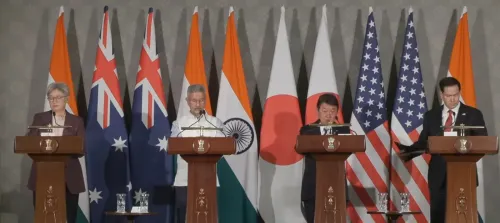
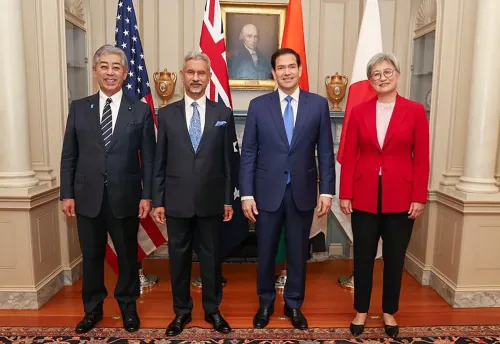
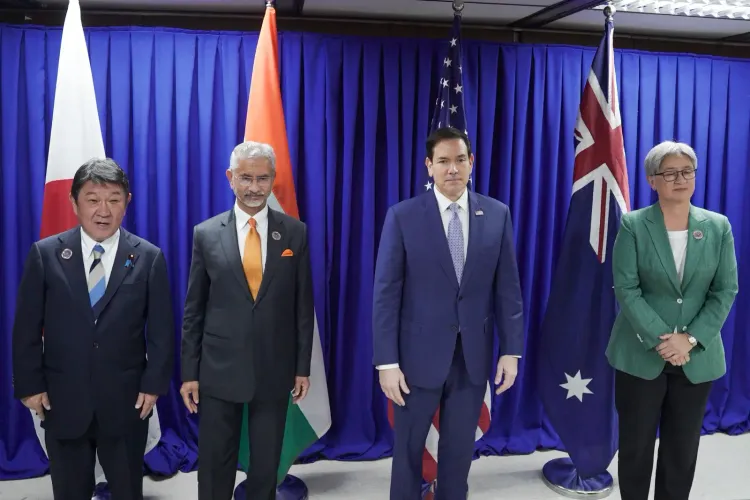
Jaishankar joined US Secretary of State Marco Rubio , Japanese FM Toshimitsu Motegi , and Australian FM Penny Wong for a Quad Foreign Ministers' Meeting in Atlanta on 1 November 2026 .
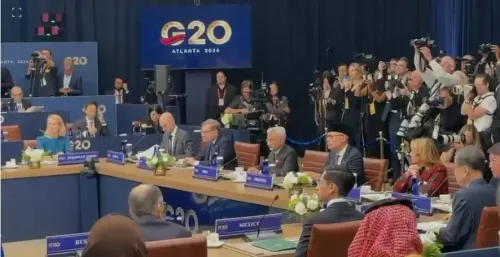
The meeting was held on the sidelines of the G20 Foreign Ministers' Meeting , hosted by Rubio.
Analysts say the talks are designed to lay groundwork for a Quad leaders' summit in Manila next month.
Experts caution the meeting could be 'more optics than outcomes,' with much of the Quad agenda reportedly being worked out bilaterally.
Maritime security and freedom of navigation under UNCLOS featured prominently at the G20 plenaries preceding the Quad session.
Jaishankar next travels to Antigua and Barbuda for the Commonwealth Heads of Government Meeting from 1–4 November .
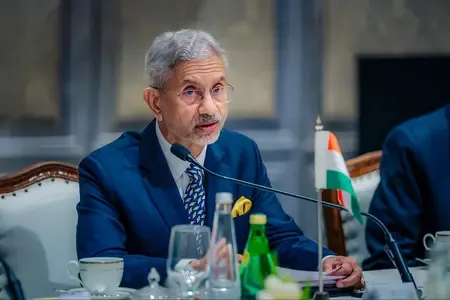
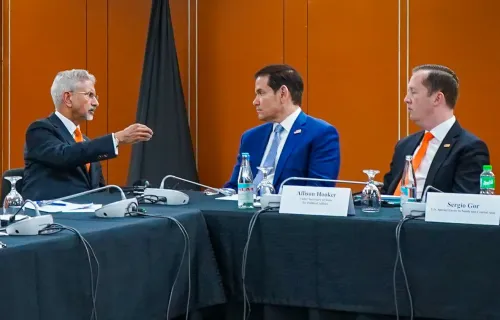
External Affairs Minister S. Jaishankar joined his counterparts from the United States, Japan, and Australia for a Quad Foreign Ministers' Meeting in Atlanta on 1 November 2026, a session analysts say is designed to lay the groundwork for a long-stalled Quad leaders' summit in Manila and test the grouping's cohesion at a moment of strain in India-US bilateral ties.
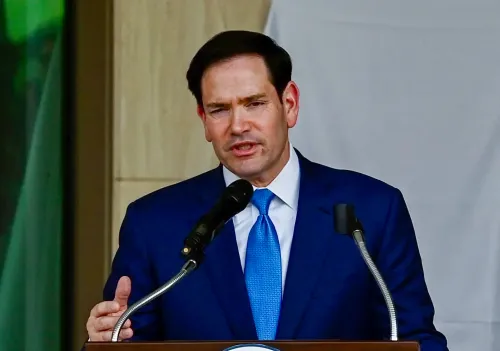
The meeting was hosted by US Secretary of State Marco Rubio on the sidelines of the G20 Foreign Ministers' Meeting, scheduled to begin at 9 am local time on Saturday.
Who Is in the Room
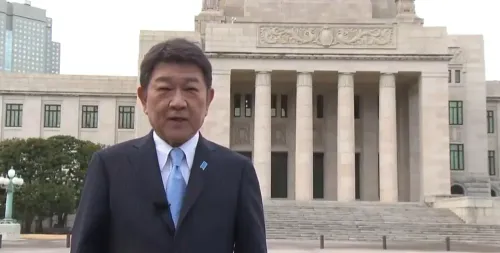
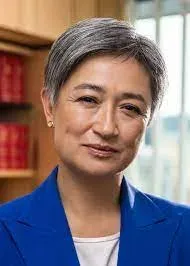
Japanese Foreign Minister Toshimitsu Motegi and Australian Foreign Minister Penny Wong are also in Atlanta for the broader G20 talks. Wong, in a statement ahead of the meeting, said: 'Together, we will advance practical cooperation on regional security, maritime security and economic resilience in support of a peaceful, stable and prosperous Indo-Pacific.'
The Ministry of External Affairs confirmed Jaishankar's participation on Wednesday. MEA spokesperson Randhir Jaiswal said: 'On the sidelines of this meeting, he will also participate in a QUAD Foreign Ministers' Meeting and also have several bilateral engagements with his counterparts.'
Experts: Groundwork for Manila Summit
Farwa Aamer, Director of South Asia Initiatives at the Asia Society Policy Institute (ASPI), said the ministers 'are expected to lay the groundwork for the long-stalled leaders' summit in Manila next month.' She also cautioned, however, that the meeting 'may remain more of an optics game,' noting that much of the Quad agenda was 'being worked out bilaterally between its members,' from critical minerals to energy.
Emma Chanlett-Avery, ASPI's Senior Director of Political-Security Affairs, said a leaders' meeting 'will be welcome news to Tokyo, Canberra, and Delhi,' but warned it 'could be overshadowed by a potential trilateral summit with Trump, Putin, and Xi just a day later, presenting a very different vision of a world order dominated by authoritarian leaders.'
Maritime Security Takes Centre Stage
Maritime security is set to dominate the agenda. At the G20's first plenary on Friday, Jaishankar stressed the 'urgent need to preserve the freedom of navigation and ensure cessation of attacks within the framework of international law, especially UNCLOS,' adding that the 'Global South is disproportionately bearing the consequences of attacks on civilian shipping and seafarers,' according to his post on X.
Rubio similarly said on X that he had told the G20 that 'maritime and food security drive economic security.' On Friday evening, Rubio, Motegi, and South Korea's Cho Hyun signed a memorandum creating a Trilateral Arctic Pacific Partnership. Australia's Wong also announced that Australia had joined the European Union-led 'No Fees/No Tolls' pledge, opposing unlawful maritime tolls that could undermine freedom of navigation.
Broader Diplomatic Context
The Atlanta Quad meeting comes just one week after Rubio's visit to India, underscoring the intensity of diplomacy ahead of the Manila summit. On the sidelines in Atlanta, Jaishankar also held bilateral meetings with the foreign ministers of Argentina, Canada, Mexico, Brazil, and Germany.
Following Atlanta, Jaishankar is scheduled to travel to Antigua and Barbuda for the Commonwealth Heads of Government Meeting from 1 to 4 November. The diplomatic sprint reflects India's active positioning across multiple multilateral frameworks as the Manila leaders' summit draws closer.
Point of View
The grouping faces a credibility question: can it move beyond shared language on the Indo-Pacific and produce tangible, verifiable cooperation? Analysts are right to flag the optics risk — Quad meetings have historically generated strong communiqués and modest deliverables. The real signal to watch is whether the Manila leaders' summit actually happens on schedule and, if it does, whether it produces binding commitments on critical minerals or maritime enforcement rather than another round of vision statements.
NationPress
31 Oct 2026
Frequently Asked Questions
What is the Quad Foreign Ministers' Meeting in Atlanta about?
The Quad Foreign Ministers' Meeting in Atlanta on 1 November 2026 brought together EAM S. Jaishankar and his counterparts from the US, Japan, and Australia to advance cooperation on Indo-Pacific security, maritime security, and economic resilience. Analysts say the primary goal is to lay the groundwork for a long-stalled Quad leaders' summit in Manila next month.
Where and when is the Quad leaders' summit expected to take place?
According to analysts cited at the Atlanta meeting, the Quad leaders' summit is expected to be held in Manila next month, following the foreign ministers' preparatory session. No official date has been publicly confirmed.
Why is the Quad meeting significant amid India-US tensions?
Despite reported strains in India-US bilateral ties over the past year, the Quad remains a platform where officials from all four countries continue to champion alignment on the Indo-Pacific. Analysts say the Atlanta meeting tests whether the grouping can maintain cohesion even as bilateral trust issues persist.
What did Australian FM Penny Wong say ahead of the Quad meeting?
Wong said the four ministers would 'advance practical cooperation on regional security, maritime security and economic resilience in support of a peaceful, stable and prosperous Indo-Pacific.' Australia also separately joined the EU-led 'No Fees/No Tolls' pledge on freedom of navigation.
What else is EAM Jaishankar doing at the G20 in Atlanta?
On the G20 sidelines, Jaishankar held bilateral meetings with the foreign ministers of Argentina, Canada, Mexico, Brazil, and Germany. He also addressed two G20 plenaries — on maritime security and energy — before the Quad session. He is scheduled to depart for Antigua and Barbuda for the Commonwealth Heads of Government Meeting from 1 to 4 November.