Quad Foreign Ministers meet in New Delhi on May 26
Synopsis
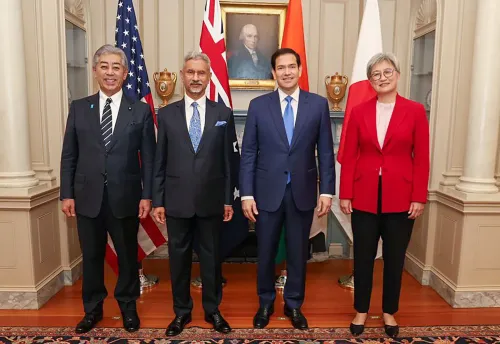
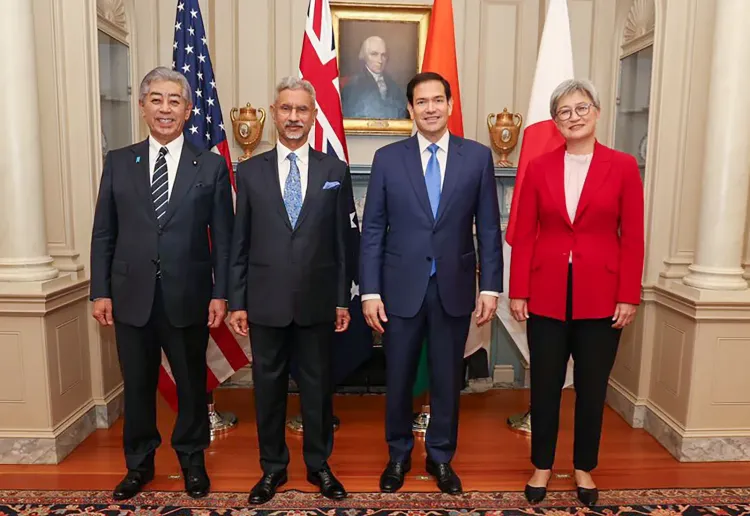
The Quad is converging on New Delhi on 26 May, with all four foreign ministers in the same room for the first time since Washington DC in July 2025. The addition of a US energy pitch — Rubio flagging expanded exports amid Strait of Hormuz tensions — signals the grouping is quietly expanding beyond security into strategic resource diplomacy.
Key Takeaways
Quad Foreign Ministers' Meeting is scheduled for 26 May in New Delhi , hosted by EAM S.
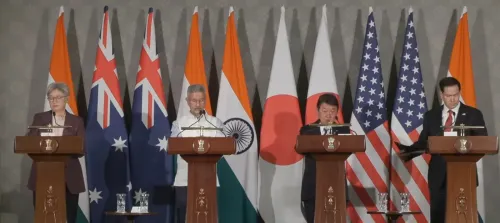
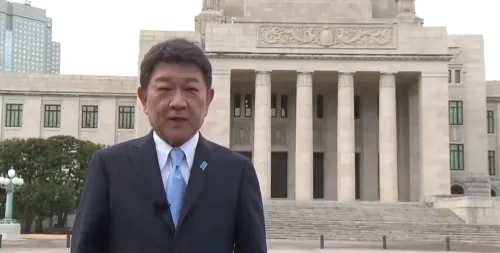
Attending: Australian FM Penny Wong , Japanese FM Toshimitsu Motegi , and US Secretary of State Marco Rubio .
Agenda covers maritime security , supply chains , critical technologies , climate action , and disaster relief .
All three visiting ministers will hold bilateral meetings with Jaishankar and call on PM Modi .
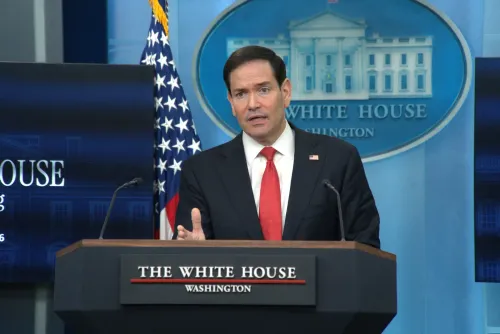
Rubio signalled US readiness to expand energy exports to India, citing Strait of Hormuz supply concerns.
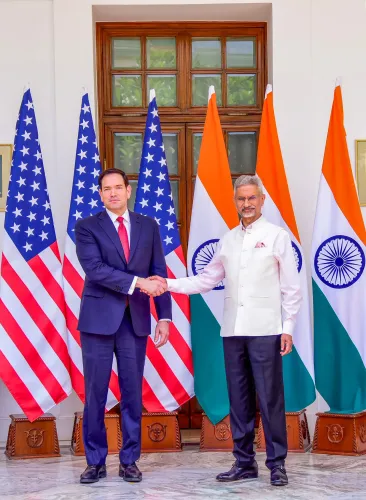
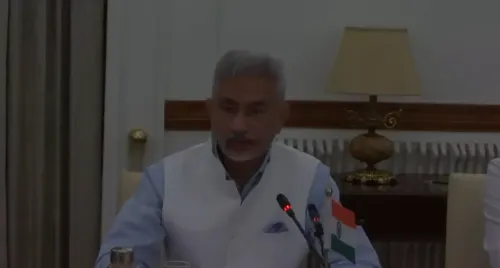
External Affairs Minister S. Jaishankar will host the Quad Foreign Ministers' Meeting in New Delhi on 26 May, with Australian Foreign Minister Penny Wong, Japanese Foreign Minister Toshimitsu Motegi, and US Secretary of State Marco Rubio all confirmed to attend. The gathering marks a significant convergence of the four-nation grouping at a moment of heightened Indo-Pacific tensions.
What the Ministers Will Discuss
According to the Ministry of External Affairs, the meeting will build on discussions held in Washington, DC on 1 July 2025. The official statement noted that the ministers will 'exchange views on advancing Quad cooperation across priority areas, review progress on ongoing Quad initiatives, and reflect on recent developments in the Indo-Pacific region and other international issues of mutual concern.'
Key agenda items include maritime security, resilient supply chains, infrastructure development, critical and emerging technologies, climate action, and humanitarian assistance and disaster relief.
Bilateral Meetings and PM Modi Call
On the sidelines, Wong, Motegi, and Rubio are each expected to hold bilateral meetings with Jaishankar. The three visiting ministers are also scheduled to call on Prime Minister Narendra Modi during their stay in the national capital — a signal of the political weight New Delhi is attaching to this round of consultations.
Rubio's Energy Pitch Ahead of Visit
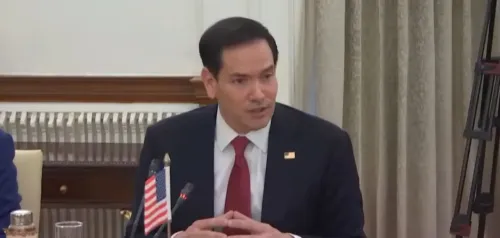
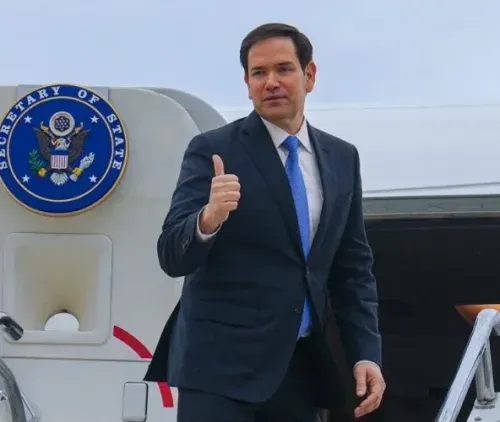
Ahead of his departure, Rubio told reporters in Miami that Washington was ready to expand energy exports to India, citing growing concerns over global oil and gas supply disruptions linked to tensions around the Strait of Hormuz. He described India as a 'great ally' and 'great partner', framing the Quad meeting as an opportunity to deepen bilateral coordination. Rubio is travelling to India with a stopover in Europe.
Why This Meeting Matters
The Quad — comprising India, Australia, Japan, and the United States — has steadily elevated its engagement since its revival in 2017, with foreign minister-level and leader-level summits becoming more frequent. This meeting comes as Indo-Pacific geopolitical dynamics continue to shift, with China's assertiveness in the South China Sea and the Taiwan Strait keeping member nations on alert. Notably, the energy dimension raised by Rubio adds an economic layer to what has traditionally been framed as a security-and-connectivity forum. The meeting is likely to produce a joint statement reaffirming the grouping's 'free, open, and inclusive Indo-Pacific' framework.
Point of View
And the Quad is the vehicle. For New Delhi, this is leverage: India can deepen US energy ties without formally abandoning its strategic autonomy posture. The real question is whether the joint statement moves beyond boilerplate 'free and open Indo-Pacific' language to include concrete deliverables on semiconductors, undersea cables, or critical minerals — the areas where Quad rhetoric has most consistently outpaced action.
NationPress
24 Sept 2026
Frequently Asked Questions
What is the Quad Foreign Ministers' Meeting scheduled for May 26?
It is a ministerial-level gathering of the four Quad nations — India, Australia, Japan, and the United States — to be held in New Delhi on 26 May, hosted by External Affairs Minister S. Jaishankar. The meeting will review ongoing Quad initiatives and discuss Indo-Pacific security, supply chains, and emerging technologies.
Who is attending the Quad meeting in New Delhi?
Australian Foreign Minister Penny Wong, Japanese Foreign Minister Toshimitsu Motegi, and US Secretary of State Marco Rubio will attend at the invitation of EAM S. Jaishankar. All three are also scheduled to call on Prime Minister Narendra Modi.
What topics are on the Quad Foreign Ministers' agenda?
The agenda includes maritime security, resilient supply chains, infrastructure development, critical and emerging technologies, climate action, and humanitarian assistance and disaster relief. Ministers will also review progress on existing Quad initiatives.
What did Marco Rubio say about US-India energy ties ahead of his visit?
Rubio told reporters in Miami that Washington is ready to increase energy exports to India amid global supply concerns linked to tensions around the Strait of Hormuz. He described India as a 'great ally' and 'great partner', framing energy cooperation as a key priority of his visit.
Why is the Quad meeting significant right now?
It comes as Indo-Pacific geopolitical dynamics continue to shift, with member nations seeking deeper coordination on regional security and economic resilience. The meeting builds on discussions held in Washington, DC on 1 July 2025, and is expected to produce fresh commitments on cooperation priorities.