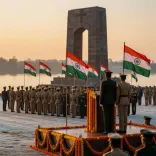
Smriti Irani Salutes Sardar Patel on National Unity Day
Synopsis
On National Unity Day, BJP leader Smriti Irani honoured Sardar Vallabhbhai Patel, India's first Deputy PM, crediting his resolve for unifying over 500 princely states and calling his life an enduring standard of national dedication.
Key Takeaways
Smriti Irani posted a tribute to Sardar Vallabhbhai Patel on his birth anniversary, 31 October 2026 .
Patel, India's first Deputy Prime Minister and Home Minister , integrated over 500 princely states into the Indian Union by 1950 .
Irani described Patel's resolve as giving India 'the thread of unity' and his life as a 'benchmark of national dedication' for generations.
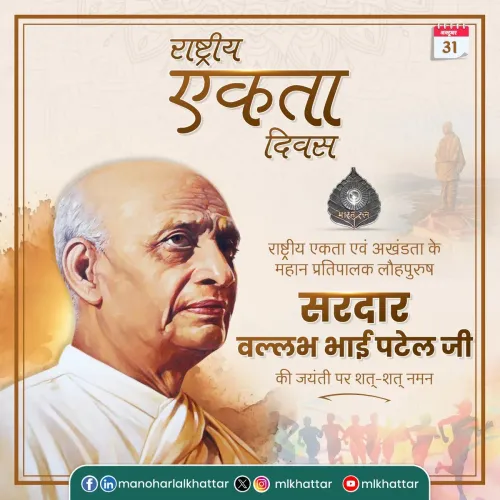
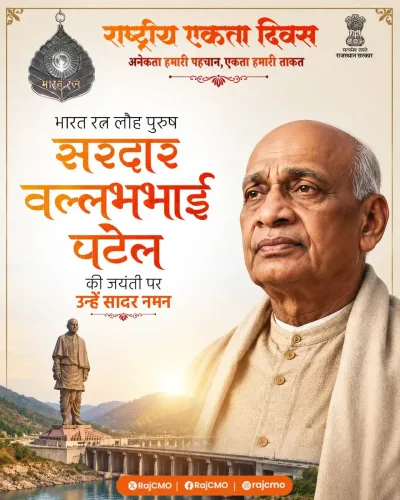
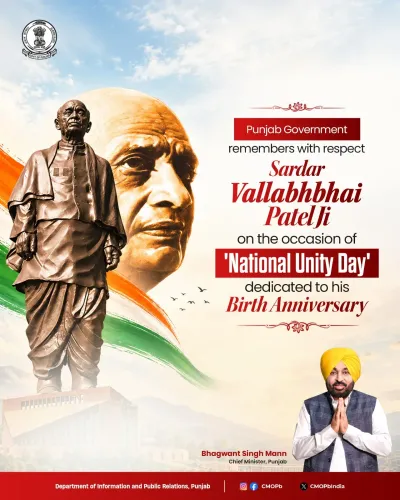
31 October is observed nationally as Rashtriya Ekta Diwas (National Unity Day) in Patel's honour.
BJP leaders have consistently used this anniversary to emphasise early post-independence territorial consolidation as a cornerstone of national identity.
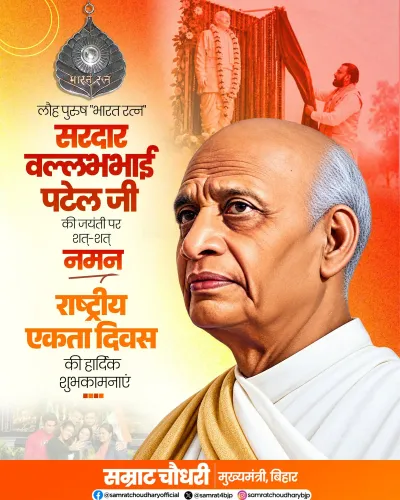
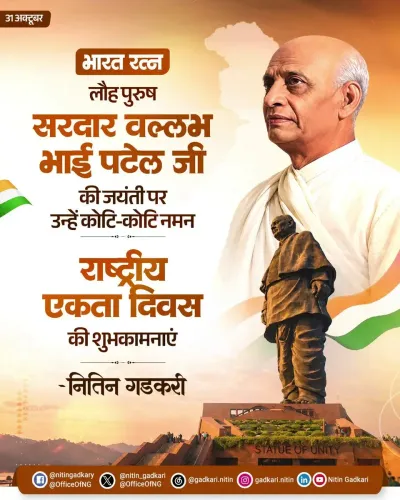
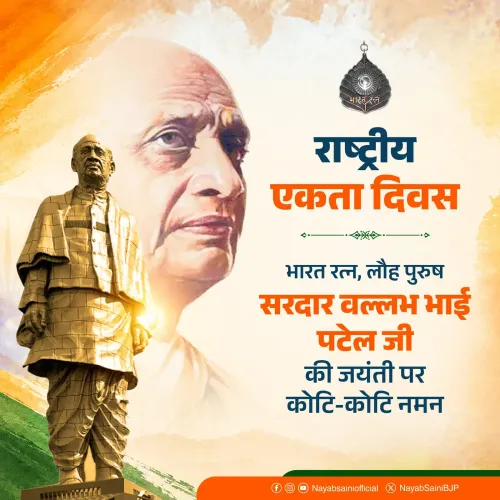
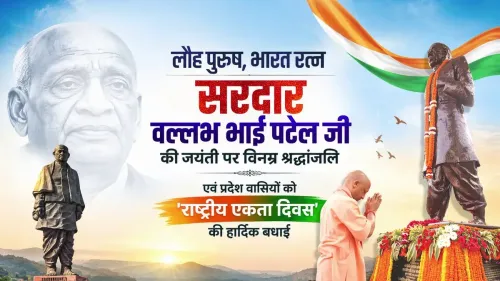
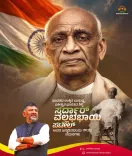
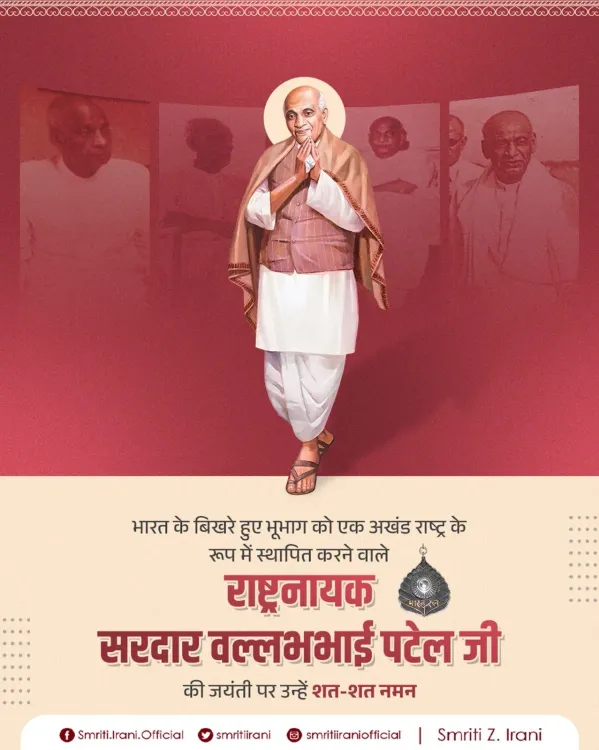
On the birth anniversary of the man who stitched a fragmented subcontinent into one sovereign nation, BJP leader Smriti Irani paid tribute to Sardar Vallabhbhai Patel on 31 October 2026, hailing him as the iron-willed architect of modern India's territorial integrity.
In her post on X, Irani wrote: 'भारत के बिखरे हुए भूभाग को एक अखंड राष्ट्र के रूप में स्थापित करने वाले लौहपुरूष सरदार वल्लभभाई पटेल जी ने सैकड़ों रियासतों को एक सूत्र में पिरोकर अखंड भारत की नींव सुदृढ़ की।' — 'The Iron Man who established India's scattered territory as one indivisible nation, Sardar Vallabhbhai Patel strengthened the foundation of an united India by threading hundreds of princely states into a single bond.' She added that his resolve gave India the thread of unity, his visionary leadership fortified the nation's foundation, and his life became the benchmark of national dedication for generations to come.
The Man Who Merged 500 Princely States
The scale of what Patel achieved in just a few post-independence years is staggering even by modern diplomatic standards. As India's first Deputy Prime Minister and Home Minister, he oversaw the accession of over 500 princely states into the Indian Union — a process substantially completed by 1950. Without that consolidation, the map of South Asia today would look unrecognisably fragmented.
Patel's combination of political persuasion, strategic pressure, and where necessary, decisive military action — most famously in Hyderabad — transformed what could have been a patchwork of competing micro-sovereignties into a functional federal republic. It is this legacy that earns him the enduring title Loh Purush, the Iron Man of India.
National Unity Day and the BJP's Annual Reckoning with Patel's Legacy
31 October is observed across India as Rashtriya Ekta Diwas — National Unity Day — a commemoration that invites every political voice to publicly affirm the idea of an indivisible India. BJP leaders have consistently marked the occasion with tributes that place Patel's integration effort at the centre of the national story, framing it as a founding act of governance as consequential as the Constitution itself.
Irani's tribute fits squarely within that tradition — but its language is notably elevated, describing Patel's life as 'rashtra-samarpan ka maandand', a standard of national dedication, for generations yet to come. That framing turns a birth anniversary into a living instruction: that the work of national unity is not a historical achievement to admire from a distance but a standard to be actively met.
Point of View
Unifying nationalism — a counter-narrative to the Congress-centric reading of independence history. By describing Patel's life as a 'standard for generations,' the tribute subtly extends the relevance of his legacy beyond commemoration into active political aspiration. National Unity Day has become one of the BJP's most consistent annual messaging moments, and tributes from senior leaders reinforce the party's self-positioning as the inheritor of Patel's integration ethos. Whether ceremonial or strategic, the consistency of this observance signals that Patel's legacy remains a live political asset, not merely a historical footnote.
NationPress
31 Oct 2026
Frequently Asked Questions
Why is 31 October celebrated as National Unity Day in India?
31 October is observed as Rashtriya Ekta Diwas or National Unity Day to mark the birth anniversary of Sardar Vallabhbhai Patel , India's first Deputy Prime Minister, who is credited with unifying over 500 princely states into the Indian Union.
What did Sardar Patel do for India's unity?
As India's first Deputy Prime Minister and Home Minister , Sardar Vallabhbhai Patel led the accession of over 500 princely states into the Indian Union, a process largely completed by 1950 , establishing the territorial integrity of modern India.
What did Smriti Irani say about Sardar Patel on National Unity Day 2026?
Smriti Irani praised Sardar Patel as the 'Iron Man' who unified India's scattered territory by threading hundreds of princely states into one nation, saying his resolve gave India the thread of unity and his life became a benchmark of national dedication for future generations.
Why is Sardar Patel called the Iron Man of India?
Sardar Vallabhbhai Patel is called the Loh Purush or Iron Man of India because of his firm, decisive role in integrating over 500 princely states into the Indian Union through a combination of diplomacy and strategic resolve after independence in 1947 .
How do BJP leaders mark Sardar Patel's birth anniversary?
BJP leaders including Smriti Irani mark 31 October each year with tributes emphasising Patel's role in national integration, framing it as part of India's foundational governance story and aligning with the official Rashtriya Ekta Diwas observances.