Gujarat CM Office Invites Youth for Sardar Patel Good Governance Fellowship

Synopsis
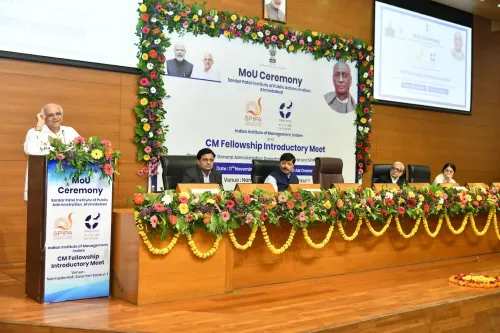
The Chief Minister's Office of Gujarat has invited young professionals to join the Sardar Patel Good Governance CM Fellowship Program, a state initiative under CM Bhupendra Patel that channels youth talent into public administration and citizen welfare, building on Gujarat's long tradition of governance innovation.
Key Takeaways
The Chief Minister's Office of Gujarat announced an open invitation to youth to join the Sardar Patel Good Governance CM Fellowship Program on 31 October 2026 .
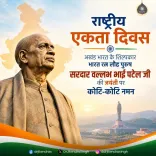
The program is named after Sardar Vallabhbhai Patel , India's first Deputy Prime Minister and Gujarat's most iconic statesman.
It operates under the leadership of Chief Minister Bhupendra Patel and is framed around PM Narendra Modi 's philosophy of good governance for public welfare.
The fellowship aims to harness youth knowledge, skills, and innovative ideas for multi-dimensional development and welfare of the common citizen in Gujarat.
Specific eligibility criteria, application timelines, and cohort details were not disclosed in the announcement; official channels will carry full guidelines.
The initiative continues Gujarat's decades-long positioning as a laboratory for administrative reform and youth-driven public policy innovation.
Gujarat is opening its corridors of governance to young talent — and it is doing so under the banner of one of India's most revered administrators. The Chief Minister's Office of Gujarat on Saturday, 31 October 2026 formally invited young professionals to join the Sardar Patel Good Governance CM Fellowship Program, a state initiative designed to channel youth knowledge, skills, and fresh ideas into the machinery of public administration.
The post, written in Gujarati, frames the fellowship around a governing philosophy rooted in Prime Minister Narendra Modi's long-standing emphasis on good governance as an instrument of public welfare — 'jansaamaanya na kalyaan no shaasanbhaav' (a spirit of governance oriented toward the welfare of the common person). It credits Chief Minister Bhupendra Patel's leadership as the driving force behind the program's current shape.
What the Sardar Patel Fellowship Stands For
Named after Sardar Vallabhbhai Patel — India's first Deputy Prime Minister, Home Minister, and Gujarat's most iconic statesman — the fellowship is explicitly positioned as a bridge between young talent and multi-dimensional state development. The program invites youth to contribute to the welfare of ordinary citizens and to Gujarat's broader progress, using their expertise and innovative thinking directly within government structures.
The naming is deliberate. Sardar Patel built unified modern India through pragmatic, institution-first administration. Attaching his name to a governance fellowship signals the kind of seriousness — and legacy weight — the Gujarat government wants associated with the initiative.
Gujarat's Governance Laboratory Tradition
This fellowship does not emerge from a vacuum. Gujarat has cultivated a reputation over more than two decades as a testing ground for administrative reform and citizen-service delivery. That tradition accelerated sharply during Narendra Modi's tenure as Chief Minister from 2001 to 2014, when the state pioneered models of e-governance, scheme implementation, and performance-linked bureaucracy that were later scaled nationally after 2014.
Fellowship-style entry points for young professionals into public administration reflect a broader national pattern: states increasingly recognise that the implementation gap — the distance between a well-designed policy and its on-the-ground reality — can be narrowed by bringing in energetic, technically skilled young minds who are not yet habituated to institutional inertia. Gujarat is betting that the Sardar Patel fellowship can do exactly that.
What Prospective Fellows Should Watch For
The CMO's post is an open invitation rather than a detailed prospectus. Specific eligibility criteria, application windows, stipend structure, and cohort timelines have not been detailed in the announcement. Interested candidates should track official Gujarat government channels for the full program guidelines as they are released.
The signal, however, is clear: Gujarat wants its next generation not just cheering from the sidelines of governance — it wants them inside the room, building it.
Point of View
The program is also a soft political asset: it associates his administration with both Sardar Patel's legacy and Modi's national governance narrative, reinforcing continuity rather than rupture. Fellowship programs of this kind signal that Gujarat recognises its implementation gap as a talent problem, not just a resource problem. The deeper bet is that structured youth entry into administration today creates the next generation of reform-minded bureaucrats and technocrats who will carry the model forward.
NationPress
31 Oct 2026
Frequently Asked Questions
What is the Sardar Patel Good Governance CM Fellowship Program in Gujarat?
The Sardar Patel Good Governance CM Fellowship Program is a Gujarat state government initiative that invites young professionals to contribute their knowledge, skills, and innovative ideas to public administration and citizen welfare under Chief Minister Bhupendra Patel's leadership.
Who can apply for the Gujarat Good Governance CM Fellowship?
The program is open to young talent — the CMO's announcement is a broad invitation to youth professionals, though specific eligibility criteria, educational qualifications, and age limits are expected to be detailed in official Gujarat government guidelines.
Why is the fellowship named after Sardar Vallabhbhai Patel?
Sardar Vallabhbhai Patel was India's first Deputy Prime Minister and Home Minister, and Gujarat's most iconic leader. Naming the fellowship after him signals the state government's intent to associate the program with his legacy of pragmatic, institution-first governance.
What is the connection between PM Modi and Gujarat's good governance model?
PM Narendra Modi served as Chief Minister of Gujarat from 2001 to 2014, during which he developed governance frameworks focused on citizen welfare, e-governance, and performance-linked delivery that later became a template for national-level reforms after 2014.
How do I apply for the Sardar Patel Good Governance CM Fellowship Program?
Application details, including windows and selection criteria, have not yet been officially published. Interested candidates should monitor official Gujarat government portals and the Chief Minister's Office social media channels for updated guidelines.