Karnataka CM's Office honours Sardar Patel on birth anniversary
Synopsis
The Chief Minister's Office of Karnataka marked Sardar Vallabhbhai Patel's birth anniversary on October 31, 2026, honouring the Iron Man of India for integrating 565 princely states, leading the Bardoli Satyagraha, and founding India's All India Civil Services as the backbone of national governance.
Key Takeaways
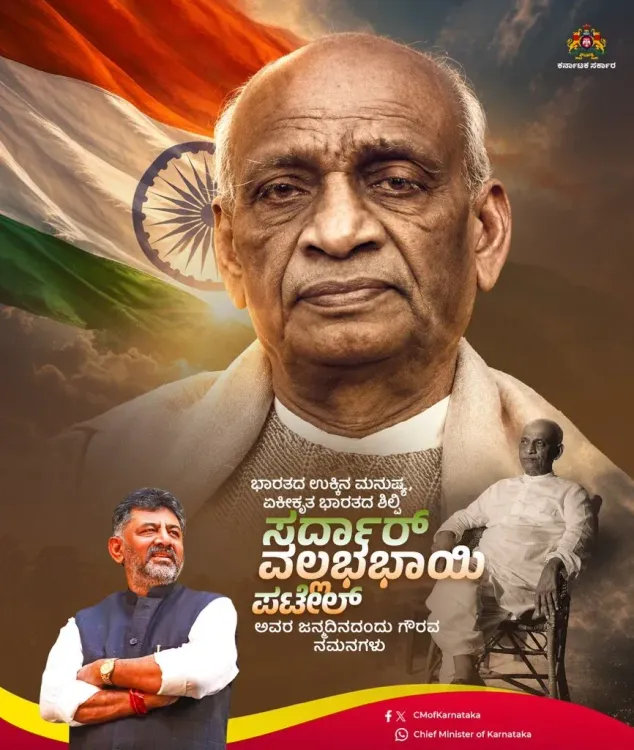
The Chief Minister's Office of Karnataka posted a Kannada tribute to Sardar Vallabhbhai Patel on October 31, 2026 , his birth anniversary.
Patel is credited with integrating 565 princely states into the Indian Union between 1947 and 1950 , preventing post-independence fragmentation.
The tribute references the Bardoli Satyagraha of 1928 , the peasant tax revolt that gave Patel the title 'Sardar' .
Patel's role in establishing the All India Civil Services (IAS, IPS) as the administrative backbone of India is highlighted.
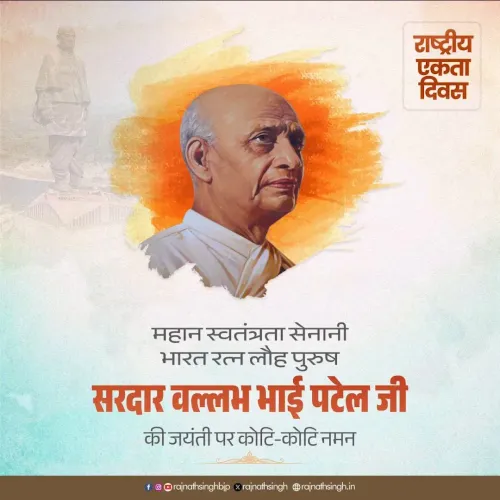
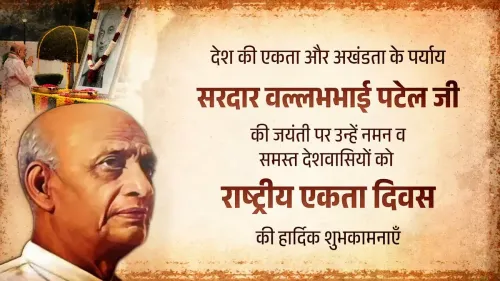
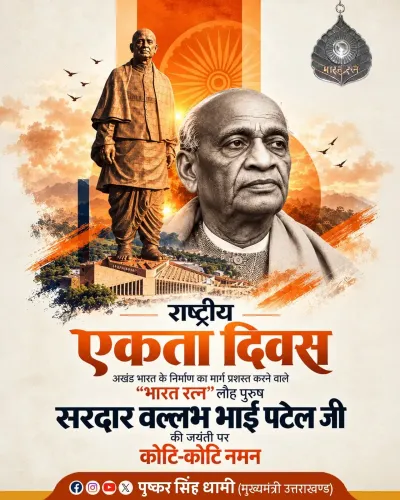
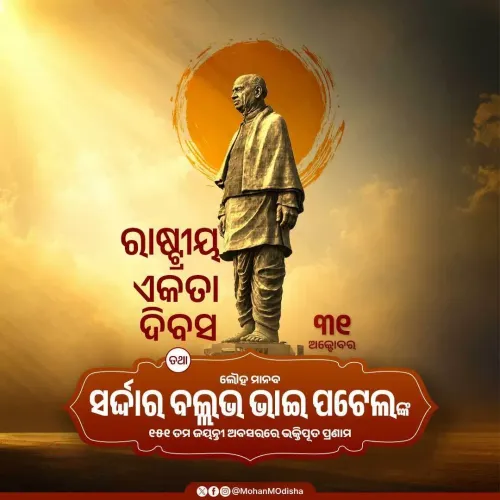
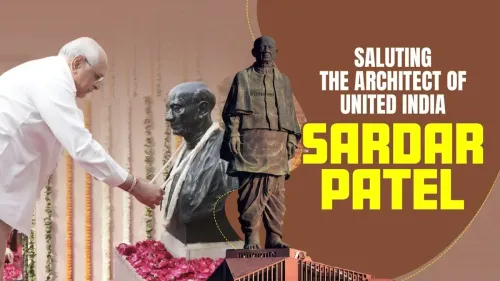
October 31 is observed nationally as Rashtriya Ekta Diwas (National Unity Day), with ceremonies held at the Statue of Unity in Gujarat.
The post calls upholding national unity, integrity, and sovereignty the 'foremost duty of every Indian.'
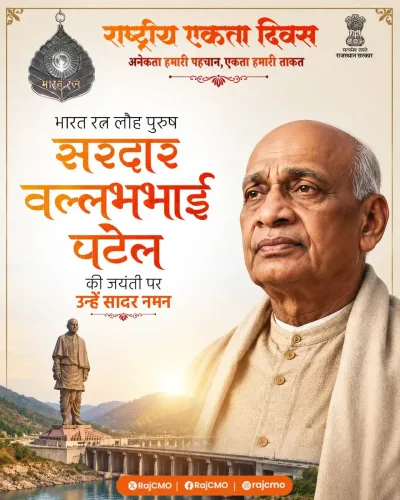
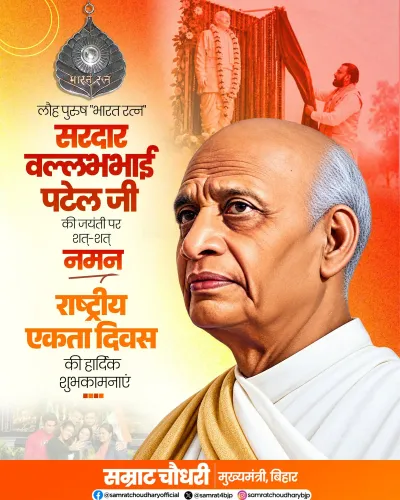
On the 151st birth anniversary of Sardar Vallabhbhai Patel, the Chief Minister's Office of Karnataka paid tribute on Saturday, October 31, 2026, honouring the 'Iron Man of India' for holding the newly independent nation together through sheer resolve and unmatched diplomatic acumen.
The Kannada-language post declared: 'Sardar Patel helped protect the country from fragmentation during the most precarious period of post-independence India through his unwavering determination and unparalleled diplomatic brilliance.' The tribute spans two distinct chapters of Patel's legacy — the mass agitation he led and the institutions he built — a pairing that defines how he is remembered across India's political spectrum.
From Bardoli's fields to the map of modern India
The post specifically invokes the Bardoli Satyagraha of 1928, the Gujarat peasant revolt Patel led against an unjust 30 per cent land revenue hike imposed by British authorities. The campaign forced a rollback and earned him the title 'Sardar' — meaning 'Chief' — bestowed by the movement's grateful farmers. It was the crucible in which his reputation as a people's leader was forged.
But it was in the three years after August 15, 1947, that Patel's greatest act unfolded. As independent India's first Deputy Prime Minister and Home Minister, he navigated the accession of 565 princely states into the Indian Union — a feat of persuasion, pressure, and political architecture that prevented the subcontinent from splintering into dozens of sovereign fragments.
The civil services as a national backbone
The Karnataka tribute also flags Patel's role in laying the foundation of the All India Civil Services — including the Indian Administrative Service and the Indian Police Service — the steel frame of governance that continues to run the country's administration nearly eight decades on. Patel famously championed these services when several contemporaries questioned their utility in a democratic India, arguing they were essential for a unified, functional state.
The post closes with the declaration that upholding the 'national unity, integrity, and sovereignty that Sardar Patel built is the foremost duty of every Indian' — a sentiment that resonates at a moment when Rashtriya Ekta Diwas (National Unity Day) ceremonies are held across the country, including at the iconic Statue of Unity in Gujarat.
On the day India marks the birth of the man who drew its borders in ink and held them in iron, Karnataka's salute is a reminder that integration was never accidental — it was earned.
Point of View
Especially on Rashtriya Ekta Diwas. Karnataka's tribute, drawing on both the Bardoli mass movement and the civil services legacy, spans the left-nationalist and centre-right readings of Patel simultaneously. In a political climate where Patel's image is contested between Congress and BJP narratives, a state government posting in Kannada — rather than Hindi — also quietly asserts regional voice within the national integration frame. The reference to 'foremost duty of every Indian' is the soft-power payload: unity as obligation, not just aspiration.
NationPress
31 Oct 2026
Frequently Asked Questions
Why is October 31 celebrated as Rashtriya Ekta Diwas?
October 31 is Rashtriya Ekta Diwas (National Unity Day) because it is the birth anniversary of Sardar Vallabhbhai Patel , who integrated 565 princely states into India after independence. The day was officially instituted to reaffirm the country's commitment to unity, integrity, and security.
What was the Bardoli Satyagraha and why is it important?
The Bardoli Satyagraha of 1928 was a non-violent peasant movement in Gujarat led by Vallabhbhai Patel against a 30 per cent British-imposed land revenue hike. The campaign succeeded in forcing a rollback and earned Patel the title 'Sardar,' cementing his national stature as a mass leader.
How many princely states did Sardar Patel integrate into India?
Sardar Vallabhbhai Patel negotiated the accession of 565 princely states into the Indian Union between 1947 and 1950 , in his capacity as India's first Deputy Prime Minister and Home Minister .
What is Sardar Patel's connection to the IAS and Indian civil services?
Sardar Patel was the principal architect of the All India Civil Services , including the Indian Administrative Service (IAS) and the Indian Police Service (IPS) . He championed their creation as Home Minister , arguing they were essential to hold a unified, democratic India together.
Why did the Karnataka CMO post a tribute to Sardar Patel?
The Chief Minister's Office of Karnataka posted the tribute on October 31, 2026 , Patel's birth anniversary and Rashtriya Ekta Diwas . State governments across India issue such tributes annually to reaffirm their commitment to national integration and to honour Patel's legacy in governance and mass movements.