Quad must be strong and effective, says Australian FM Penny Wong in New Delhi
Synopsis
At the Quad Foreign Ministers’ Meeting in New Delhi, Australian FM Penny Wong invoked EAM Jaishankar’s ‘freedom of choice’ doctrine and warned of a region under ‘accelerating contest’ and ‘acute economic stress’ — signalling that the Quad has outgrown its origins and is now positioning itself as the Indo-Pacific’s primary counter to strategic coercion.
Key Takeaways
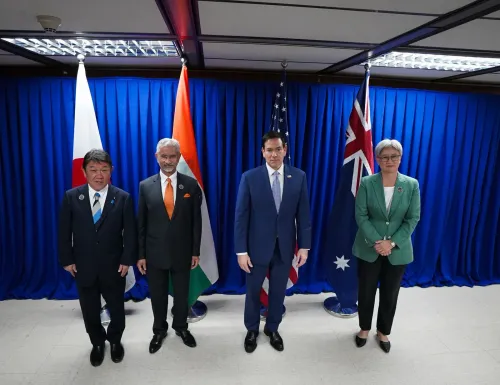
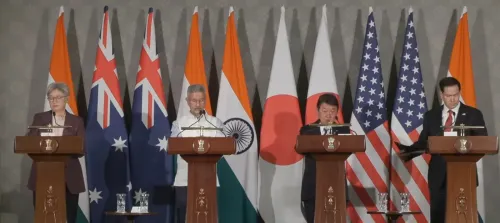
Australian Foreign Minister Penny Wong addressed the Quad Foreign Ministers’ Meeting in New Delhi on 26 May 2025 .
Wong said all four Quad nations want the grouping to be “as strong and as effective as we can make it.” She cited concrete Quad deliverables: disaster response in Myanmar and Papua New Guinea , undersea cables, maritime security, and critical minerals cooperation.
Wong recalled EAM Jaishankar’s ‘freedom of choice’ framework from the 2025 Washington Quad meeting as central to Australia’s Quad engagement.
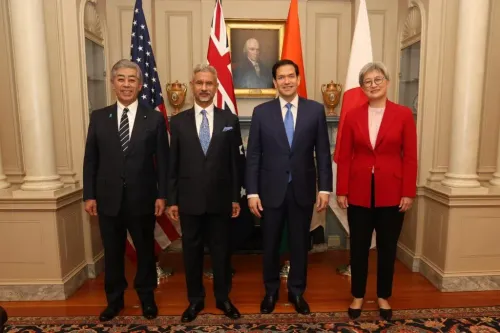
She acknowledged US Secretary Rubio and Japan’s Minister Motegi for their Quad leadership.
Wong described the Indo-Pacific as facing “accelerating contest, a deteriorating strategic environment and acute economic stress.”
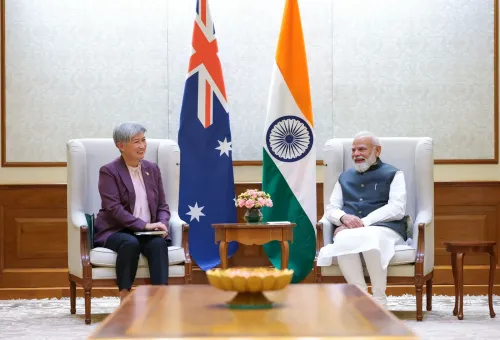
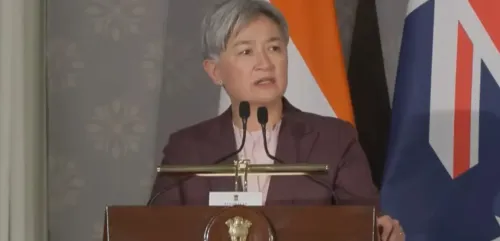
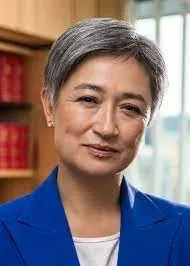
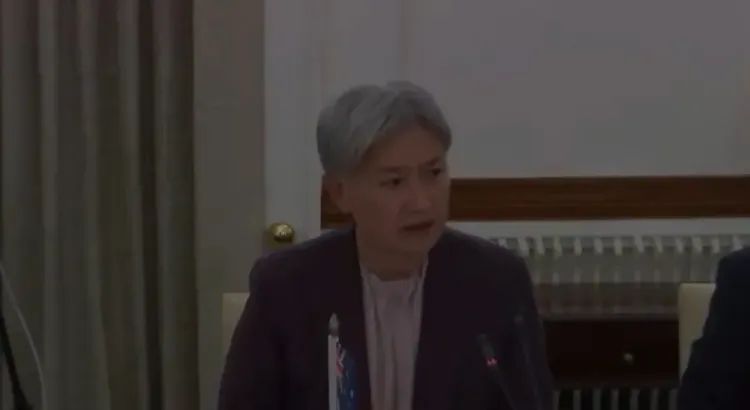
Australian Foreign Minister Penny Wong on Tuesday, 26 May declared that all four Quad nations are united in their determination to make the grouping “as strong and as effective” as possible, with a shared commitment to a free, open, peaceful, stable and prosperous Indo-Pacific. Wong made the remarks during her opening address at the Quad Foreign Ministers’ Meeting held in New Delhi.
Wong’s Opening Remarks
“We are four sovereign nations. We have our own histories, our own interests, but there is great alignment between our interests, and we all share a vision for the Indo-Pacific,” Wong said. She emphasised that each member brings “unique perspective, experiences and strengths” to the partnership. The grouping, she noted, has already delivered “concrete results” — from disaster response after the earthquake in Myanmar and the landslide in Papua New Guinea, to cooperation on critical infrastructure, undersea cables, maritime security, and critical minerals.
Acknowledgements and Diplomatic Tone
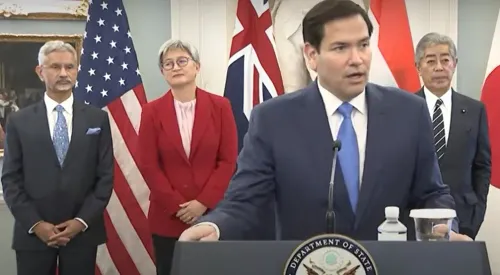
Wong praised India’s centrality to the Indo-Pacific, describing the country as “the world’s largest democracy and a power that is so important in the shaping of the Indo-Pacific and the world.” She also acknowledged US Secretary of State Marco Rubio, noting that his “very first meeting after you were sworn-in” was a Quad session, and credited Japanese Minister Motegi as “one of the original Quad ministers” for his long-standing leadership.
Jaishankar’s 'Freedom of Choice' Framework
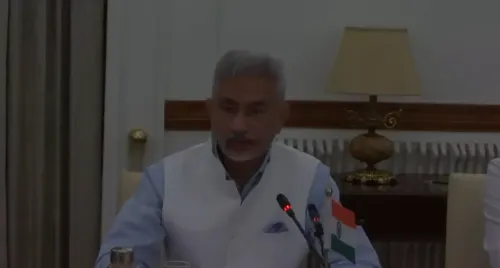
Wong specifically recalled a remark made by External Affairs Minister S. Jaishankar at an earlier Quad meeting in Washington in 2025, centred on the idea of “choices” — ensuring that Indo-Pacific nations retain “the freedom of choice on their security and on their sovereign interests” as well as on development. “That is central to how Australia approaches our engagement in the Quad,” she said.
Strategic Context: A Region Under Pressure
Wong did not shy away from the broader strategic environment. “I think we all understand we meet today with a region that is under pressure, accelerating contest, a deteriorating strategic environment and acute economic stress,” she said. The remarks signal that the Quad’s agenda has expanded well beyond its original maritime security remit, now encompassing economic resilience and critical technology supply chains. This comes amid heightened tensions in the South China Sea and ongoing debates over regional multilateral architecture.
What Comes Next
The New Delhi ministerial is expected to set the agenda for the next leaders-level Quad Summit. Outcomes on critical minerals cooperation and undersea cable security are being closely watched by regional partners. Australia’s active posture at the meeting underscores Canberra’s intent to deepen its Indo-Pacific footprint as strategic competition intensifies.
Point of View
A framing that implicitly counters Beijing’s sphere-of-influence doctrine without naming it. The acknowledgement of Rubio’s early Quad engagement also suggests Canberra is working to lock Washington into the grouping before any potential US strategic pivot. What mainstream coverage underplays is that the Quad’s expansion into critical minerals and undersea cables means it is now as much an economic security architecture as a defence one — a shift with significant implications for how smaller Indo-Pacific nations choose alignment.
NationPress
11 Oct 2026
Frequently Asked Questions
What did Australian FM Penny Wong say at the Quad Foreign Ministers’ Meeting?
Penny Wong said all four Quad nations are committed to making the grouping “as strong and as effective as we can make it,” focused on delivering concrete results in the Indo-Pacific. She spoke at the Quad Foreign Ministers’ Meeting in New Delhi on 26 May 2025.
What has the Quad delivered so far, according to Wong?
Wong cited disaster response after the earthquake in Myanmar and the landslide in Papua New Guinea, as well as cooperation on critical infrastructure, undersea cables, maritime security, and critical minerals as concrete Quad achievements.
What is the ‘freedom of choice’ principle Wong referenced?
It is a framework articulated by External Affairs Minister S. Jaishankar at an earlier Quad meeting in Washington in 2025, centring on ensuring Indo-Pacific nations retain the freedom to make their own choices on security, sovereign interests, and development without coercion.
Who else spoke at the Quad Foreign Ministers’ Meeting in New Delhi?
The meeting included US Secretary of State Marco Rubio and Japan’s Minister Motegi, both of whom Wong acknowledged for their Quad leadership. EAM S. Jaishankar hosted the meeting in New Delhi.
Why does the Quad matter in the current strategic environment?
Wong described the Indo-Pacific as facing ‘accelerating contest, a deteriorating strategic environment and acute economic stress,’ making the Quad’s role in preserving a free and open regional order more critical than ever.