Quad ministers meet in Atlanta for 3rd time in 2026, advance Indo-Pacific agenda
Synopsis
The Quad held its third foreign ministers' meeting in six months — this time in Atlanta, on the sidelines of the G20 — with supply chains, critical minerals, and Indo-Pacific maritime security all on the table. The pace of engagement signals the grouping is laying concrete groundwork for a leaders' summit, moving well beyond symbolic diplomacy.
Key Takeaways
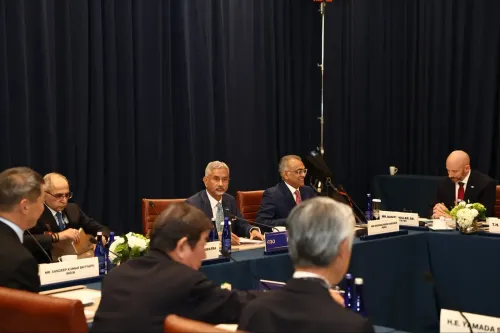
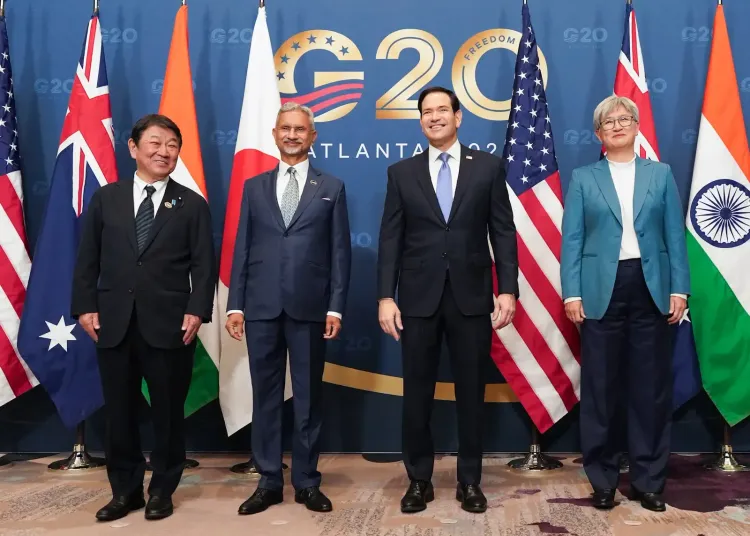
The Quad held its third ministerial meeting of 2026 in Atlanta on 31 October , on the sidelines of the G20 Foreign Ministers' Meeting .
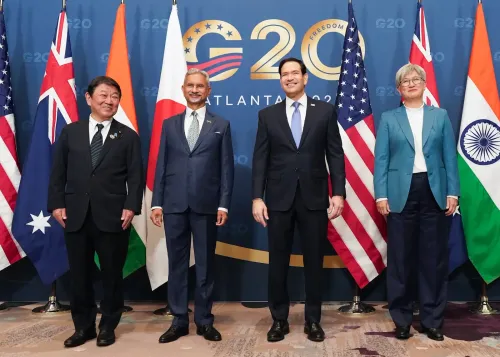
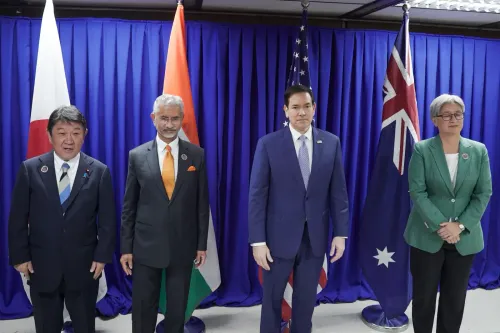
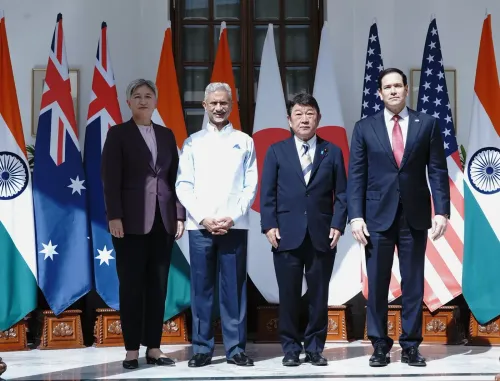
US Secretary of State Marco Rubio hosted EAM S.
Jaishankar , Japanese FM Toshimitsu Motegi , and Australian FM Penny Wong .
The four ministers focused on supply chains, critical minerals, maritime cooperation, and next-generation technologies.
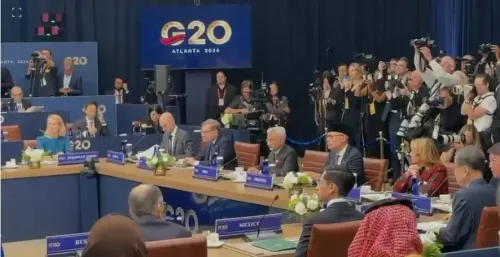
Rubio separately flagged the Strait of Hormuz and Bab al-Mandeb Strait as trade routes requiring protection at the G20 closing session.
The meeting is expected to lay groundwork for a Quad leaders' summit ; no date has been set.
EAM Jaishankar travels next to Antigua and Barbuda for the Commonwealth Heads of Government Meeting from 1–4 November .
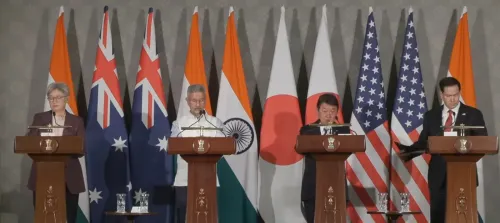
The foreign ministers of India, the United States, Japan, and Australia convened in Atlanta on Saturday, 31 October 2026 for the Quad's third ministerial meeting this year, reviewing concrete progress on supply chains, critical minerals, maritime cooperation, and next-generation technologies. The gathering, hosted on the sidelines of the G20 Foreign Ministers' Meeting, underscores the grouping's accelerating diplomatic tempo — three ministerials in under six months.
Who Attended and Who Hosted
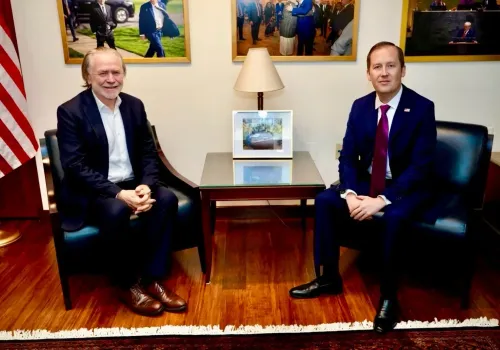
US Secretary of State Marco Rubio hosted the session, welcoming External Affairs Minister (EAM) S. Jaishankar, Japanese Foreign Minister Toshimitsu Motegi, and Australian Foreign Minister Penny Wong. US Ambassador to India Sergio Gor was also present in Atlanta, describing the gathering as a clear marker of Washington's commitment to the Quad framework.
'The Quad is very important to the United States. It's very important that we communicate on a regular basis with our partners — with India, of course, with Japan, and Australia,' Gor told reporters just before the meeting. He noted that the three ministerials this year followed earlier sessions in New Delhi and Manila.
What the Four Ministers Agreed On
In a post on X after the talks, Rubio said he was 'pleased to meet with my Quad counterparts in Atlanta and discuss the real progress we have made in turning our shared priorities into real benefits for the Indo-Pacific.' He highlighted four pillars of ongoing cooperation: building reliable and open supply chains, supporting next-generation technologies, increasing maritime cooperation, and securing critical minerals.
Japan's Ministry of Foreign Affairs said Motegi described the meeting as 'a meaningful opportunity to demonstrate the outcomes of practical cooperation, particularly including in the economic field.' The four ministers, according to the Japanese ministry, 'reaffirmed that they would steadily advance concrete cooperation among the Quad toward the realization of a Free and Open Indo-Pacific (FOIP).'
Supply Chains and Critical Minerals at G20 Too
The supply chain agenda carried directly into the broader G20 closing session. Rubio said he made clear to G20 partners that 'secure supply chains are essential for growth,' and specifically flagged the Strait of Hormuz and Bab al-Mandeb Strait as critical trade routes that 'must remain secure and open to commerce.' He also stressed the need to 'strengthen and expand critical mineral supply chains to protect our future' — a concern that aligns with the Quad's Indo-Pacific economic security posture.
Notably, the critical minerals agenda reflects a broader strategic competition, with Quad members seeking to reduce dependence on single-source supply chains for materials essential to semiconductors, batteries, and defence applications.
What Comes Next
The Atlanta ministerial is expected to help lay the groundwork for a Quad leaders' summit, though no date has been announced. EAM Jaishankar is set to travel from Atlanta to Antigua and Barbuda for the Commonwealth Heads of Government Meeting from 1 to 4 November, keeping up a punishing diplomatic schedule in the final days of October and early November. The frequency of Quad ministerials in 2026 signals that the grouping is moving from vision-setting to operational delivery ahead of a potential summit.
Point of View
And the Atlanta meeting makes clear the Quad is hardening from a consultative forum into an operational grouping with economic security at its core. The critical minerals focus is the sharpest edge: it is implicitly a counter to Chinese supply-chain dominance in materials critical to defence and semiconductors. What mainstream coverage understates is the G20 platform Rubio used to push the same agenda publicly — linking Quad priorities to multilateral legitimacy. The real test will come at the leaders' summit: whether the 'practical cooperation' Motegi referenced translates into binding procurement arrangements or remains aspirational language.
NationPress
31 Oct 2026
Frequently Asked Questions
What was discussed at the Quad ministerial meeting in Atlanta?
The four Quad foreign ministers — from India, the US, Japan, and Australia — reviewed progress on building reliable supply chains, securing critical minerals, expanding maritime cooperation, and advancing next-generation technologies. The meeting also reaffirmed shared commitment to a Free and Open Indo-Pacific.
How many times have Quad foreign ministers met in 2026?
The Atlanta meeting on 31 October 2026 was the third Quad ministerial this year, following earlier sessions in New Delhi and Manila. US Ambassador to India Sergio Gor described the frequency as a mark of Washington's commitment to the grouping.
Why are supply chains and critical minerals central to the Quad agenda?
Quad members are seeking to reduce reliance on single-source supply chains for materials — such as lithium, cobalt, and rare earths — vital to semiconductors, batteries, and defence. Securing these supply chains is seen as essential to the Indo-Pacific's long-term economic and strategic resilience.
What comes next after the Atlanta Quad ministerial?
The Atlanta meeting is expected to help lay the groundwork for a Quad leaders' summit, though no date has been confirmed. EAM Jaishankar travels next to Antigua and Barbuda for the Commonwealth Heads of Government Meeting from 1 to 4 November.
Who hosted the Quad ministerial meeting in Atlanta?
US Secretary of State Marco Rubio hosted the meeting on the sidelines of the G20 Foreign Ministers' Meeting in Atlanta on 31 October 2026, bringing together EAM S. Jaishankar, Japanese FM Toshimitsu Motegi, and Australian FM Penny Wong.