Jaishankar at Quad Atlanta meet: freedom of choice, supply chains top agenda
Synopsis
At the third Quad ministerial of 2026 in Atlanta, Jaishankar pushed for freedom of choice in the Indo-Pacific, supply chain resilience, and action against non-market practices — while the group committed over $85 million in AI assistance and $10 million for critical mineral recovery. The call for a 'more contemporary' Quad agenda signals a deliberate evolution beyond its original security-only mandate.
Key Takeaways
EAM S Jaishankar attended the Quad Foreign Ministers' Meeting in Atlanta on 31 October 2026 , the third such ministerial this year.
Jaishankar raised freedom of choice , supply chain resilience , and countering non-market practices as India's core Indo-Pacific priorities.
Quad ministers committed more than $85 million to expand trusted AI access across the Indo-Pacific via the Quad SI Accelerator .
The US pledged $10 million to support critical mineral recovery from e-waste in India and ASEAN nations.
All four nations completed a joint voyage from Chennai to Perth aboard an Indian Coast Guard vessel; first joint exercise planned at Sea Dragon 2027 .
The first Quad Business Leaders' Forum was announced to deepen commercial ties.
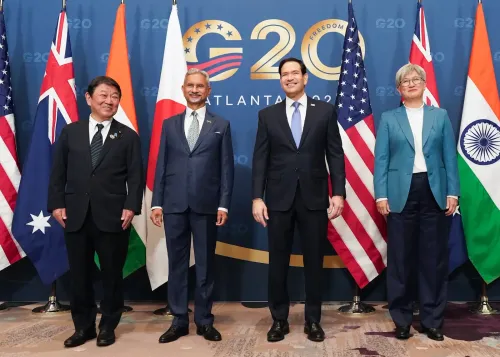
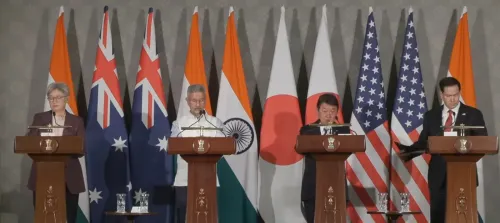
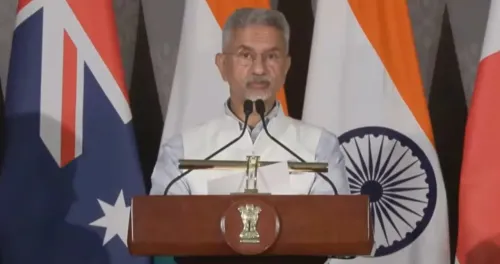
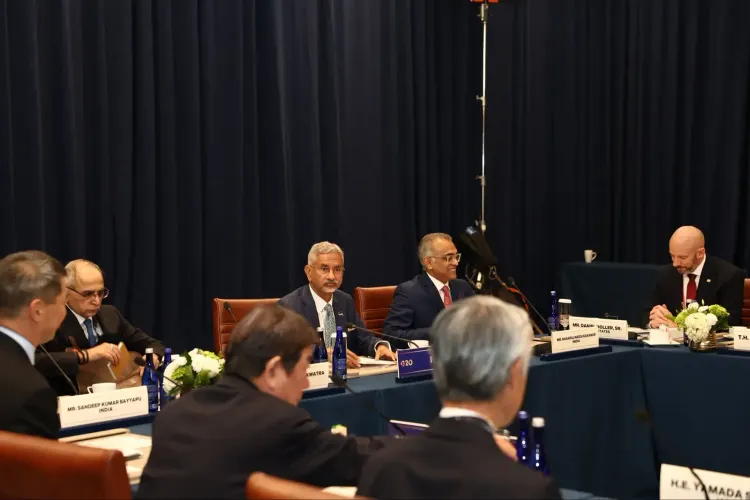
External Affairs Minister S Jaishankar on Saturday, 31 October 2026, set out India's priorities at the Quad Foreign Ministers' Meeting in Atlanta, emphasising freedom of choice in the Indo-Pacific, resilient supply chains, and coordinated action against non-market economic practices. The meeting, held on the sidelines of the G20 Foreign Ministers' Meeting, brought together Jaishankar and his counterparts from the United States, Japan and Australia for the third Quad ministerial gathering of the year.
Key Priorities Jaishankar Raised
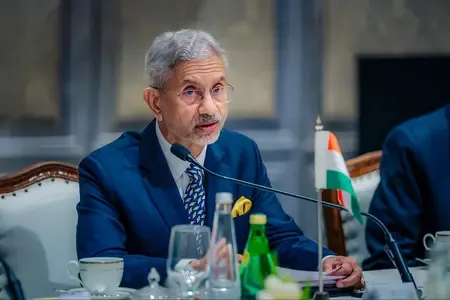
In a post on X following the meeting, Jaishankar outlined the issues he raised with US Secretary of State Marco Rubio, Japanese Foreign Minister Toshimitsu Motegi, and Australian Foreign Minister Penny Wong. He described the Quad's continuing commitments as 'Maintaining stability, driving prosperity and ensuring freedom of choice as our continuing commitments in the Indo-Pacific.' His post did not name any specific country or identify particular practices by name.
Jaishankar stressed deeper cooperation to strengthen supply chain resilience and to ensure security in technology, critical minerals and energy. He also called for 'Countering non-market practices and increased economic stresses in the Indo-Pacific' — language widely read as directed at concerns over trade distortions in the region. On security, he underlined the need to advance agreements on counter-terrorism, maritime security and capacity building.
Joint Initiatives Announced After the Meeting
The joint release issued after the Atlanta talks outlined several concrete commitments. The four ministers expressed their intention to provide more than $85 million in technical and financial assistance to expand access to trusted artificial intelligence across the Indo-Pacific, including through the Quad SI Accelerator. The release used the term 'Super Intelligence', explaining in a footnote that it refers to artificial intelligence in India, Australia and Japan.
The ministers also welcomed a US commitment of $10 million to promote facilities in India and ASEAN countries that recover critical minerals from discarded electronics and scrap, aimed at reducing dependence on any single supplier. The funding was not earmarked solely for India. The partners also announced they would explore simpler cross-border procedures for recyclable materials.
Maritime Cooperation and Security Moves
On the maritime front, representatives of all four Quad nations completed a joint voyage aboard an Indian Coast Guard offshore patrol vessel from Chennai to Perth between 25 September and 7 October. The partners plan their first exercise under the Indo-Pacific Maritime Surveillance Collaboration initiative at Sea Dragon 2027 and announced a maritime domain awareness symposium for early next year.
The ministers also committed to dismantling online scam operations and holding transnational criminal groups accountable, condemning networks that traffic people and force them into fraud operations targeting civilians.
Business and Diplomatic Backdrop
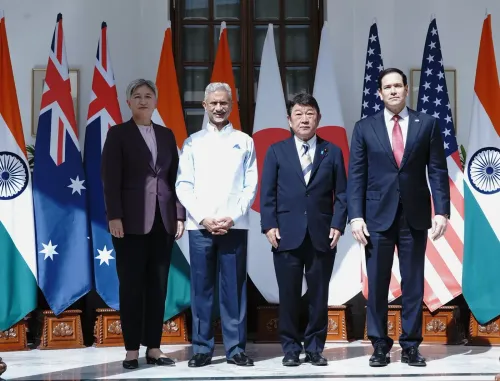
The Atlanta meeting also saw the announcement of the first Quad Business Leaders' Forum, aimed at strengthening commercial ties and promoting deals in key sectors. Notably, this was the third Quad ministerial of 2026, following earlier gatherings in New Delhi and Manila. The Quad — comprising India, the United States, Japan and Australia — covers maritime and transnational security, economic prosperity, critical and emerging technologies, and humanitarian assistance. Jaishankar's call for 'a more contemporary QUAD agenda with a practical approach' signals that member states are seeking to evolve the grouping's mandate beyond its original security-centric framing.
Point of View
And whether the AI initiative reaches beyond well-connected partners, will determine whether this Atlanta meeting is remembered as a turning point or another well-worded communiqué.
NationPress
31 Oct 2026
Frequently Asked Questions
What did EAM Jaishankar say at the Quad Foreign Ministers' Meeting in Atlanta?
Jaishankar outlined India's priorities as freedom of choice in the Indo-Pacific, stronger supply chain resilience, and countering non-market economic practices. He also called for a more contemporary and practical Quad agenda, and emphasised counter-terrorism, maritime security, and capacity building.
What is the Quad and who attended the Atlanta meeting?
The Quad is a grouping of India, the United States, Japan and Australia that cooperates on maritime security, economic prosperity, emerging technologies, and humanitarian assistance. The Atlanta meeting brought together Jaishankar, US Secretary of State Marco Rubio, Japanese Foreign Minister Toshimitsu Motegi, and Australian Foreign Minister Penny Wong.
What was the $85 million AI commitment announced at the Quad meeting?
The four Quad ministers announced an intention to provide more than $85 million in technical and financial assistance to expand access to trusted artificial intelligence across the Indo-Pacific, including through the Quad SI Accelerator. The term 'Super Intelligence' used in the release refers to AI as applied in India, Australia and Japan.
What maritime cooperation steps did the Quad announce?
Representatives of all four nations completed a joint voyage from Chennai to Perth aboard an Indian Coast Guard offshore patrol vessel between 25 September and 7 October 2026. The group also announced its first joint exercise under the Indo-Pacific Maritime Surveillance Collaboration at Sea Dragon 2027 and a maritime domain awareness symposium for early next year.
How does the Atlanta meeting fit into the broader Quad calendar?
The Atlanta meeting was the third Quad Foreign Ministers' gathering of 2026, following earlier sessions in New Delhi and Manila. It was held on the sidelines of the G20 Foreign Ministers' Meeting, reflecting the Quad's increasing integration with broader multilateral diplomacy.