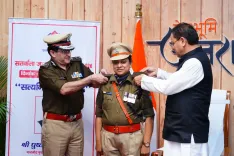
President Murmu flags off Nashik Simhastha Kumbh 2027 with CM Fadnavis
Synopsis
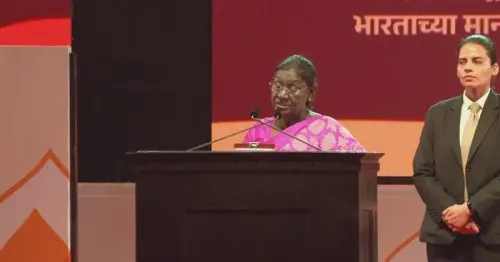
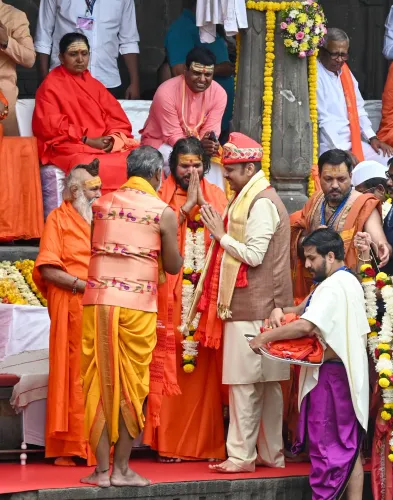
President Draupadi Murmu performed the ritual flag-pole worship on 1 November 2026 to formally launch the Nashik-Trimbakeshwar Simhastha Kumbh Mela 2027 cycle, with Chief Minister Devendra Fadnavis in attendance, setting the state's largest cultural-administrative exercise in motion.
Key Takeaways
President Draupadi Murmu performed the dhwaj puja (flag and flag-pole worship) on 1 November 2026 , formally inaugurating the Simhastha Kumbh Mela 2027 preparations.
Chief Minister Devendra Fadnavis attended the ceremony, signalling the Maharashtra government's top-level commitment to the 2027 mela.
The Nashik-Trimbakeshwar Simhastha Kumbh Mela is held once every 12 years ; the previous edition was in 2015 .
Nashik and Trimbakeshwar are among the four sacred Kumbh Mela sites in India, drawing tens of millions of pilgrims at their peak.
The ceremony marks the start of a multi-year infrastructure and logistics build-up — roads, ghats, sanitation and security — ahead of the 2027 mela.
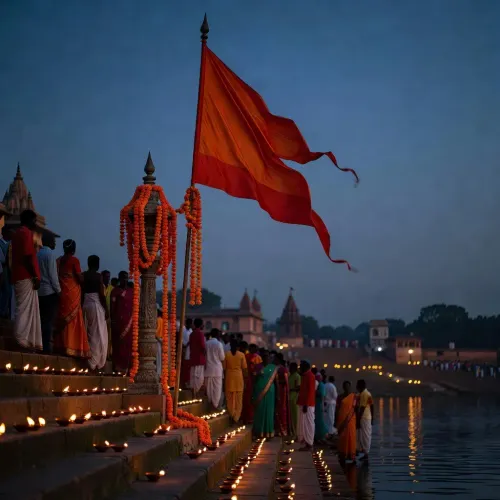
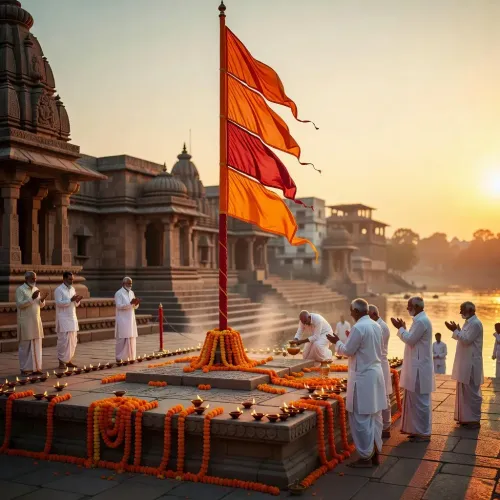
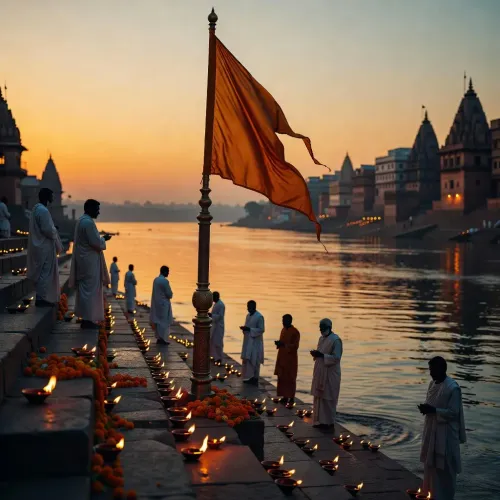
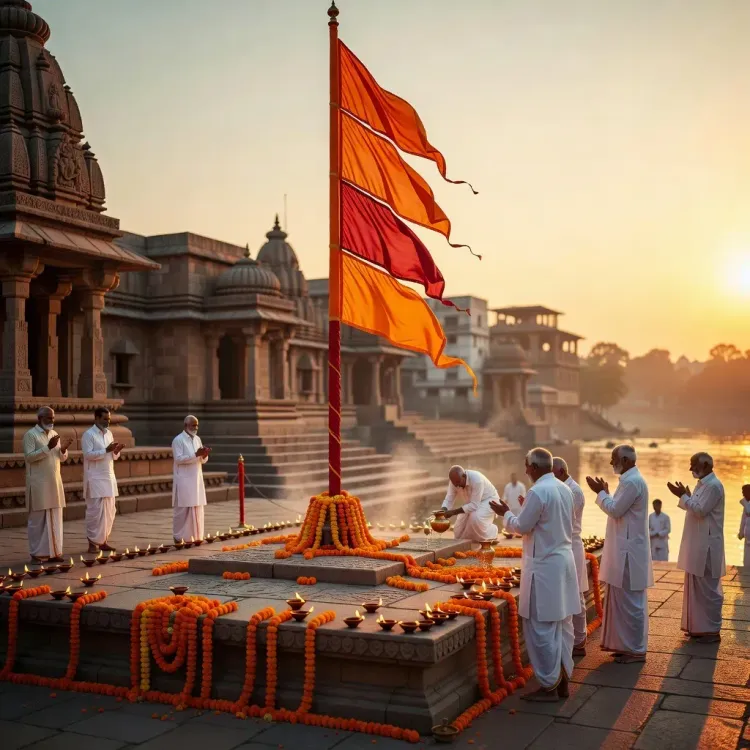
A sacred flag and its consecrated pole — simple objects, but ones that set in motion preparations for one of the largest human gatherings on earth. On Saturday, 1 November 2026, President Draupadi Murmu performed the ritual worship of the dhwajastambha (flag-pole) and the sacred flag marking the formal commencement of preparations for the Nashik-Trimbakeshwar Simhastha Kumbh Mela 2027, with Chief Minister Devendra Fadnavis in attendance — a moment that officially opens the clock on Maharashtra's most ambitious cultural and administrative undertaking of the decade.
What the flag-worship ceremony signals
The dhwaj puja is not merely ceremonial. In the tradition of the Kumbh Mela, the hoisting and consecration of the sacred flag at Trimbakeshwar — one of the twelve Jyotirlingas — is the ritual trigger that formally inaugurates the mela cycle. By inviting the President of India to preside over this rite, the Maharashtra government has underscored the national significance of an event that, at its peak, draws tens of millions of pilgrims to the banks of the Godavari in Nashik and at the source of the river in Trimbakeshwar.
President Murmu, who took office in July 2022 as India's first President from a tribal community, lent constitutional weight to the occasion. Her presence signals a convergence of state religious tradition and the highest office of the Republic — a combination Maharashtra has carefully choreographed.
Every 12 years: the Nashik edition's scale and history
The Simhastha Kumbh Mela rotates among four sites — Prayagraj, Haridwar, Ujjain, and Nashik-Trimbakeshwar — each hosting the mela once every twelve years when planetary alignments meet specific astrological conditions. The last Nashik edition was held in 2015, when the state government coordinated extensive infrastructure, crowd management, and security operations across the twin towns.
2027 will be the next iteration, and the gap between today's flag ceremony and the mela itself is precisely the window the administration needs to build temporary townships, reinforce ghats, expand roads, and deploy sanitation networks at a scale that few events in the world demand. The Nashik-Trimbakeshwar corridor transforms, for weeks, into one of the densest concentrations of humanity on the planet.
Fadnavis and the state's administrative commitment
Chief Minister Devendra Fadnavis, who previously oversaw state affairs from 2014 to 2019 and returned to office in 2023, has presided over Nashik's Kumbh legacy before — the 2015 mela fell within his first term. His presence at the flag ceremony alongside the President frames the 2027 edition as a top-priority state project. Budget allocations, infrastructure tenders, and security frameworks are the immediate next milestones that planners and pilgrims alike will watch for.
For Maharashtra, the Simhastha is not just a religious event — it is a test of governance at civilisational scale, and the flag raised today is as much an administrative starting gun as it is a sacred one.
Point of View
Not merely a regional one. For CM Fadnavis, who was in office during the 2015 edition, this is also a continuity narrative: positioning his administration as the custodian of a recurring civilisational moment. Kumbh Melas have increasingly become arenas where state capacity is on public display, and early ceremonial investment — especially at the presidential level — sets expectations for the infrastructure spend and governance ambition that must follow.
NationPress
1 Nov 2026
Frequently Asked Questions
What is the Nashik-Trimbakeshwar Simhastha Kumbh Mela?
It is one of the four major Kumbh Mela sites in India, held at Nashik and Trimbakeshwar in Maharashtra once every 12 years, drawing millions of Hindu pilgrims to the banks of the Godavari river and the Trimbakeshwar Jyotirlinga.
When is the next Nashik Simhastha Kumbh Mela?
The next Nashik-Trimbakeshwar Simhastha Kumbh Mela is scheduled for 2027. The previous edition was held in 2015.
What happened at the Simhastha Kumbh Mela 2027 flag ceremony on 1 November 2026?
President Draupadi Murmu performed the ritual worship of the sacred flag-pole and flag (dhwaj puja) at Trimbakeshwar, formally marking the start of preparations for the 2027 mela, with Chief Minister Devendra Fadnavis in attendance.
Why is President Draupadi Murmu involved in the Kumbh Mela preparations?
The Maharashtra government invited the President to preside over the inaugural flag-worship ceremony to underscore the national significance of the event and give it constitutional prominence beyond a state-level religious occasion.
What infrastructure work is expected ahead of Nashik Kumbh Mela 2027?
State governments typically undertake road upgrades, ghat reinforcement, temporary township construction, sanitation network expansion, and large-scale security deployment in the years leading up to a Kumbh Mela. Budget allocations and tender announcements for these works are expected to follow the ceremonial launch.