India's extreme poverty fell from 27.1% to 2.6% since 2011, World Bank finds
Synopsis
The World Bank's latest India brief delivers a striking headline: extreme poverty has fallen from 27.1% to just 2.6% between 2011 and 2023, with nearly 500 million people escaping deprivation. PM Modi has cited the findings as validation of his government's welfare approach — but the same report flags persistent inequality, wage gaps and employment challenges that complicate the celebratory framing.
Key Takeaways
India's extreme poverty rate fell from 27.1% in 2011 to 2.6% in 2023 , according to the World Bank's India Poverty and Equity Brief: October 2026 .
An estimated 496 million people moved out of poverty under the lower-middle-income threshold of $4.20 per person per day (2021 PPP).
PM Narendra Modi shared the findings on Instagram on 1 November 2026 , calling it 'a historic fall in poverty.' The World Bank described India's pace of poverty reduction as one of the fastest globally over the past decade.
The report also flagged unresolved challenges including income inequality , wage disparities , and employment gaps .
Prime Minister Narendra Modi on Saturday, 1 November 2026 highlighted India's dramatic progress in poverty reduction, sharing findings from the World Bank's India Poverty and Equity Brief: October 2026. According to the report, India's extreme poverty rate declined from 27.1% in 2011 to 2.6% in 2023 — one of the fastest such declines recorded globally.
What the World Bank Report Found
The World Bank's assessment, using an extreme poverty threshold of $3 per person per day at 2021 purchasing power parity (PPP), documents a sweeping reduction in deprivation over twelve years. Under the broader lower-middle-income poverty threshold of $4.20 per person per day (also at 2021 PPP), the report estimated that approximately 496 million people moved out of poverty during the period.
The report noted that India had made considerable progress across both monetary and non-monetary dimensions of poverty, with improvements in access to essential services and living standards underpinning the headline numbers.
What PM Modi Said
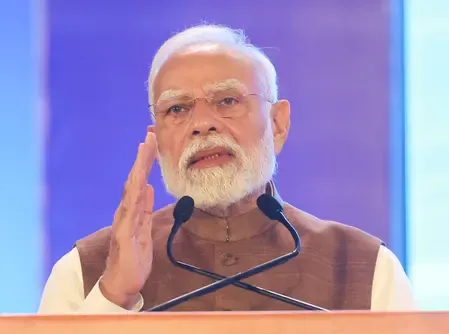
Modi shared the findings via a carousel post on Instagram, writing: 'A historic fall in poverty. A generational rise in opportunity.' One of the slides in the carousel carried the message: ''Gareebi Hatao' was never a slogan for us. It is our commitment…' The statement framed the reduction as the outcome of sustained welfare initiatives and development-focused governance.
Challenges That Remain
The World Bank's brief does not present an unqualified picture. The report flags that challenges relating to income inequality, employment, and wage disparities persist, even as headline poverty numbers have improved. Analysts note that the pace and quality of job creation, alongside the adequacy of wages at the lower end of the income spectrum, will determine whether the gains are durable.
This comes amid ongoing debate over whether economic growth has been sufficiently inclusive — a question that independent economists and opposition parties have continued to raise in the context of India's GDP expansion outpacing improvements in household consumption for certain segments.
Why the Numbers Matter
The reduction from 27.1% to 2.6% in extreme poverty over roughly a decade places India among the few large economies to achieve near-elimination of extreme deprivation in a single generation. For context, the absolute number of people living in extreme poverty fell by several hundred million, reshaping India's profile in global development metrics.
The World Bank's findings renew attention to whether economic growth is being converted into better living conditions uniformly across regions and communities — particularly for marginalised groups and informal workers. Ensuring that progress continues beyond current thresholds, and that those near the poverty line do not slip back, remains the forward challenge.
Point of View
But they need context. The extreme poverty threshold of $3 a day at 2021 PPP is a low bar — millions who have cleared it still live with significant economic precarity. The same report that Modi cited also flags income inequality, wage gaps, and employment challenges, details that were absent from the Instagram carousel. India's development story since 2011 spans two very different political administrations, and attributing the full arc of change to any single government's policies oversimplifies a complex structural shift. The harder question — whether those near the poverty line are resilient enough to stay above it — is one the headline number cannot answer.
NationPress
1 Nov 2026
Frequently Asked Questions
What did the World Bank report say about poverty in India?
The World Bank's India Poverty and Equity Brief for October 2026 found that India's extreme poverty rate fell from 27.1% in 2011 to 2.6% in 2023, using a threshold of $3 per person per day at 2021 purchasing power parity. Approximately 496 million people moved out of poverty under the broader lower-middle-income threshold of $4.20 per day.
Why did PM Modi share the World Bank poverty report?
PM Modi shared a carousel of findings from the report on Instagram on 1 November 2026, describing the decline in extreme poverty as a historic achievement and attributing it to his government's sustained welfare and development initiatives. He wrote: 'A historic fall in poverty. A generational rise in opportunity.'
How does India's poverty reduction compare globally?
The World Bank described India's pace of poverty reduction over the past decade as one of the fastest recorded globally. The fall from 27.1% to 2.6% in extreme poverty over roughly twelve years is exceptional among large economies.
Does the World Bank report raise any concerns?
Yes. While noting significant progress, the report flags that challenges relating to income inequality, employment, and wage disparities persist in India. It underscores that continued growth must translate into better living conditions for all sections of society, including marginalised communities and informal workers.
What poverty thresholds did the World Bank use for India?
The report used two thresholds, both measured at 2021 purchasing power parity: an extreme poverty line of $3 per person per day, and a lower-middle-income poverty line of $4.20 per person per day. The 2.6% figure corresponds to the stricter extreme poverty threshold.