CM Fadnavis Hails ISRO's GSLV-F18 Launch of NVS-03 Satellite
Synopsis
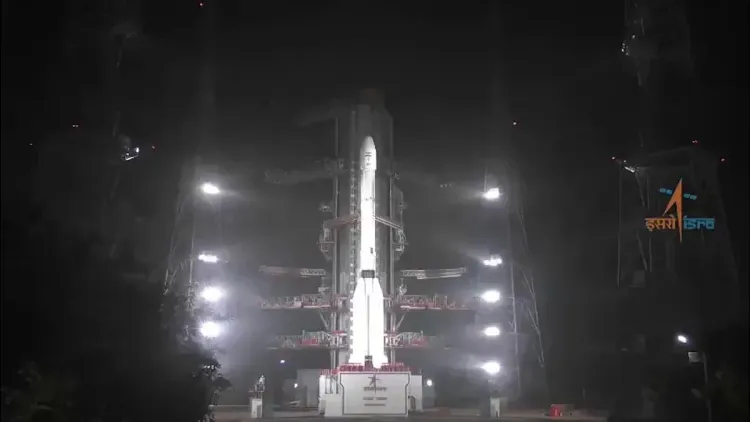
Maharashtra CM Devendra Fadnavis congratulated ISRO on successfully launching GSLV-F18 with NVS-03, a second-generation NavIC satellite featuring indigenous atomic clocks, marking a fresh step in India's push for sovereign space-based navigation capability.
Key Takeaways
GSLV-F18 successfully carried the NVS-03 satellite to orbit, furthering India's NavIC navigation constellation.
NVS-03 belongs to the second-generation NVS series , which began with NVS-01 in 2023 and incorporates indigenous atomic clocks .
India's NavIC system has been operational since 2018 , covering the subcontinent and roughly 1,500 km beyond India's borders .
The programme traces back to IRNSS-1A (2013) , launched to eliminate dependence on foreign GPS constellations for positioning over Indian territory.
Defence forces, civilian infrastructure, and maritime users all depend on NavIC's regional navigation signals.
CM Fadnavis framed the launch within the Aatmanirbhar Bharat narrative, highlighting ISRO's role in India's strategic self-reliance in space technology.
India's homegrown navigation ambitions just cleared another orbital hurdle. Maharashtra Chief Minister Devendra Fadnavis congratulated ISRO scientists and engineers on the successful launch of GSLV-F18 carrying the NVS-03 satellite, calling it 'another milestone in advancing India's indigenous navigation capabilities and strengthening self-reliance in space technology.'
NVS-03 and the second-generation NavIC upgrade
NVS-03 is the third satellite in the NVS (Navigation with Indian Constellation) second-generation series, which began with NVS-01 in 2023. The NVS series carries a critical upgrade over the original constellation: indigenous atomic clocks, replacing components that had previously been sourced from abroad. That single detail matters enormously — atomic clocks are the heartbeat of any navigation system, and mastering them domestically closes one of the last significant import dependencies in the NavIC programme.
The broader NavIC constellation provides positioning and timing services across the Indian subcontinent and roughly 1,500 km beyond its borders, covering a region that includes vital maritime routes and land borders. Defence forces, fishermen, disaster-response agencies, and civilian mapping services all sit within its service envelope.
From IRNSS-1A in 2013 to a sovereign navigation grid
India's journey to an independent satellite navigation system is over a decade old. The Indian Regional Navigation Satellite System (IRNSS) programme kicked off with IRNSS-1A in 2013, driven by a clear strategic logic: never again be dependent on a foreign power's GPS constellation — which can be selectively degraded or denied — for precision positioning over Indian territory. The full seven-satellite constellation was declared operational in 2018, and the system was rebranded NavIC.
The NVS series now represents the second act — a quieter but arguably more important chapter, because sustaining and upgrading a constellation is harder than building the first one. Each GSLV launch for an NVS satellite is a vote of confidence in both ISRO's launch-vehicle reliability and the agency's growing component-manufacturing depth.
Fadnavis's congratulations in a larger political frame
CM Fadnavis's post, tagged @ISRO, #NavIC, and #GSLVF18, reflects a consistent BJP-government messaging pattern of amplifying space achievements as proof of 'Aatmanirbhar Bharat' (self-reliant India) in strategic technology. The framing — 'make our nation proud on the global stage' — positions NavIC not merely as a technical exercise but as a sovereignty statement.
What makes NavIC genuinely consequential beyond the political narrative is adoption. With NavIC chips now mandated in certain device categories and the system's integration into civilian infrastructure expanding, each new satellite reinforces the signal availability and accuracy that commercial uptake demands. More satellites mean redundancy, resilience, and a stronger case for industry to embed NavIC receivers as a default rather than an afterthought.
The next test will be how quickly NVS-03's signals are certified and integrated into the operational constellation — and whether ISRO maintains the launch cadence needed to retire ageing first-generation satellites before coverage gaps open up. India's navigation grid is being rebuilt satellite by satellite. GSLV-F18 just laid one more brick.
Point of View
Yet they are what convert a proof-of-concept into a durable strategic asset. CM Fadnavis's congratulatory post slots neatly into the ruling dispensation's practice of using space milestones to reinforce the Aatmanirbhar Bharat brand, particularly where dual-use technologies — navigation signals serving both defence and civilian users — are involved. The real policy question NavIC now faces is demand-side: ISRO can sustain the constellation, but whether Indian device manufacturers and infrastructure operators standardise on NavIC signals at scale will determine whether the programme fulfils its strategic promise or remains an underused sovereign asset.
NationPress
1 Nov 2026
Frequently Asked Questions
What is NVS-03 and why was it launched?
NVS-03 is the third satellite in ISRO's second-generation NavIC series, launched aboard GSLV-F18 to upgrade and sustain India's indigenous regional satellite navigation constellation. The NVS series introduces indigenous atomic clocks, reducing dependence on foreign components.
What is NavIC and how is it different from GPS?
NavIC (Navigation with Indian Constellation) is India's own regional satellite navigation system, providing positioning and timing services over the Indian subcontinent and up to 1,500 km beyond its borders. Unlike GPS, which is operated by the United States, NavIC is fully under Indian control, giving India sovereign navigation capability.
When did India's NavIC system become operational?
NavIC was declared operational in 2018 after the completion of its initial seven-satellite constellation. The programme began with the launch of IRNSS-1A in 2013 under the Indian Regional Navigation Satellite System project.
What is the GSLV-F18 rocket?
GSLV-F18 is a mission designation for a flight of ISRO's Geosynchronous Satellite Launch Vehicle, used to carry heavier payloads — such as navigation and communication satellites — to higher orbits. GSLV has been the primary launch vehicle for the NavIC constellation's NVS series.
Why did Devendra Fadnavis congratulate ISRO for NVS-03?
As Maharashtra Chief Minister and a senior BJP leader, Devendra Fadnavis regularly acknowledges national scientific achievements. His post praised ISRO scientists for advancing India's indigenous navigation capabilities, aligning with the government's broader emphasis on self-reliance in strategic technology.