CM Fadnavis Hoists Dharmdhwaj, Launches Nashik Kumbh 2027
Synopsis
Maharashtra CM Devendra Fadnavis and President Droupadi Murmu simultaneously hoisted the Dharmdhwaj at Trimbakeshwar and Nashik on 1 November 2026, formally commencing the Nashik-Trimbakeshwar Simhastha Mahakumbh Mela 2027 — the first edition at these sites since 2015.
Key Takeaways
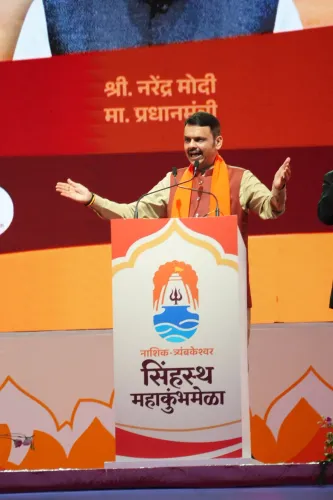
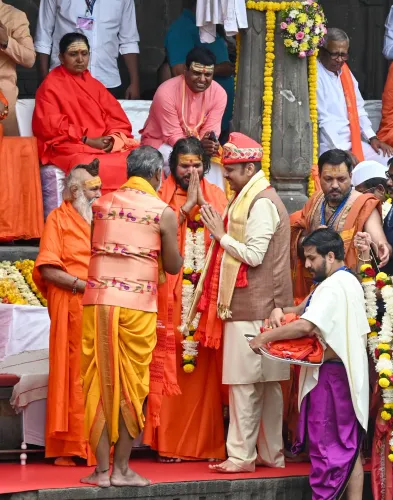
CM Devendra Fadnavis hoisted the Dharmdhwaj at Kushavart Tirtha, Trimbakeshwar on 1 November 2026 , marking the formal start of the Simhastha Mahakumbh Mela 2027.
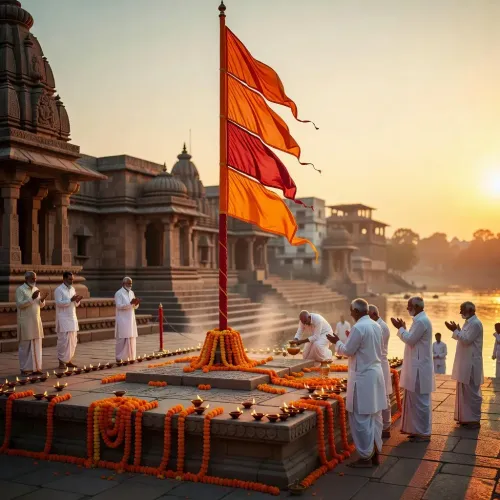
President Droupadi Murmu , joined by Governor Jishnu Dev Varma , simultaneously hoisted the Dharmdhwaj at Ramkund, Nashik .
The Nashik-Trimbakeshwar Simhastha Kumbh Mela is held every 12 years ; the previous edition was in 2015 .
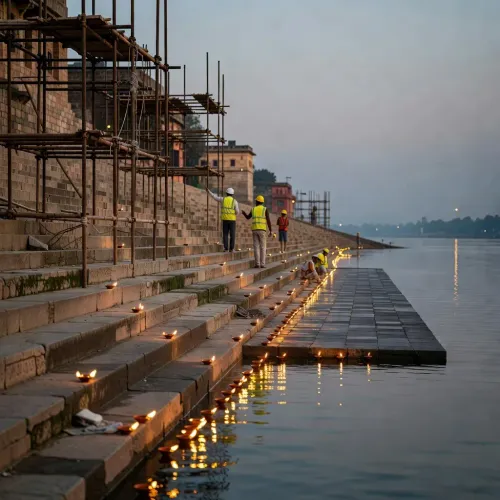
Extensive infrastructure development — covering connectivity, amenities and pilgrim facilities — is underway across both host cities ahead of 2027.
Senior leaders including Deputy CM Eknath Shinde , Deputy CM Sunetra Pawar and Minister Girish Mahajan attended the ceremonies.
The event draws tens of millions of pilgrims to the Godavari river and is one of the four major Kumbh Melas rotating across India.
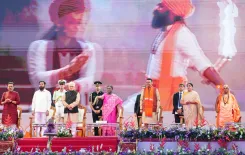
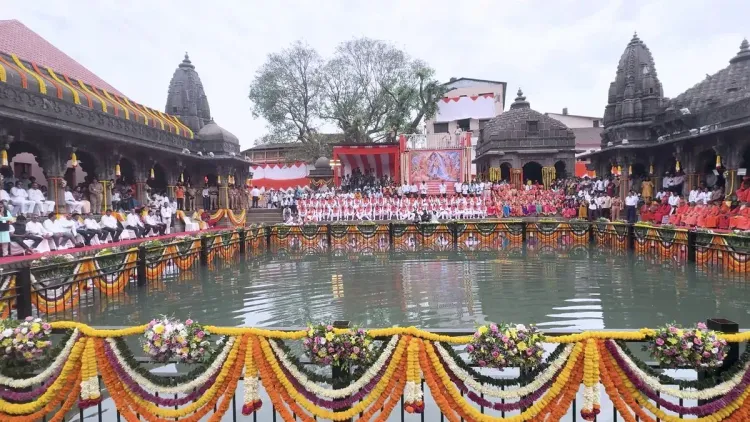
Two sacred flags rose simultaneously over Maharashtra on Sunday, 1 November 2026 — and with them, the countdown to one of the world's largest human gatherings officially began. Maharashtra Chief Minister Devendra Fadnavis hoisted the Dharmdhwaj (sacred flag) at Kushavart Tirtha, Trimbakeshwar, while President Droupadi Murmu, accompanied by Governor Jishnu Dev Varma, performed the same ceremony at Ramkund, Nashik — marking the formal commencement of the Nashik-Trimbakeshwar Simhastha Mahakumbh Mela 2027.
Two Sites, One Simultaneous Beginning
The twin-city launch was deliberate and symbolic. Nashik and Trimbakeshwar together host the Simhastha Kumbh Mela — one of the four major Kumbh Melas that rotate across India every 12 years. The last edition at these sites was held in 2015, making 2027 the long-awaited return of millions of devotees to the banks of the Godavari. Having the President of India anchor the Nashik ceremony while the Chief Minister led the Trimbakeshwar rites gave the launch a rare dual-capital weight.
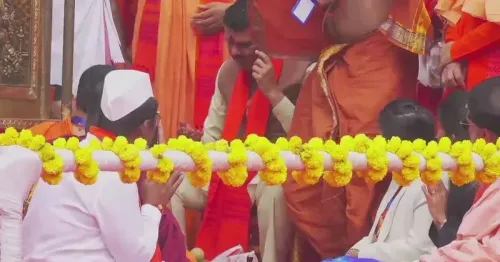
Deputy Chief Minister Eknath Shinde, Deputy CM Sunetra Pawar, Minister Girish Mahajan, MLA Hiraman Khoskar, Trimbak Municipal Council chief Trivenitai Tungar, and Sant-Mahants from various Akharas were among the dignitaries present at the ceremonies.
What the Simhastha Kumbh at Nashik-Trimbakeshwar Means
The Kumbh Mela is not merely a religious event — it is, by scale, one of the largest periodic gatherings of human beings on earth. At its peak, the Nashik-Trimbakeshwar edition draws tens of millions of pilgrims who take a holy dip in the Godavari river, particularly during the shahi snan (royal bathing) dates determined by planetary alignments. Indian state governments co-ordinate with the Centre and with the Akharas — the ancient monastic orders — to manage crowd flow, sanitation, accommodation and security across both towns.
Fadnavis framed the occasion in civilisational terms, calling the Kumbh Mela 'a powerful symbol of unity' and describing Sanatan civilisation as 'an ocean where diverse traditions, philosophies, rituals and beliefs converge like rivers.' The imagery was pointed: in a country where religious gatherings can be politically charged, the Chief Minister cast this one as a convergence, not a division.
Infrastructure Push Before the Pilgrims Arrive
With 2027 still roughly a year away, Fadnavis confirmed that 'extensive development works are underway in Nashik and Trimbakeshwar' — covering connectivity, modern amenities and pilgrim facilities. Indian state governments typically earmark significant capital budgets for Kumbh-host cities: road-widening, ghats, temporary townships, water supply and digital crowd-management systems are standard pre-Kumbh investments. The Chief Minister described these works as creating 'a lasting legacy' beyond the event itself — infrastructure that will serve the region's residents long after the last pilgrim departs.
The specific project timelines and budget allocations for the 2027 Nashik-Trimbakeshwar edition are among the key figures to watch as Maharashtra tables its upcoming state budgets.
President Murmu's Presence Raises the Occasion's National Profile
President Murmu's participation was not incidental. Having the constitutional head of state perform the ceremonial flag-hoisting at Ramkund signals the Union government's recognition of the event's national importance. It also positions the Nashik-Trimbakeshwar Simhastha 2027 alongside the Prayagraj Mahakumbh as a centrepiece of India's spiritual-tourism calendar — an increasingly deliberate strand of government policy that links pilgrimage infrastructure with economic development in tier-2 cities.
For Maharashtra, the optics are significant: a BJP Chief Minister and a President who has consistently engaged with tribal and Sanatan traditions together inaugurating the state's biggest religious event projects a unified political and constitutional endorsement rarely seen at this scale.
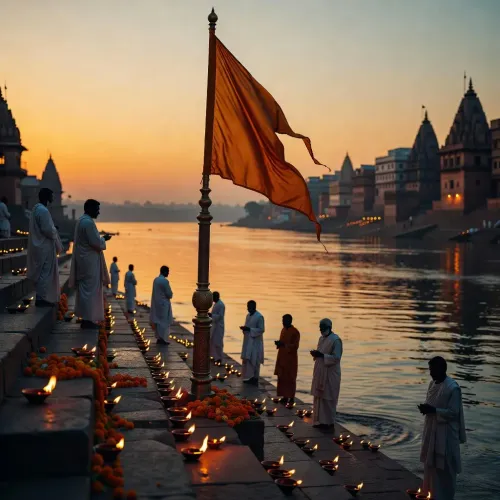
The Dharmdhwaj is now flying over both Trimbakeshwar and Nashik. The pilgrims will follow — by the millions.
Point of View
Placing it on par with the Prayagraj Mahakumbh in the government's spiritual-tourism playbook. For the BJP-led Maharashtra government, the ceremony is also a political statement — anchoring the ruling coalition's identity in Sanatan heritage ahead of the 2027 event cycle. The infrastructure narrative layered onto the religious occasion follows a now-established pattern of using pilgrimage mega-events as levers for tier-2 city development, with Nashik and Trimbakeshwar positioned as the next beneficiaries. Watchers should track whether state budget allocations match the ambition of the launch rhetoric.
NationPress
1 Nov 2026
Frequently Asked Questions
What is the Nashik-Trimbakeshwar Simhastha Mahakumbh Mela 2027?
It is one of the four major Kumbh Melas held in India, hosted at Nashik and Trimbakeshwar every 12 years. The 2027 edition follows the previous one held in 2015 and will draw millions of devotees to take a holy dip in the Godavari river.
What happened on 1 November 2026 at Nashik and Trimbakeshwar?
CM Devendra Fadnavis hoisted the Dharmdhwaj at Kushavart Tirtha, Trimbakeshwar, while President Droupadi Murmu hoisted it at Ramkund, Nashik — simultaneously marking the commencement of the Simhastha Mahakumbh Mela 2027.
When was the last Simhastha Kumbh Mela held at Nashik-Trimbakeshwar?
The previous Nashik-Trimbakeshwar Simhastha Kumbh Mela was held in 2015, making 2027 the next edition in the 12-year cycle.
What infrastructure work is planned for Nashik and Trimbakeshwar for Kumbh 2027?
CM Fadnavis stated that extensive development works covering connectivity, modern amenities and pilgrim facilities are underway in both cities, though specific project budgets and timelines are yet to be officially detailed.
Who attended the Simhastha Kumbh 2027 commencement ceremony?
Key attendees included President Droupadi Murmu, Governor Jishnu Dev Varma, Deputy CMs Eknath Shinde and Sunetra Pawar, Minister Girish Mahajan, MLA Hiraman Khoskar, Trimbak Municipal Council chief Trivenitai Tungar, and Sant-Mahants from various Akharas.