CM Fadnavis, President Murmu Launch Nashik Kumbh 2027
Synopsis
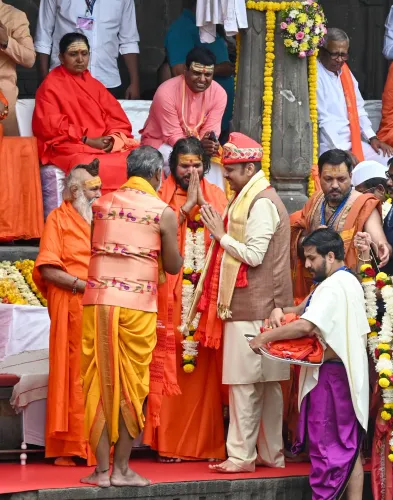
President Draupadi Murmu and CM Devendra Fadnavis simultaneously hoisted the sacred flag at Nashik and Trimbakeshwar on November 1, 2026, formally inaugurating the Nashik-Trimbakeshwar Simhastha Mahakumbh Mela 2027. A record-setting Goda Mahaaarti featuring 6,233 tribal participants was registered in the Guinness World Records.
Key Takeaways
Simhastha Mahakumbh Mela 2027 was formally inaugurated on November 1, 2026 with simultaneous flag-hoisting at Ramkund, Nashik and Kushavart Tirth, Trimbakeshwar .
President Draupadi Murmu led the Goda Mahaaarti at Ramtirth and visited Shri Trimbakeshwar Jyotirlinga temple .
6,233 tribal men and women from 650 villages participated in the Goda Mahaaarti, with the event claimed to have been registered in the Guinness World Records .
CM Devendra Fadnavis pledged major infrastructure upgrades for Nashik and Trimbakeshwar ahead of the 2027 Mela.
The previous Nashik-Trimbakeshwar Simhastha Kumbh was held in 2015 ; the event follows a 12-year cycle among four sacred sites.
Governor Jishnu Dev Varma , Deputy CMs Eknath Shinde and Sunetra Ajit Pawar , Shankaracharya of Sringeri Peetha , and saints from various akharas attended the ceremony.
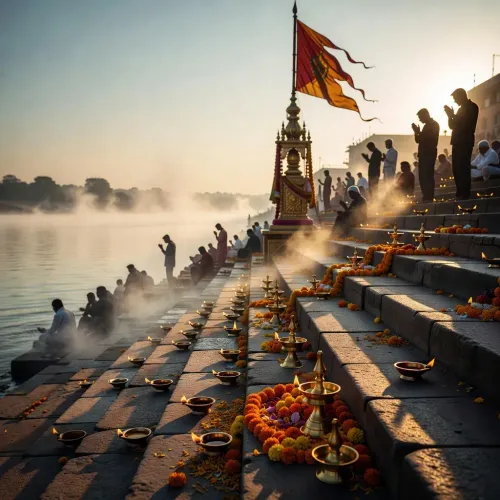
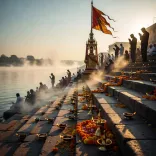
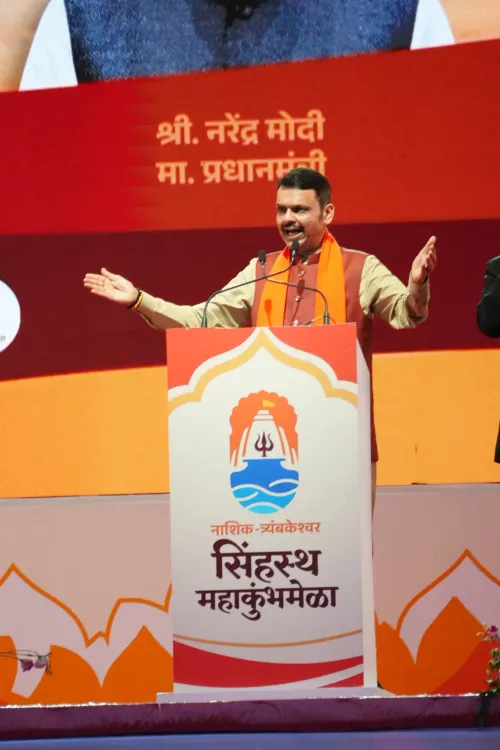
On the banks of the Godavari — a river Hindus have revered for millennia — India's highest constitutional authority and Maharashtra's chief minister raised the sacred flag in unison, formally setting the clock ticking on one of the world's most extraordinary human gatherings. The Chief Minister's Office of Maharashtra announced on Sunday, November 1, 2026, that the Nashik-Trimbakeshwar Simhastha Mahakumbh Mela 2027 was officially inaugurated through simultaneous flag-hoisting ceremonies at two holy sites.
Two sites, one moment — the inauguration unfolds
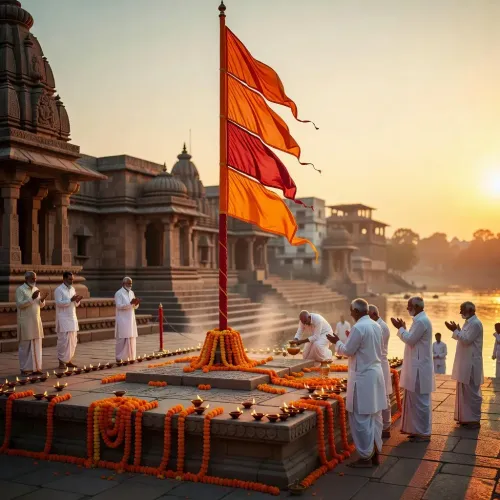
President Draupadi Murmu performed the flag worship and hoisting at Ramkund, Nashik, while Chief Minister Devendra Fadnavis conducted the same rituals at Kushavart Tirth, Trimbakeshwar — both at the same auspicious shubhmuhurt (auspicious moment). The CMO described the twin ceremony as a convergence of 'shraddha, sanskriti ani samajik ekatmata' — faith, culture, and social unity — echoing across the Godavari's ghats.
President Murmu subsequently participated in the Goda Mahaaarti at Ramtirth on the banks of the Godavari, offering prayers amid the chanting of Vedic hymns. She also visited Shri Trimbakeshwar temple — one of India's twelve Jyotirlinga shrines — and offered aarti to Lord Trimbakeshwar.
A Guinness record on the Godavari's ghats
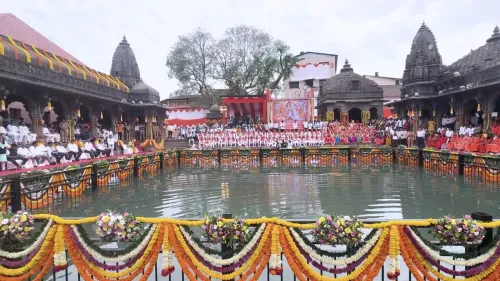
The inauguration's centrepiece was a mass Mahaaarti of a scale rarely witnessed. 6,233 tribal men and women from 650 villages participated in the Goda Mahaaarti, a ceremony the CMO stated has been recorded in the Guinness World Records. CM Fadnavis singled out the participation as deeply meaningful, noting that tribal communities have long been custodians of Sanatan culture, and their presence gave the inaugural ceremony its most striking image.
'The Kumbh Mela is not just India's celebration — it belongs to devotees across the world,' Fadnavis said, describing the Kumbh as a 'mahasangam' (grand confluence) of the diverse expressions of an ancient civilisation as vast as an endless ocean.
President Murmu's message and the 2027 vision
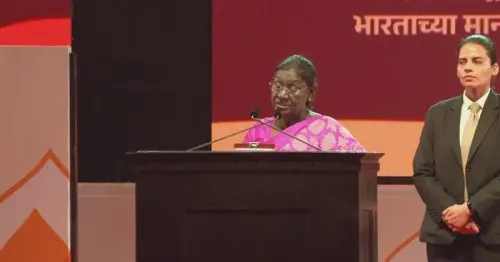
President Murmu extended good wishes to the nation for the 2027 Mela, expressing confidence that the coming Kumbh would be a beautiful union of spirituality, social harmony, tradition, and environmental conservation. It was a pointed signal that ecological concerns — increasingly central to event planning at pilgrimage sites — will be woven into the 2027 framework.
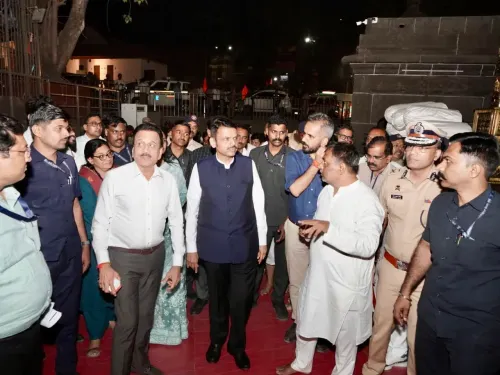
Fadnavis pledged to transform the physical landscape of both Nashik and Trimbakeshwar through large-scale infrastructure upgrades before the Mela opens. He was emphatic, however, that the government's role is to create facilities — the real custodians of the Kumbh, he said, are the sadhu-mahants (saints and ascetics).
Who stood on the Godavari's ghats
The ceremony drew Governor Jishnu Dev Varma, Deputy CM Eknath Shinde, Deputy CM Sunetra Ajit Pawar, Minister Girish Mahajan, and MLA Hiraman Khoskar. The Jagadguru Shankaracharya of Sringeri Peetha, Shri Vidushekhar Bharati Mahaswamiji, attended alongside saints and mahants from various akharas — the monastic orders whose arrival at the Mela marks its spiritual heartbeat.
The last Simhastha Kumbh at Nashik-Trimbakeshwar was held in 2015. The 12-year cycle that governs the Mela's rotation among four sacred sites — Prayagraj, Haridwar, Nashik-Trimbakeshwar, and Ujjain — now places Maharashtra at the centre of global pilgrimage attention.
With the flag now flying over both Ramkund and Kushavart Tirth, the countdown to 2027 has begun — and if Sunday's ceremony is any measure, Maharashtra intends to make this Kumbh one for the ages.
Point of View
The Fadnavis government is simultaneously projecting inclusive governance and cultural soft power — a formula increasingly used by state governments to bolster regional identity on the national stage. The emphasis on environmental conservation alongside religion also reflects a broader political calculus: framing large religious gatherings as ecologically responsible counters growing judicial and civil-society scrutiny of pilgrimage site pollution. With the Prayagraj Maha Kumbh fresh in public memory, Maharashtra will be measured against that standard.
NationPress
1 Nov 2026
Frequently Asked Questions
When is the Nashik-Trimbakeshwar Simhastha Kumbh Mela 2027?
The Nashik-Trimbakeshwar Simhastha Mahakumbh Mela 2027 was formally inaugurated on November 1, 2026, with the full Mela scheduled for 2027. The exact dates for bathing ghats and major events will be announced as planning progresses.
What is the Simhastha Kumbh Mela and how is it different from the Prayagraj Kumbh?
The Simhastha Kumbh Mela is held at Nashik and Trimbakeshwar on the banks of the Godavari river and follows a 12-year cycle, just like the Kumbhs at Prayagraj (Ganga), Haridwar (Ganga), and Ujjain (Shipra). Each site hosts its own Kumbh based on specific planetary alignments.
What did President Draupadi Murmu do at the Nashik Kumbh inauguration?
President Draupadi Murmu performed the sacred flag worship and hoisting at Ramkund, Nashik, led the Goda Mahaaarti at Ramtirth on the Godavari's banks, and visited Shri Trimbakeshwar Jyotirlinga temple where she offered aarti.
What is the Guinness World Record claimed at the Nashik Kumbh inauguration?
CM Devendra Fadnavis stated that the Goda Mahaaarti — performed by 6,233 tribal men and women from 650 villages — has been recorded in the Guinness World Records, though independent verification is pending.
When was the last Simhastha Kumbh Mela held at Nashik-Trimbakeshwar?
The previous Simhastha Kumbh Mela at Nashik-Trimbakeshwar was held in 2015. The 12-year cycle brings it back to Maharashtra in 2027.