Simhastha Kumbh 2026 begins at Nashik-Trimbakeshwar
Synopsis
President Draupadi Murmu and Maharashtra Chief Minister Devendra Fadnavis inaugurated the Simhastha Kumbh Mela 2026 at Nashik-Trimbakeshwar on 31 October, performing sacred flag-hoisting and puja at the Godavari. The President called the pilgrimage a message of unity and environmental protection to the world.
Key Takeaways
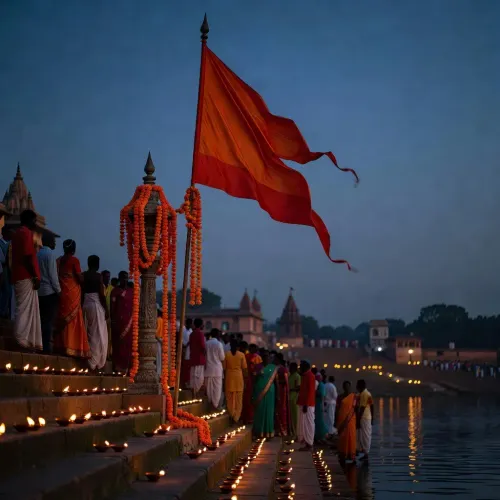
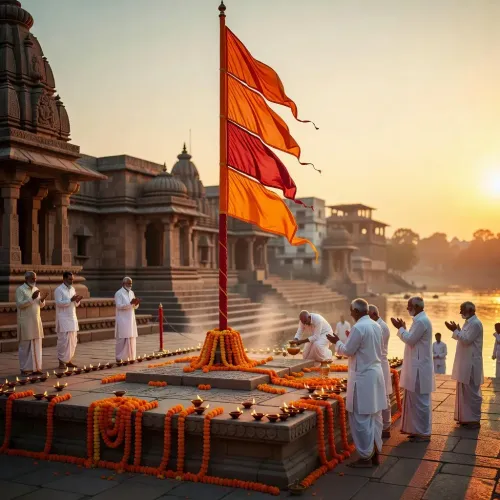
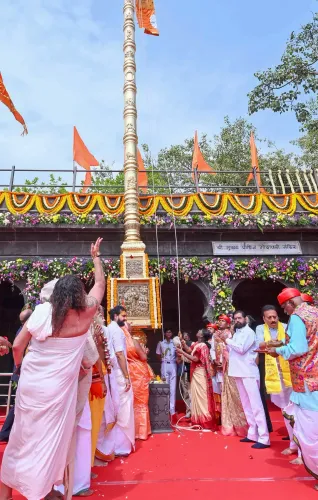
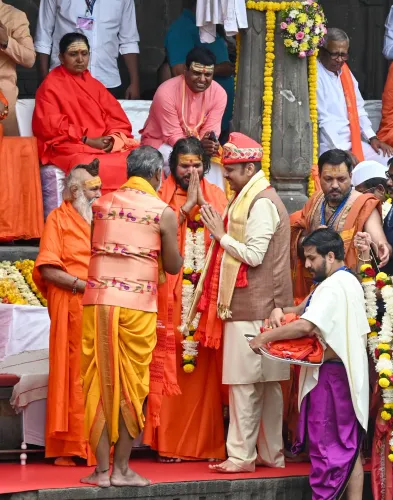
President Draupadi Murmu personally hoisted the sacred flag ( dharmdhwajarohan ) and performed puja at Kushavart ghat , Trimbakeshwar, formally opening the Simhastha Kumbh Mela 2026 .
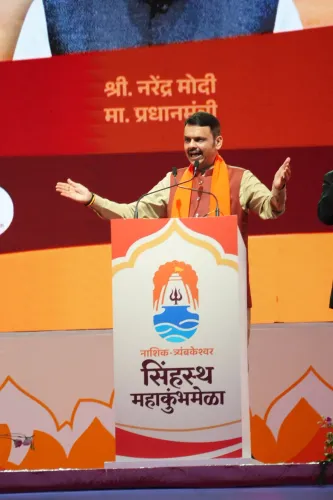
Chief Minister Devendra Fadnavis simultaneously performed flag-hoisting and flagpole puja at Trimbakeshwar Godaghat on the banks of the Godavari .
President Murmu also visited the Trimbakeshwar Shiva temple and offered tributes to Shri Trimbakraja during the inauguration.
The President called the Simhastha a global message of unity and environmental protection , linking pilgrimage tradition to river conservation.
The opening ceremonies coincided with National Unity Day (31 October) , the birth anniversary of Sardar Vallabhbhai Patel , with CM Fadnavis also paying tribute to Indira Gandhi .
The Simhastha Kumbh Mela at Nashik-Trimbakeshwar is a twelve-yearly event; the previous edition was held in 2015 .
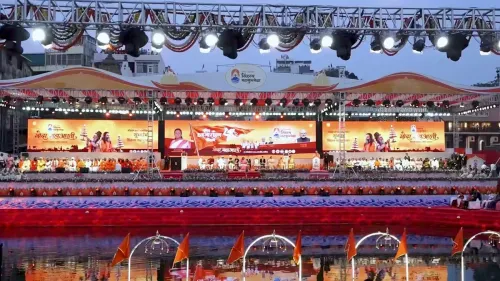
On the banks of the Godavari, with the Trimbakeshwar temple as witness, one of Hinduism's most sacred pilgrimages formally opened on Saturday, 31 October 2026 — and Maharashtra's government pulled out every ceremonial stop to mark the moment. The Chief Minister's Office of Maharashtra confirmed that President Draupadi Murmu and Chief Minister Devendra Fadnavis together presided over the inauguration of the Simhastha Kumbh Mela at Nashik-Trimbakeshwar, hoisting the sacred flag and performing ritual worship to formally begin the twelve-yearly pilgrimage.
President Murmu at Kushavart, Fadnavis at Godaghat — two flag-hoisings, one commencement
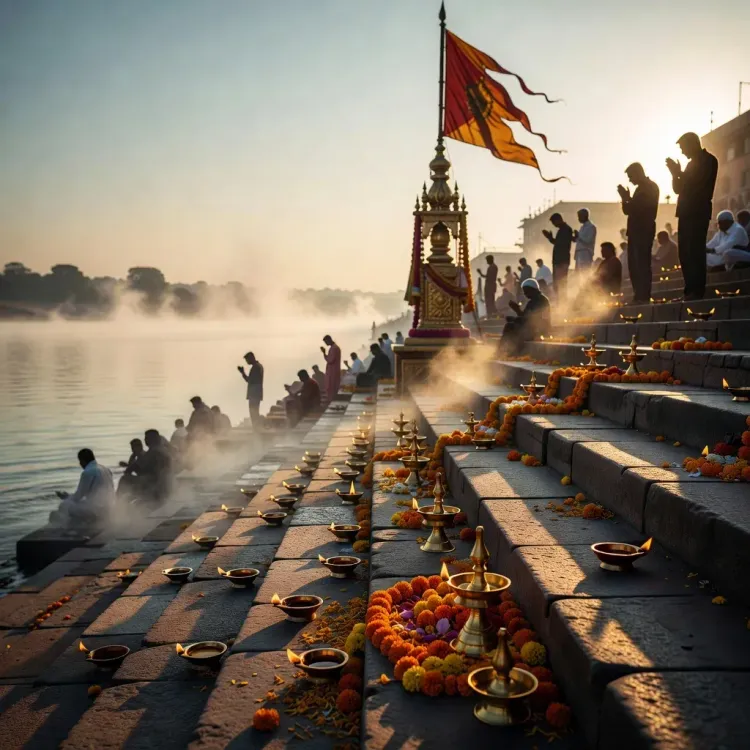
President Draupadi Murmu conducted the dharmdhwajarohan (hoisting of the religious flag) at the iconic Kushavart ghat — the principal sacred tank in Trimbakeshwar — and also performed the dhwajapujan (worship of the flagpole) there. She additionally paid her respects at the Trimbakeshwar Shiva temple, seeking the blessings of Shri Trimbakraja. Simultaneously, Chief Minister Devendra Fadnavis performed the flagpole puja at the Godaghat on the banks of the Godavari and then conducted a separate flag-hoisting ceremony at Trimbakeshwar that formally commenced the Simhastha Kumbh Parva.
The President's address carried a message that reached far beyond the riverbank: the Simhastha, she said, sends the world a signal of unity and environmental protection — 'ekātmatā āṇi paryāvaraṇa rakṣaṇācā sandeś' (a message of oneness and conservation of nature). That framing — pilgrimage as soft-power platform — has become a deliberate strand of how India positions its mega-religious gatherings on the global stage.
A pilgrimage held every twelve years — and why 2026 matters
The Simhastha Kumbh Mela at Nashik-Trimbakeshwar is one of four rotating Kumbh sites across India, the others being Prayagraj, Haridwar, and Ujjain. It convenes every twelve years when Jupiter enters the Leo zodiac, drawing tens of millions of pilgrims for ritual bathing in the Godavari. The last edition at this location was held in 2015, when the Maharashtra state government coordinated infrastructure and security for the event. Eleven years later, the scale of central participation — the President herself opening the ceremonies — signals how much the event's profile has grown as a vehicle for cultural diplomacy and national unity messaging.
The choice of date was also symbolically loaded. 31 October is the birth anniversary of Sardar Vallabhbhai Patel, observed across India as National Unity Day. Chief Minister Fadnavis paid tribute to Sardar Patel and former Prime Minister Indira Gandhi — also remembered on this day — as part of the morning's official programme, weaving together threads of national remembrance and religious celebration.
Godavari conservation woven into the sacred fabric
President Murmu's explicit invocation of environmental protection alongside unity is not incidental. The Godavari, like India's other sacred rivers, faces mounting pressures from industrial discharge, agricultural runoff, and urban encroachment. Embedding a conservation message at the inaugural ceremony of a mass pilgrimage that will bring millions to the river's edge is a calculated move — it places the burden of stewardship on the pilgrims themselves and signals state intent to frame the Kumbh not merely as a religious gathering but as an ecological responsibility.
As the Simhastha Kumbh's main bathing dates approach in the coming weeks and months, the eyes of Maharashtra's administration — and the nation — will be firmly fixed on the Godavari's banks at Nashik and Trimbakeshwar.
Point of View
Reinforcing the central government's broader strategy of positioning India's mega-pilgrimages as platforms for cultural diplomacy. Pairing the Kumbh's opening with National Unity Day — Sardar Patel's birth anniversary — is a deliberate act of narrative layering that connects religious tradition to constitutional patriotism. The explicit environmental messaging from the highest constitutional office also signals that river conservation is being mainstreamed into the Kumbh's official identity, likely reflecting pressure around Godavari pollution. For Maharashtra's ruling dispensation, hosting a smooth, high-profile Simhastha with presidential participation is a significant political and administrative credibility moment ahead of any future electoral cycles.
NationPress
1 Nov 2026
Frequently Asked Questions
When did Simhastha Kumbh Mela 2026 officially begin?
The Simhastha Kumbh Mela 2026 officially began on 31 October 2026 with flag-hoisting and puja ceremonies at Trimbakeshwar and the Godaghat on the Godavari river in Nashik district, Maharashtra.
Who inaugurated the Simhastha Kumbh Mela 2026?
President Draupadi Murmu conducted the main flag-hoisting and worship at Kushavart ghat , while Chief Minister Devendra Fadnavis performed separate flag-hoisting and puja ceremonies at Trimbakeshwar Godaghat , jointly inaugurating the 2026 Simhastha Kumbh Mela.
Where is the Simhastha Kumbh Mela held?
The Simhastha Kumbh Mela is held at Nashik and Trimbakeshwar in Maharashtra, on the banks of the sacred Godavari river . It is one of four rotating Kumbh sites in India and convenes every twelve years.
What is Kushavart in Trimbakeshwar?
Kushavart is a sacred tank (kund) in Trimbakeshwar , considered the principal bathing and worship site during the Simhastha Kumbh Mela. It is believed to be the source of the Godavari river and holds deep religious significance for pilgrims.
When was the last Simhastha Kumbh Mela at Nashik?
The previous Simhastha Kumbh Mela at Nashik-Trimbakeshwar was held in 2015 . The event occurs every twelve years, making 2026 the next scheduled edition.