World Bank India poverty brief: Vijayendra credits Modi's governance model
Synopsis
The World Bank's October 2026 India Poverty and Equity Brief documents a dramatic fall in lower-middle-income poverty — from 57.7% to 16.1% between 2011 and 2023 — lifting 496 million people. Karnataka BJP chief B. Y. Vijayendra seized on the findings to credit Prime Minister Modi's welfare delivery model, framing the numbers as proof of governance over promises.
Key Takeaways
The World Bank's October 2026 India Poverty and Equity Brief records India's poverty rate at the $4.20/day threshold fell from 57.7% in 2011 to 16.1% in 2023 , lifting 496 million people .
Extreme poverty at the $3.00/day threshold dropped from 27.1% to 2.6% over the same period.
Projections show the $4.20/day rate falling from 14.2% in 2026 to 12.1% by 2028 .
Karnataka BJP President B.
Vijayendra credited Prime Minister Narendra Modi's last-mile welfare delivery model for the progress.
Vijayendra linked the findings to the Viksit Bharat vision, calling them a foundation for India's development trajectory.
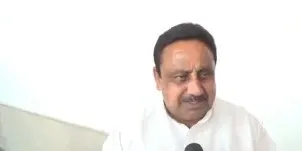
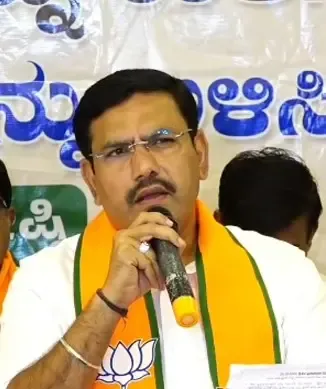
Karnataka Bharatiya Janata Party (BJP) President and MLA B. Y. Vijayendra on Saturday, 31 October 2026, welcomed the findings of the World Bank's India Poverty and Equity Brief, stating that the report validated India's measurable progress in reducing poverty and expanding livelihoods under Prime Minister Narendra Modi. The response came from Bengaluru as the World Bank's October 2026 brief drew political attention across the country.
What the World Bank Data Shows
The World Bank's October 2026 India Poverty and Equity Brief records that India achieved one of the fastest poverty reductions globally between 2011 and 2023. The lower-middle-income poverty rate — measured at $4.20 per day — plunged from 57.7% in 2011 to 16.1% in 2023, lifting an estimated 496 million people out of poverty. Extreme poverty, measured at $3.00 per day, fell sharply from 27.1% to 2.6% over the same period.
Projections in the brief anticipate the $4.20-a-day poverty rate declining further, from 14.2% in 2026 to 12.1% by 2028, suggesting the downward trajectory remains intact in the near term.
Vijayendra's Political Reading
In a formal statement, Vijayendra said the report underlined what the government's welfare model had achieved on the ground. 'India's fight against poverty is delivering measurable results,' he said, adding that the government's approach reflected governance based on tangible progress rather than mere promises.
He credited Modi's emphasis on last-mile welfare delivery and inclusive development as the driving force behind the improvements documented in the brief. Vijayendra also framed the findings as an important foundation for the broader Viksit Bharat vision, arguing that concrete outcomes — not rhetoric — defined the current governance model.
Broader Context and What It Means
India's poverty reduction over the 2011–2023 window spans multiple administrations, and economists have noted that structural factors — including direct benefit transfers, rural employment schemes, and expanding financial inclusion — contributed across policy cycles. This comes amid ongoing debate over whether welfare schemes translate into durable income gains or primarily address consumption floors.
Notably, the World Bank brief focuses on headcount poverty rates using international thresholds, which measure a different dimension than domestic poverty lines or multi-dimensional poverty indices. Critics of single-metric assessments argue that income poverty reduction does not automatically capture improvements in education, health access, or job quality.
What Comes Next
The brief's 2028 projections will likely be cited by the ruling Bharatiya Janata Party (BJP) in the lead-up to forthcoming state elections, particularly in Karnataka, where the party is in opposition. How the opposition interprets the same data — including questions around methodology and attribution — is expected to be a recurring point of contention in policy debates ahead.
Point of View
But the political framing around them deserves scrutiny. India's poverty reduction between 2011 and 2023 spans three distinct policy phases under two different governments, and attributing the full arc to any single administration flattens a more complex story. The $4.20/day international line, while useful for global comparisons, measures a low bar — and the brief's own projections suggest roughly one in eight Indians will still be below it by 2028. Using a headline number to validate a governance model without addressing the quality of jobs created, the durability of welfare gains, or multi-dimensional deprivation metrics is a selective read that both the BJP and its critics are likely to deploy selectively in the months ahead.
NationPress
31 Oct 2026
Frequently Asked Questions
What did the World Bank's October 2026 India Poverty and Equity Brief find?
The brief found that India achieved one of the fastest poverty reductions in the world between 2011 and 2023. The lower-middle-income poverty rate at $4.20 per day fell from 57.7% to 16.1%, lifting an estimated 496 million people, while extreme poverty at $3.00 per day dropped from 27.1% to 2.6%.
Who is B. Y. Vijayendra and why did he react to the World Bank report?
B. Y. Vijayendra is the President of the Karnataka unit of the Bharatiya Janata Party (BJP) and a sitting MLA. He issued a statement welcoming the World Bank findings, using them to credit Prime Minister Narendra Modi's governance model for India's poverty reduction progress.
What are India's projected poverty rates according to the World Bank?
The World Bank brief projects India's $4.20-per-day poverty rate will fall from 14.2% in 2026 to 12.1% by 2028, indicating continued but gradual improvement over the near term.
Does the World Bank report credit a specific government for India's poverty reduction?
The World Bank brief documents the statistical trend between 2011 and 2023 without attributing it to any specific administration. The political attribution to Prime Minister Modi's government came from Karnataka BJP President Vijayendra's statement, not from the World Bank report itself.
What is Viksit Bharat and how does Vijayendra connect it to the World Bank findings?
Viksit Bharat — meaning 'Developed India' — is a long-term development vision articulated by the Modi government, targeting a fully developed economy by 2047. Vijayendra described the World Bank's poverty reduction data as an important foundation for realising that vision.