Tharoor recalls Indira Gandhi on 42nd assassination anniversary
Synopsis
On the 42nd anniversary of Indira Gandhi's assassination, Congress MP Dr. Shashi Tharoor offers a layered tribute — acknowledging personal meetings dating to 1974, condemning the Emergency, and hailing the 1971 Bangladesh Liberation War as her defining moral achievement.
Key Takeaways
Shashi Tharoor posted a tribute to Indira Gandhi on the 42nd anniversary of her assassination, 31 October 2026 .
Tharoor met Indira Gandhi in 1974 as President of the St.
Stephen's College students' union and later interviewed her for a doctoral dissertation on her foreign policy.
He explicitly stated his 'fierce opposition' to the Emergency (imposed 25 June 1975 ) while still describing her assassination as 'a profound personal blow.' He named the 1971 Bangladesh Liberation War as her single greatest achievement, citing 'moral clarity', the liberation of millions, and the resolution of the world's largest refugee crisis.
His central argument: no democracy can survive if the political fate of its Prime Minister is 'determined by bullets and not ballots.' The tribute blends documented personal history with sharp political principle, distinguishing it from routine party condolence statements.
Forty-two years after an assassin's bullet ended Indira Gandhi's life on 31 October 1984, Congress MP Dr. Shashi Tharoor has offered one of the more candid tributes in public life — honouring a leader he openly criticised, mourning a death he never forgot, and insisting that no democracy can afford to let bullets decide its prime ministers' fates.
A personal acquaintance, not just a political icon
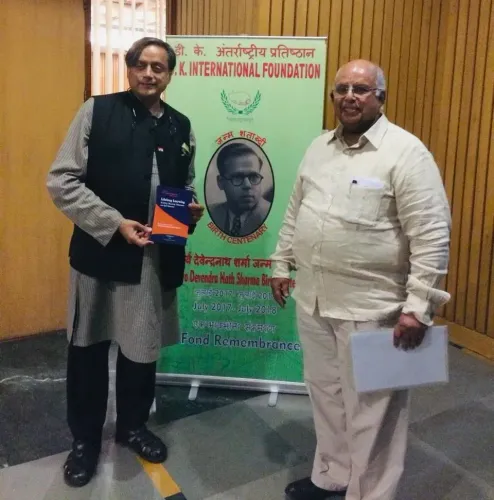
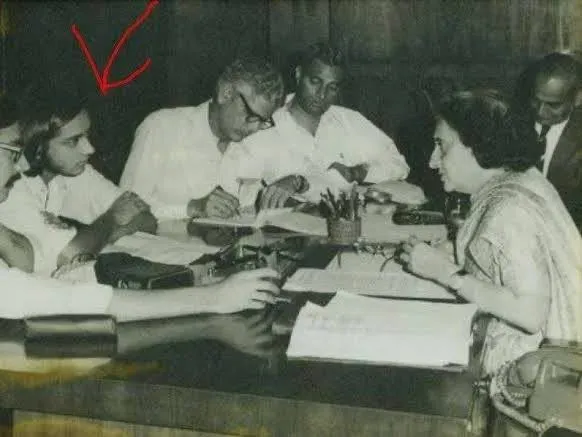
Tharoor's tribute carries unusual biographical weight. He recalls meeting Indira Gandhi in 1974, when he was President of the students' union at St. Stephen's College, one of Delhi University's most storied institutions. That encounter preceded an interview he conducted in early 1975 for a Swiss youth magazine — a photograph from which he shared alongside the post — and later two longer sessions for his doctoral dissertation on her foreign policy, conducted after her electoral defeat in 1977.
That combination — student leader, journalist-interviewer, doctoral researcher — gave Tharoor a layered vantage point that few of her contemporaries can now claim. His tribute is not the reflex of party loyalty but, by his own account, the reckoning of someone who studied her closely and disagreed with her sharply.
Opposing the Emergency, grieving the assassination
Tharoor is explicit about the fault line: he describes his opposition to the Emergency — the 21-month suspension of constitutional rights imposed by Indira Gandhi from 25 June 1975 — as 'fierce', and acknowledges 'the occasional authoritarian excesses of her rule.' The Emergency remains one of independent India's most contested periods, remembered for press censorship, mass detentions, and the subordination of the judiciary.
Yet he writes that her assassination 'still felt like a profound personal blow.' The distinction he draws is precise and important: opposing a leader's actions is not the same as consenting to their murder. 'It took something vital away from our democracy,' he writes, 'that the political fate of our Prime Minister should be determined by bullets and not ballots.' In a single sentence, the tribute becomes an argument — for democratic accountability over political violence.
The 1971 Bangladesh war as her defining hour
Asked to name one landmark moment in a 'consequential life', Tharoor chooses the 1971 Bangladesh Liberation War. India's military intervention in December 1971, authorised by Indira Gandhi, ended the conflict in East Pakistan and created the independent nation of Bangladesh. The war also resolved what was then the world's largest refugee crisis, with millions of Bengalis having fled across the border into India.
Tharoor describes her conduct as one of 'moral clarity' — language that places the decision in an ethical as much as a strategic frame. The 1971 war is widely regarded by historians as a high-water mark of Indian statecraft: a swift, decisive military campaign backed by careful diplomacy, including the signing of the Indo-Soviet Treaty of Peace, Friendship and Cooperation in August that year to deter superpower intervention. For Congress, it remains the centrepiece of Indira Gandhi's legacy; for Tharoor, it is the moment she 'rewrote the map of the subcontinent.'
The grammar of a mature tribute
What distinguishes Tharoor's post from routine death-anniversary statements is its refusal to flatten the record. He does not elide the Emergency to sanctify the war hero, nor does he weaponise the Emergency to diminish the war hero. Indian political discourse often forces a binary — lionise or condemn — on leaders with complex legacies. Tharoor's tribute, signed off with प्रणाम (reverence) and शांति (peace), attempts something harder: to hold both truths at once.
As India marks the 42nd anniversary of 31 October 1984, that balance is itself a political act — a reminder that democratic health depends on the ability to criticise leaders freely and to grieve them genuinely, without either impulse cancelling the other.
Point of View
Particularly on 1971, to present a layered inheritance rather than an uncritical hagiography. The move matters because it attempts to inoculate the party against charges of authoritarianism while retaining ownership of India's most celebrated military-diplomatic victory. By grounding the tribute in documented personal history — student union meetings, interviews, doctoral research — Tharoor also implicitly positions himself as a credentialled interpreter of that legacy, not merely a loyalist. In a political environment where the Emergency is routinely invoked in debates about executive overreach, the willingness to name it honestly while still mourning the assassination is a signal of confidence, and a template other Congress voices may follow.
NationPress
31 Oct 2026
Frequently Asked Questions
When was Indira Gandhi assassinated?
Indira Gandhi was assassinated on 31 October 1984 by two of her security personnel at her residence in New Delhi . The 42nd anniversary falls on 31 October 2026 .
What did Shashi Tharoor say about Indira Gandhi on her death anniversary?
Dr. Shashi Tharoor recalled meeting Indira Gandhi in 1974 and interviewing her for a doctoral dissertation. He acknowledged his opposition to the Emergency but called her assassination 'a profound personal blow,' and named her leadership in the 1971 Bangladesh Liberation War as her greatest achievement.
What was the 1971 Bangladesh Liberation War?
The 1971 Bangladesh Liberation War was an armed conflict in which India intervened in December 1971 , leading to the defeat of Pakistani forces in East Pakistan and the creation of the independent nation of Bangladesh . It also ended what was then the world's largest refugee crisis.
What was the Emergency declared by Indira Gandhi?
Indira Gandhi imposed a national Emergency on 25 June 1975 , citing 'internal disturbance.' It lasted 21 months until March 1977 and involved the suspension of constitutional rights, press censorship, and mass detentions. Tharoor describes his opposition to it as 'fierce.'
What is Shashi Tharoor's connection to St. Stephen's College?
Dr. Shashi Tharoor served as President of the students' union at St. Stephen's College , a Delhi University institution, in 1974 . It was in that capacity that he first met Indira Gandhi .