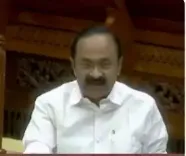
Tharoor slams Delhi University bar on student protests
Synopsis
Congress MP Dr. Shashi Tharoor condemned a reported University of Delhi bar on student protests on 24 July 2026, arguing that even during the JP Movement preceding the 1975 Emergency, no such restriction existed — invoking the late Chandan Mitra as a personal witness to that era's relative campus freedoms.
Key Takeaways
Shashi Tharoor called a reported University of Delhi ban on students joining protests 'utterly appalling' on 24 July 2026 .
Tharoor drew a direct comparison with the JP Movement of 1974–75 , arguing no such bar existed even in the period immediately preceding the National Emergency .
He cited the late Chandan Mitra — journalist, editor and Rajya Sabha MP — as a St.
Stephen's College student who openly joined JP Movement protests without institutional penalty.
The post reignites debate over academic freedom and the limits of political expression at India's publicly funded universities.
The University of Delhi had not issued a formal public clarification on its protest policy as of the time of publication.
Potential oversight by the Delhi High Court and the University Grants Commission is being watched by campus rights observers.
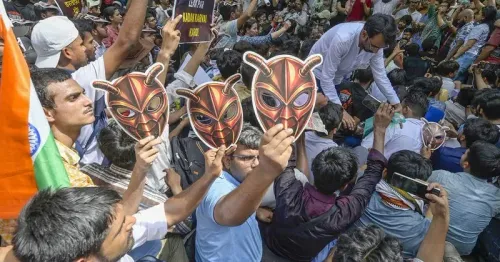
Congress MP Dr. Shashi Tharoor on Friday, 24 July 2026, sharply criticised the University of Delhi over what he described as a ban on students joining protests, calling the move 'utterly appalling' and drawing a pointed comparison with the relative freedoms that existed even during the politically charged JP Movement era of the mid-1970s.
Context
Tharoor, who studied at St. Stephen's College — a constituent college of Delhi University — during the period preceding the Emergency, recalled that no such institutional bar existed even then. 'Even in the days of the JP Movement leading up to the Emergency, there was no bar by the University of Delhi on students joining any of his protests,' he wrote, referring to the nationwide agitation led by socialist leader Jayaprakash Narayan against the Indira Gandhi government in 1974–75.
He further noted that members of his own students' union at St. Stephen's, including the late journalist and parliamentarian Chandan Mitra, 'openly' participated in those protests without any institutional penalty. The invocation of Mitra — who passed away in 2018 — lends the post a personal dimension, anchoring the historical claim in named, verifiable individuals.
Policy Backdrop
The JP Movement of 1974–75 was one of independent India's most consequential episodes of mass civil disobedience, culminating in the declaration of the National Emergency on 25 June 1975 — a period during which civil liberties, press freedom and the right to protest were formally curtailed across the country. Tharoor's argument is that even in that fraught climate, Delhi University did not move to restrict student participation in political agitation.
The post comes amid India's long-running and unresolved debate over academic freedom, institutional autonomy and the boundaries of political expression on university campuses. Delhi University, as one of India's largest and most politically active university systems, has historically been a crucible for student movements spanning the ideological spectrum. Any administrative restriction on protest participation touches a particularly sensitive nerve in that tradition.
Stakeholders and Impact
The most immediate stakeholders are Delhi University's estimated 3 lakh-plus students enrolled across its many colleges, along with student unions affiliated with political parties across the spectrum. Restrictions on campus protest rights directly affect the pipeline through which student leaders enter mainstream politics — a pipeline that produced figures ranging from Tharoor himself to Chandan Mitra.
Faculty bodies, civil society groups focused on educational rights, and the University Grants Commission (UGC) — which sets broad regulatory norms for higher education — are also implicated. If the restriction in question is embedded in a formal policy circular, it could draw scrutiny from the Delhi High Court, which has previously weighed in on campus governance matters.
What's Next
The University of Delhi has not, as of publication, issued a public clarification on the nature or scope of any restriction on student protests. Observers will watch for a formal response from the university administration, a possible intervention by the UGC, or legal proceedings before the Delhi High Court. Tharoor's post is likely to amplify pressure on the institution to provide a transparent accounting of its current policy on student assembly and political participation.
More broadly, the episode renews scrutiny of how India's publicly funded universities navigate the tension between administrative order and the constitutional guarantee of free expression — a question that shows no sign of fading from the national conversation.
Point of View
Not merely an emotional reaction — by anchoring his critique in the JP Movement era, he implicitly frames the current Delhi University restriction as more authoritarian than the conditions that preceded India's most notorious democratic rupture. The reference to Chandan Mitra, a figure respected across party lines, is a deliberate rhetorical choice designed to broaden the appeal beyond Congress supporters. This fits a broader pattern in which opposition politicians use institutional memory and historical precedent to challenge what they characterise as a creeping narrowing of civic space on campuses. The post is likely to resonate with student union leaders and civil liberties advocates, but its policy impact will depend on whether the university administration responds publicly or allows the controversy to be absorbed into the news cycle.
NationPress
23 Oct 2026
Frequently Asked Questions
What did Shashi Tharoor say about Delhi University and student protests?
On 24 July 2026, Tharoor called a reported University of Delhi bar on students joining protests 'utterly appalling,' arguing that no such restriction existed even during the JP Movement of 1974–75 that preceded the Emergency.
What was the JP Movement and why is it relevant here?
The JP Movement was a nationwide agitation led by socialist leader Jayaprakash Narayan against the Indira Gandhi government in 1974–75, culminating in the declaration of the National Emergency on 25 June 1975. Tharoor uses it as a benchmark, arguing that even that politically charged era did not see Delhi University ban student protest participation.
Who was Chandan Mitra and why did Tharoor mention him?
Chandan Mitra was a prominent journalist, editor and Rajya Sabha MP who was a student at St. Stephen's College, Delhi University, during the JP Movement. Tharoor mentioned him as a personal example of a fellow student union member who openly joined JP Movement protests without any institutional bar — lending a named, verifiable human face to his historical argument.
Can Delhi University legally restrict students from joining protests?
The constitutional right to peaceful assembly is guaranteed to all citizens, including students. However, university administrations can issue conduct codes governing on-campus activity. Whether any specific restriction issued by Delhi University is legally tenable would depend on its exact terms and is subject to potential review by the Delhi High Court or the University Grants Commission.
What happens next after Tharoor's criticism of Delhi University?
Observers are watching for a formal public clarification from Delhi University on its protest policy, possible UGC scrutiny, and potential legal proceedings before the Delhi High Court. Tharoor's post is expected to increase pressure on the administration to respond transparently.