Trump Vows to Cut Red Tape, Lower Costs for U.S. Farmers
Synopsis
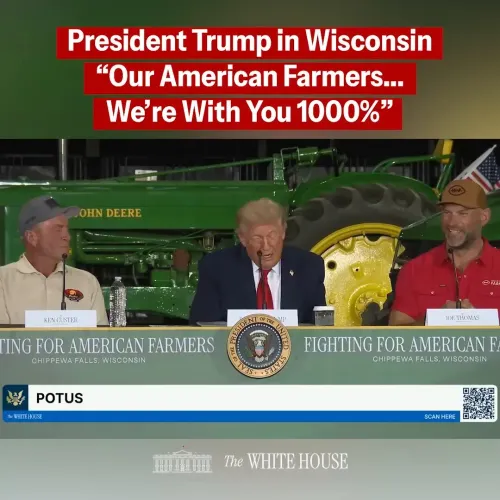
The White House announced on October 22, 2026 that President Trump is cutting red tape and lowering costs for American farmers, continuing a deregulatory approach to agriculture that defined his first term and now appears to be ramping up again.
Key Takeaways
The White House posted on October 22, 2026 that President Trump is cutting red tape and lowering costs for American farmers.
The statement signals a deregulatory push targeting permitting, compliance burdens, and input costs in the agricultural sector.
During Trump's first term (2017–2021) , the administration required agencies to eliminate two regulations for every new one introduced.
The U.S. has roughly 3.4 million farms , with major concentrations in the Midwest, Great Plains, and California.
Specific executive actions or USDA rule changes have not yet been publicly detailed; follow-up announcements are anticipated.
The messaging fits a long-standing Republican political pattern of framing deregulation as a rural, values-based issue.
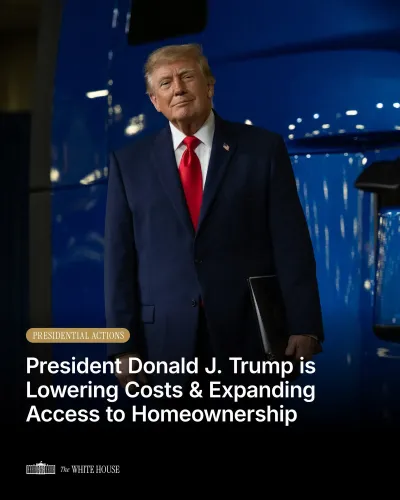
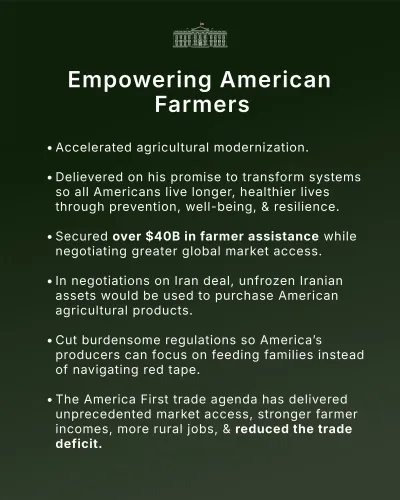
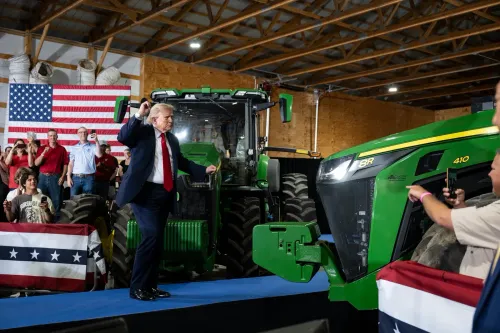
With a flag and a wheat stalk emoji, The White House put America's agricultural community front and centre on Thursday, October 22, 2026 — signalling that President Donald Trump is moving to slash regulatory burdens and reduce input costs for the nation's farmers and ranchers.
The deregulation pitch: what farmers stand to gain
The White House post declared that the administration is 'cutting red tape and lowering costs' for American farmers, framing the move as a direct act of solidarity with food producers. The language is pointed: red tape is a shorthand for the permitting requirements, environmental compliance paperwork, and agency rule-making that farm groups have long complained add time and money to every growing season.
During Trump's first term (2017–2021), the administration issued executive orders directing federal agencies to roll back two existing regulations for every new one introduced — a model that was applied across agriculture, energy, and manufacturing. The current messaging suggests a similar deregulatory drive is either already underway or imminent in this second term.
America's farmers: who this is aimed at
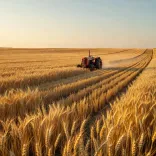
The United States Department of Agriculture (USDA) counts roughly 3.4 million farms across the country, with the bulk of output concentrated in the Midwest corn and soybean belt, the Great Plains wheat country, and California's produce valleys. Input costs — seeds, fertiliser, fuel, and the administrative overhead of regulatory compliance — have been a persistent pressure point, particularly after the global commodity price shocks of the early 2020s.
Farm lobby groups have consistently pushed for streamlined permitting on land use, water rights, and pesticide approvals. Any USDA rule changes or executive action targeting those specific areas would directly affect millions of producers and the downstream supply chains that feed both domestic consumers and export markets.
The political calculus behind the message
The White House's framing — 'the people who put food on our tables' — is as much cultural as it is economic. Republican administrations have historically anchored farm policy messaging in a values-laden narrative about self-reliance, land stewardship, and the dignity of agricultural labour. That framing reliably consolidates rural political support while positioning deregulation as a kitchen-table issue rather than a business-lobby concession.
The specific regulatory actions referenced in the post have not yet been detailed publicly, and any concrete USDA rule changes or executive orders will bear close scrutiny for their scope and timeline once announced.
The next move belongs to the USDA — and the fine print of whatever rule-making follows this signal will determine whether this is a sweeping shift or a familiar refrain.
Point of View
Farm-cost relief becomes the policy instrument of choice. Trump's first term showed that executive orders can move quickly in this space, but the real test is whether the USDA translates the rhetoric into durable rule changes rather than one-cycle messaging. For a global food-import nation like India, shifts in U.S. farm policy and export competitiveness carry real downstream consequences — cheaper or more abundant American commodities can reprice global benchmarks. The specificity of what comes next will determine whether this is a structural policy shift or a well-timed political signal.
NationPress
23 Oct 2026
Frequently Asked Questions
What did the White House say about farmers on October 22, 2026?
The White House posted that President Trump is cutting red tape and lowering costs for American farmers, reaffirming his commitment to agricultural producers.
What does 'cutting red tape' mean for U.S. farmers?
It generally refers to reducing regulatory requirements such as environmental compliance paperwork, permitting processes, and agency rules that add time and cost to farming operations.
What deregulation did Trump pursue for farmers in his first term?
During 2017–2021, the Trump administration issued executive orders requiring federal agencies to eliminate two existing regulations for every new one introduced, a policy applied across agriculture among other sectors.
Which government department oversees U.S. farm regulation?
The United States Department of Agriculture (USDA) is the primary federal agency responsible for farm policy, rule-making, and regulatory oversight in the agricultural sector.
How does U.S. farm deregulation affect India?
Lower production costs for American farmers can increase U.S. agricultural exports, potentially affecting global commodity prices for wheat, corn, and soybeans — crops that also set price benchmarks in Indian markets.