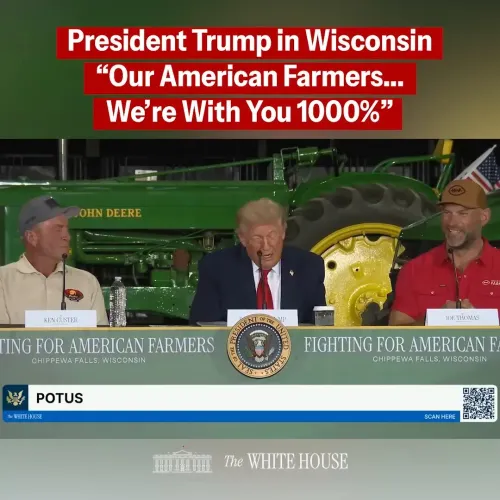
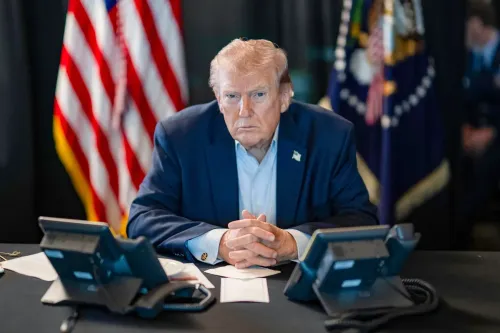
Trump Holds Roundtable on American Agriculture
Synopsis
President Trump held a roundtable on American agriculture on June 5, 2026, as the White House signals executive focus on farm policy. The session comes amid stalled Farm Bill reauthorisation in Congress and ongoing uncertainty over trade access for key US commodity exports.
Key Takeaways
President Trump participated in a White House roundtable on American agriculture on June 5, 2026 .
The session reflects continued executive engagement with the farm sector, a key political constituency for the Trump administration.
The 2018 Farm Bill , signed by Trump, expired in 2023 , leaving farmers in a period of legislative uncertainty pending reauthorisation.
The USDA is the federal body responsible for implementing farm support, crop insurance, and rural development programmes central to any policy outcomes.
Commodity exporters — particularly soybean, corn, and dairy producers — are closely watching for trade policy signals that could affect access to key export markets.
Congressional action on a new Farm Bill and upcoming USDA production reports are the next major markers for the agricultural sector.
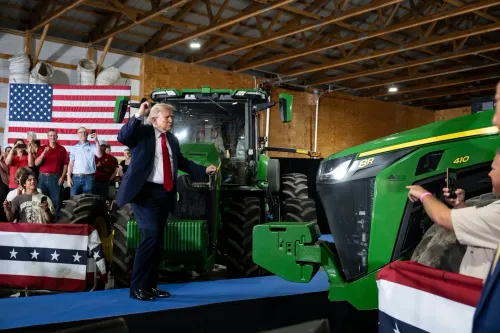
President Donald Trump participated in a roundtable focused on American agriculture on Friday, June 5, 2026, the White House announced, signalling continued executive attention to the farm sector amid ongoing debates over trade policy and federal farm support programs.
Context
Presidential roundtables on agriculture have been a recurring tool across administrations to engage directly with farmers, commodity producers, and agribusiness stakeholders. These sessions typically surface concerns around commodity prices, export access, and the regulatory environment that shapes day-to-day farm operations.
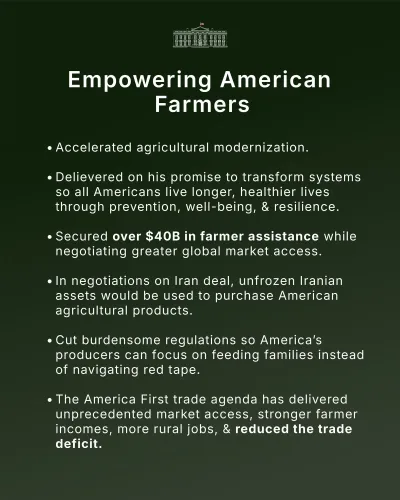
For the Trump administration, agriculture has been a politically significant constituency. Farm states formed a core part of Trump's electoral base, and policy decisions on tariffs and trade agreements have had direct consequences for crops including soybeans, corn, and dairy.
Policy Backdrop
The last major legislative framework governing American farm policy was the Agricultural Improvement Act of 2018 — commonly known as the 2018 Farm Bill — which President Trump signed into law. That legislation extended commodity support payments, crop insurance programmes, and conservation initiatives through 2023.
With the 2018 Farm Bill having expired, Congress has been engaged in protracted negotiations over a new reauthorisation. The absence of a fresh Farm Bill has left farmers in a period of policy uncertainty, making executive-level engagement on agricultural issues particularly consequential.
The United States Department of Agriculture (USDA), the federal agency overseeing farm programmes and rural development, plays a central role in implementing whatever legislative and executive direction emerges from such discussions.
Stakeholders and Impact
American farmers and agricultural exporters are the most immediate stakeholders in any policy signals emerging from a White House roundtable. Commodity producers — particularly those in soybean, corn, wheat, and dairy sectors — have historically been sensitive to shifts in trade policy, including tariff regimes that affect access to export markets such as China, Mexico, and the European Union.
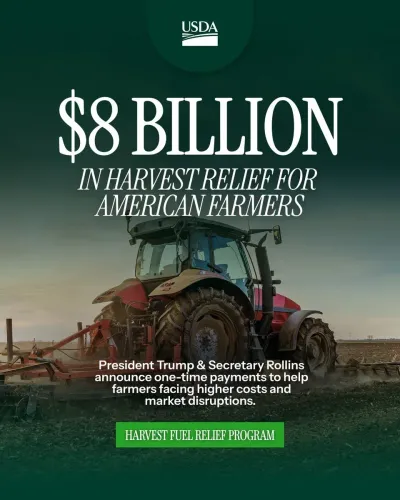
During Trump's first term, retaliatory tariffs from trading partners in response to US trade actions led to significant disruptions in soybean exports, prompting the administration to deploy emergency farm aid packages. Any new policy direction discussed in the June 2026 roundtable would be watched closely by commodity markets and farm lobbies alike.
Rural communities, which depend heavily on the economic health of the agricultural sector, also stand to be affected by decisions on crop insurance, conservation subsidies, and rural infrastructure funding that typically flow through USDA programmes.
What's Next
Congressional negotiators are expected to continue work on a new Farm Bill reauthorisation, and any signals from the White House roundtable could influence the shape of that legislation. The USDA is also scheduled to release periodic acreage and production reports that will inform market expectations for the current growing season.
With midterm political cycles and trade negotiations both in play, the administration's posture on agriculture will remain under close scrutiny from farm groups, commodity traders, and lawmakers representing rural districts.
Point of View
But they serve as a barometer of administrative priorities and can shape the terms of ongoing congressional negotiations. For a president whose electoral coalition is heavily reliant on rural America, visible engagement with agricultural concerns carries both policy and political weight. The timing, ahead of a critical growing season and with trade tensions still a live variable, suggests the administration is positioning itself as an active steward of farm interests.
NationPress
20 Oct 2026
Frequently Asked Questions
What did Trump discuss at the agriculture roundtable on June 5 2026?
The White House announced President Trump's participation in the roundtable but specific policy announcements or participant details from the June 2026 session have not been officially confirmed. Such roundtables typically cover commodity prices, trade access, and federal farm support programmes.
What is the US Farm Bill and why does it matter?
The Farm Bill is the primary federal legislation governing American agricultural policy, covering commodity supports, crop insurance, conservation programmes, and rural development funding. The most recent version, the 2018 Farm Bill , expired in 2023 and Congress has yet to pass a replacement.
How does Trump's trade policy affect American farmers?
During Trump's first term, tariffs on imports from major trading partners triggered retaliatory measures that disrupted US agricultural exports, particularly soybeans to China . The administration responded with emergency farm aid, but market uncertainty remained a persistent concern for commodity producers.
What is the USDA's role in American agriculture?
The United States Department of Agriculture (USDA) is the federal agency responsible for administering farm programmes, crop insurance, conservation initiatives, and rural development funding. It implements the policy frameworks set by Congress through the Farm Bill.
Why do presidential agriculture roundtables matter?
While not binding, White House roundtables allow the executive branch to signal policy priorities, gather direct input from industry stakeholders, and influence the direction of congressional negotiations on legislation such as the Farm Bill.