Trump Delivers Remarks on US Farm Policy in Wisconsin
Synopsis
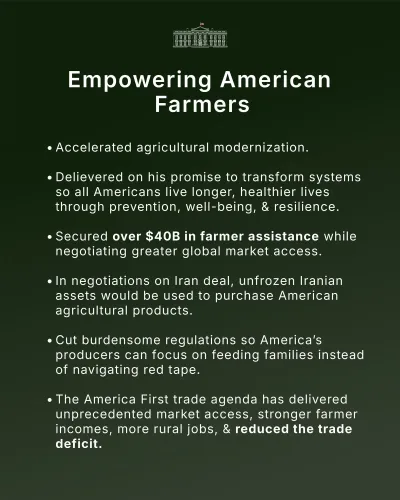
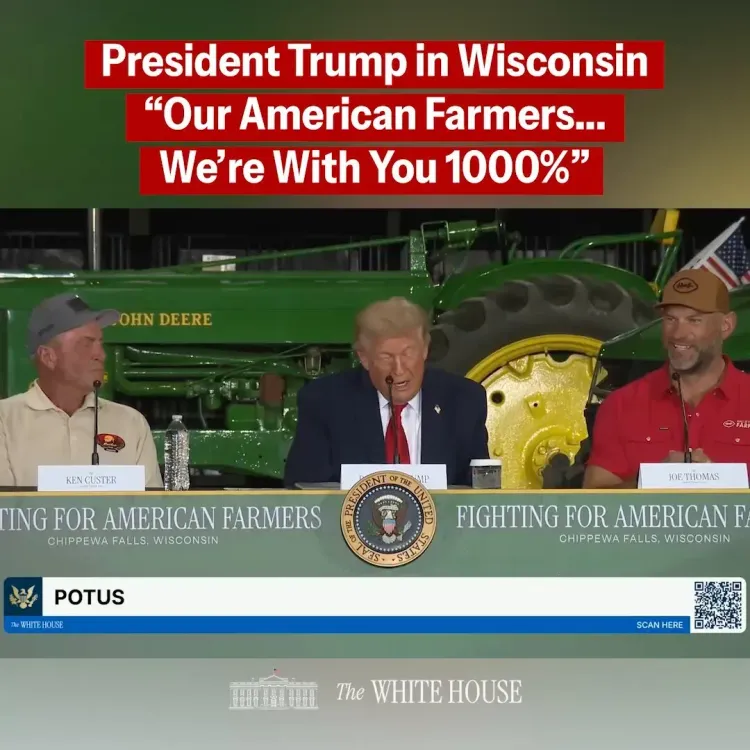
President Trump addressed farmers in Wisconsin on June 5, 2026, reaffirming the administration's commitment to American agriculture. The White House pledged unwavering support for the sector, drawing on a policy legacy that includes $28 billion in farm aid and the USMCA trade deal.
Key Takeaways
President Trump delivered live remarks in Wisconsin on June 5, 2026 , focused on supporting American farmers.
The White House stated the administration 'will never waver' in pursuing the best outcomes for US agriculture.
The Trump administration's first term included $28 billion in direct payments to farmers under the Market Facilitation Program .
The USMCA replaced NAFTA with expanded dairy and poultry market-access provisions benefiting US exporters.
Wisconsin is a major agricultural state producing dairy, corn, soybeans, and cranberries — a key venue for farm-policy messaging.
The next Farm Bill reauthorization and USDA 2026 farm income forecasts are key policy milestones to watch.
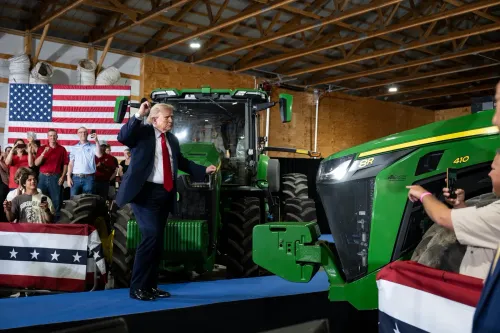
President Donald Trump addressed an audience in Wisconsin on Friday, June 5, 2026, delivering remarks focused on the administration's commitment to supporting American farmers. The White House announced the event in real time, describing it as the president 'fighting for American farmers' in a key agricultural state.
Context
The White House posted on X that the president was delivering remarks 'fighting for American farmers in Wisconsin,' adding that 'the Trump administration will never waver in pursuing the best for our great American agriculture industry.' Wisconsin is a major agricultural producer, with significant output in dairy, corn, soybeans, and cranberries, making it a symbolically and economically important venue for any farm-policy address.
The state has historically been a bellwether for rural voter sentiment, and presidential visits centred on agricultural policy carry both economic and political weight in the Midwest.
Policy Backdrop
The Trump administration's agricultural record is anchored in a combination of protective trade measures and compensatory domestic spending. During the first Trump term, the Market Facilitation Program disbursed $28 billion in direct payments to farmers affected by retaliatory tariffs during the US-China trade dispute — one of the largest emergency farm-aid packages in American history.
The 2018 Farm Bill reauthorized crop insurance, conservation programs, and commodity supports, while the United States-Mexico-Canada Agreement (USMCA), which replaced NAFTA, opened new dairy and poultry market-access provisions benefiting American exporters. These measures established the policy lineage that the current administration draws upon in its messaging to the farm sector.
The US agriculture industry accounts for roughly 5% of US GDP and generates substantial export revenue, making it a central pillar of both domestic economic policy and international trade negotiations.
Stakeholders and Impact
American farmers and agricultural exporters are the primary stakeholders in any policy direction signalled by the administration. Producers of commodity crops — corn, soybeans, wheat — are especially sensitive to trade policy shifts, as retaliatory tariffs from major importers can rapidly compress margins.
Dairy farmers in Wisconsin specifically have benefited from USMCA provisions that expanded US access to the Canadian dairy market. Any new trade enforcement actions or subsidy programmes announced in connection with the June 2026 remarks would directly affect this constituency.
Broader rural communities, agri-input suppliers, and food-processing industries downstream of farm production also stand to gain or lose depending on the policy specifics the administration chooses to advance.
What's Next
Attention will turn to the USDA's release of 2026 farm income forecasts and any new trade enforcement actions targeting major agricultural importers. Congressional negotiations on the next Farm Bill reauthorization are also ongoing, and the administration's public positioning in states like Wisconsin signals the political priority it assigns to rural constituencies ahead of those legislative battles.
The administration's repeated public commitment to agriculture — framed as unwavering support for 'the best' outcomes for the industry — suggests farm policy will remain a prominent feature of its domestic communications strategy in the months ahead.
Point of View
The administration is reinforcing its America First trade identity ahead of what could be consequential Farm Bill negotiations in Congress. The messaging mirrors a pattern from the first Trump term: pair protective trade rhetoric with visible presidential engagement in farm states to shore up rural support. Whether the June 2026 remarks translate into concrete new policy — fresh subsidies, trade enforcement actions, or Farm Bill commitments — will determine whether this is a strategic signal or a ceremonial gesture.
NationPress
22 Sept 2026
Frequently Asked Questions
Why did President Trump visit Wisconsin to talk about farm policy?
Wisconsin is one of the United States' most important agricultural states, producing dairy, corn, soybeans, and cranberries. Presidential visits there for farm-policy events carry both economic significance and political symbolism, as rural voters in the Midwest are a key constituency for the Trump administration.
What has the Trump administration done for American farmers in the past?
During his first term, President Trump launched the Market Facilitation Program, which provided $28 billion in direct payments to farmers hurt by retaliatory tariffs during the US-China trade dispute. His administration also signed the USMCA, which opened new dairy and poultry export markets for American producers.
What is the US Farm Bill and why does it matter for farmers?
The Farm Bill is a major piece of US federal legislation reauthorized roughly every five years that governs crop insurance, commodity price supports, conservation programs, and food assistance. It is the primary safety net for American farmers and is currently due for reauthorization, making the administration's public stance on agriculture especially significant.
How does US trade policy affect Indian agricultural imports or exports?
US agricultural trade policy, including tariffs and bilateral deals like the USMCA, shapes global commodity prices for crops such as soybeans, corn, and wheat. Since India is both a producer and importer of several of these commodities, shifts in US farm policy and export volumes can influence Indian market prices and trade competitiveness.
What should Indian readers watch for following Trump's Wisconsin remarks?
Key developments to monitor include the USDA's 2026 farm income forecasts, any new US trade enforcement actions against major agricultural importers, and progress on the next Farm Bill reauthorization in Congress — all of which could affect global agricultural trade flows, including those involving India.