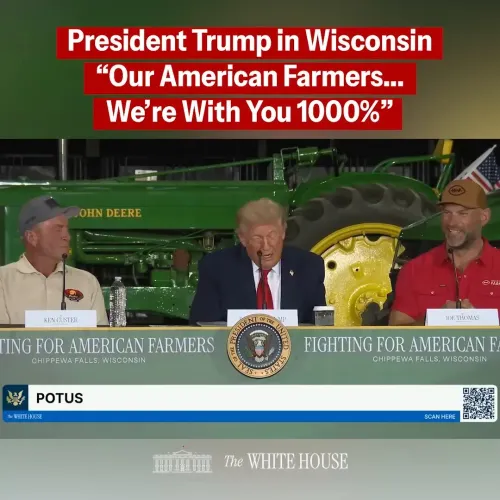
White House Vows to Keep Fighting for America's Farmers
Synopsis
The White House posted a forceful pledge of support for American farmers on June 6, 2026, amid ongoing congressional debate over the next Farm Bill reauthorization. The declaration underscores the executive branch's intent to defend federal agricultural programmes covering crop insurance, commodity supports, and rural development.
Key Takeaways
The White House posted a direct pledge on June 6, 2026 : 'NEVER STOP FIGHTING FOR AMERICA'S FARMERS!' The declaration comes during the active window for congressional debate on the next Farm Bill reauthorization, following the 2018 Farm Bill that ran through 2023 .
The USDA administers federal farm programmes spanning crop insurance, conservation easements, nutrition assistance, and rural development funding.
Trade actions and retaliatory tariffs have historically required supplemental federal aid packages for US commodity producers .
Congressional markup sessions on the next Farm Bill and any new trade or tariff announcements will be the key policy tests of this commitment.
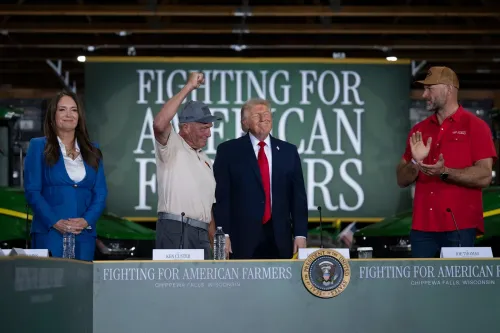
The White House, the official communications account of the Executive Office of the President of the United States, posted a rallying declaration on Saturday, June 6, 2026, pledging continued federal commitment to the country's agricultural sector with the message: 'NEVER STOP FIGHTING FOR AMERICA'S FARMERS!'
Context
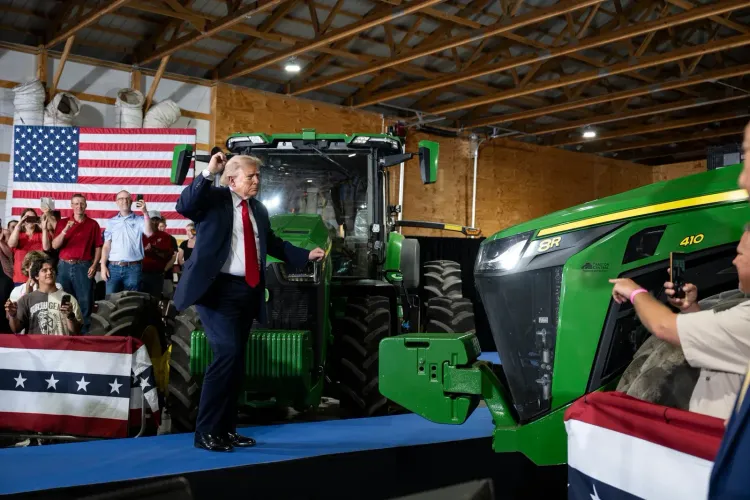
The post, accompanied by an image and the American flag and wheat-sheaf emojis, is a direct statement of executive-level support for US farmers and rural communities. While brief, such declarations from the White House typically signal an active policy posture — often surfacing during periods of commodity-price stress, regulatory debate, or ahead of major legislative action on agricultural policy.
Federal messaging that frames the presidency as a defender of farm interests has a long history in American politics, where rural constituencies carry significant electoral and economic weight. The timing of this post, in June 2026, places it within the window of ongoing congressional discussions around the next reauthorization of the Farm Bill.
Policy Backdrop
The Farm Bill is the cornerstone of US agricultural legislation — a multi-year omnibus law that governs commodity price supports, crop insurance subsidies, conservation easements, nutrition assistance, and agricultural research funding. The 2018 Farm Bill extended these provisions through 2023, and subsequent extensions have kept programmes running while Congress works toward a new long-term reauthorization.
The United States Department of Agriculture (USDA) administers the bulk of these programmes, channelling billions of dollars annually into crop insurance, rural development, and export-market tools. Federal farm policy traces its roots to the Agricultural Adjustment Act of 1933, which created the first permanent price-support and supply-management framework for major crops during the Great Depression.
Trade policy has repeatedly intersected with farm welfare. Tariff actions and retaliatory measures by trading partners have, in past cycles, triggered supplemental aid packages for commodity producers — particularly in row-crop sectors such as soy, corn, and wheat, as well as livestock. Any new trade or tariff announcements in 2026 would directly affect these export-dependent segments.
Stakeholders and Impact
US farmers and rural communities are the immediate audience and beneficiaries of this messaging. Agriculture employs millions across the country and underpins supply chains that extend from domestic food security to global commodity markets. Farm-state senators and representatives in Congress closely watch White House signals for cues on budget priorities and trade negotiations.
International buyers — including large importers of American grain, oilseeds, and meat — also monitor US agricultural policy shifts, as federal support levels influence production volumes and export pricing. For India, which is both a competitor and a buyer in select commodity categories, US farm policy has downstream implications for global food prices.
What's Next
Attention will now turn to Capitol Hill, where committee hearings and markup sessions on the next Farm Bill reauthorization are expected to intensify through 2026. The White House's public posture will be a key variable in shaping the scope of commodity supports, conservation funding, and trade-promotion tools included in any new legislation.
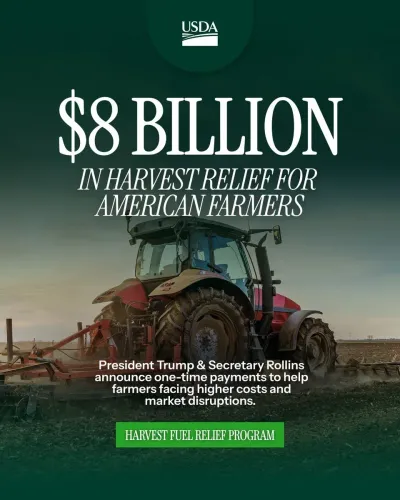
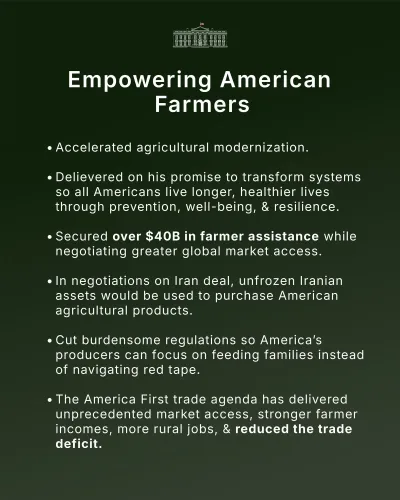
Any executive actions — such as new tariff measures, trade agreements, or emergency supplemental aid packages for farmers — would give concrete form to the pledge made in this post. Observers will watch for USDA announcements and White House budget proposals as the clearest indicators of how this commitment translates into policy.
Point of View
With the Farm Bill reauthorization unresolved and global commodity markets volatile, the message serves both a domestic political function and a negotiating-table signal to trading partners. For Indian policymakers and agri-commodity traders, it is a reminder that Washington views agricultural support as a non-negotiable pillar of economic and electoral strategy. The real test will be whether this rhetoric is matched by concrete budget allocations and trade-policy decisions in the months ahead.
NationPress
20 Oct 2026
Frequently Asked Questions
Why is the White House posting about American farmers in June 2026?
The White House posted a pledge to keep fighting for American farmers on June 6, 2026, likely signalling executive support during ongoing congressional negotiations over the next Farm Bill reauthorization and amid global trade pressures on US commodity exports.
What is the US Farm Bill and why does it matter?
The Farm Bill is a multi-year US law that sets the framework for crop insurance, commodity price supports, conservation programmes, nutrition assistance, and agricultural research. It is the single most important piece of federal legislation for American farmers and rural communities.
How does US farm policy affect India?
US federal support levels influence American agricultural production volumes and global export pricing in commodities such as soy, wheat, and cotton — all of which affect world market prices that Indian farmers and food importers must contend with.
What role does the USDA play in supporting American farmers?
The United States Department of Agriculture administers federal farm programmes including crop insurance subsidies, conservation easements, rural development funding, and export-market development tools that collectively stabilise farm incomes across the country.
What happens if the Farm Bill is not reauthorized?
Without a new Farm Bill, Congress typically passes short-term extensions to keep existing programmes running. A prolonged lapse, however, could disrupt crop insurance enrollment cycles, conservation payments, and commodity support calculations for millions of US farmers.