Trump Advocates for Farmer Support Through Tax Cuts and Trade Deals
Synopsis
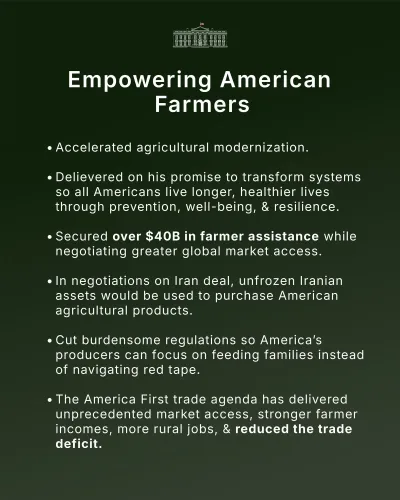
In a recent address, Donald Trump unveiled his administration's initiatives focused on American farmers, including significant tax cuts, trade advancements, and regulatory rollbacks. He stressed the urgency for Congress to approve a new farm bill and pledged continued support for farmers affected by trade disruptions.
Key Takeaways
Tax Cuts: Trump proposes significant tax reductions for farmers, enhancing their financial stability.
Trade Agreements: New trade deals are boosting exports, particularly in soybeans.
Regulatory Relief: Efforts to ease regulations aim to lower operational costs for farmers.
Financial Aid: A $12 billion relief package is available for those affected by trade disruptions.
Energy Policy: New renewable fuel standards are expected to benefit rural economies.
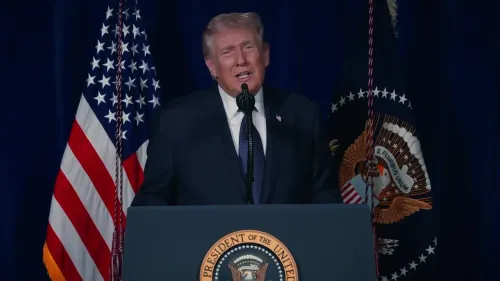
Washington, March 27 (NationPress) On Friday, Donald Trump presented a comprehensive plan featuring tax reductions, trade advancements, and regulatory reforms specifically designed for American farmers. He emphasized the need for additional support and urged Congress to approve a new farm bill.
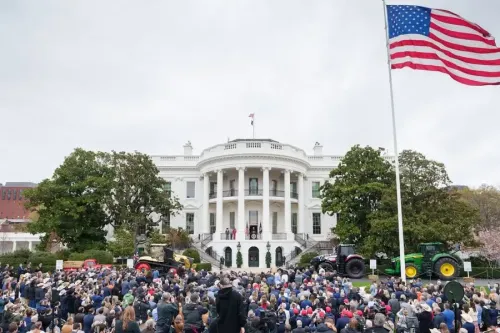
During what he called the largest assembly of farmers on the South Lawn of the White House, Trump stated that his administration acted promptly to elevate farm revenues and lower operational expenses.
“In my initial year back in the White House, farm income has surged by 20 percent,” he remarked, attributing this growth to tax reforms and the easing of regulations.
He also underscored a $12 billion aid package for farmers impacted by trade issues, stating, “We provided $12 billion in agricultural relief.”
Trump indicated that trade agreements have played a crucial role in this growth. He mentioned that the U.S. is now exporting more than $40 billion worth of soybeans to China, adding, “American soybeans are being shipped to China in unprecedented volumes.”
Additionally, he noted the expansion of markets for beef, dairy, and biofuels across various regions.
On the tax front, Trump claimed that his administration implemented “the largest tax cuts in American history,” with nearly half of tax filers benefiting and receiving an average refund of approximately $5,000.
He also mentioned that farmers can now write off 100 percent of equipment expenses in the first year, describing it as “slightly better” than previous long-term depreciation norms.
A significant aspect of his speech was focused on regulatory relief. Trump asserted that he eliminated “absurd water regulations” and sought to ease the environmental compliance burdens associated with farm machinery.
He contended that such regulations had complicated tractors and increased costs, vowing to “eliminate excessive red tape” to reduce machinery expenses.
He also introduced a new “right to repair” initiative that empowers farmers to repair their own equipment, potentially saving them up to $30,000 on major repairs. Additional reforms included relaxing demands for diesel exhaust fluid and issuing new guidelines aimed at lowering compliance costs.
Energy policy was another key focus. Trump declared that he had enacted an emergency order permitting the immediate sale of E15 fuel and was advocating for year-round approval. He also unveiled updated renewable fuel standards for 2026 and 2027, which he claimed would yield over $10 billion in economic benefits for rural areas and create around 100,000 jobs.
To bolster financing options, Trump announced that the Small Business Administration would broaden loan guarantees for farmers and food producers. He also promoted a new “product of the USA” label to help consumers identify domestically sourced products.
Trump repeatedly criticized the previous administration, asserting that farmers had been “treated very poorly” and that no new trade agreements were established during that time. He encouraged lawmakers to pass a new farm bill, deeming it “essential to everything we do,” echoing sentiments expressed by farmers at the gathering.
He also indicated that he would seek additional agricultural relief in the upcoming funding bill, assuring attendees, “We have you covered in both instances.”
Point of View
It's crucial to recognize the implications of Trump's proposals for American farmers. His focus on tax reductions, trade agreements, and regulatory relief reflects a significant push to support this vital sector. The call for a new farm bill echoes the sentiments of many in the agricultural community, highlighting the need for legislative action.
NationPress
2 Oct 2026
Frequently Asked Questions
What tax cuts did Trump propose for farmers?
Trump proposed significant tax cuts, including allowing farmers to deduct 100 percent of equipment costs in the first year, which he described as an improvement over previous long-term depreciation rules.
How is the U.S. agriculture sector benefiting from trade deals?
Trump highlighted that the U.S. is now exporting over $40 billion in soybeans to China as a direct result of new trade agreements, which he claims has boosted farm incomes.
What regulatory changes did Trump announce?
Trump announced the repeal of certain environmental regulations and introduced a 'right to repair' rule, allowing farmers to fix their own equipment, potentially saving them significant costs.
What is the significance of the $12 billion relief package?
The $12 billion relief package is intended to support farmers affected by trade disruptions, providing essential financial aid to stabilize their operations.
What are the expected outcomes of the new renewable fuel standards?
The updated renewable fuel standards for 2026 and 2027 are projected to generate over $10 billion in economic benefits for rural areas and create around 100,000 jobs.