Trump Announces Major Tax Cuts and Support for American Farmers
Synopsis
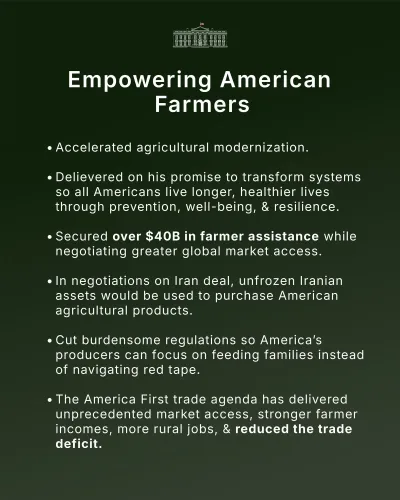
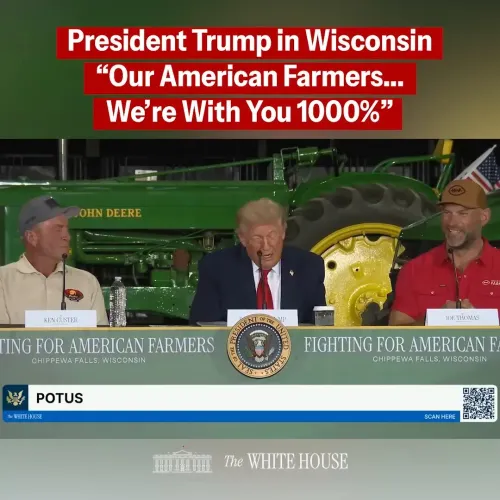
In a significant event at the White House, President Trump unveiled a range of tax cuts and regulatory reforms aimed at benefiting American farmers, asserting that his administration has made substantial progress after years of challenges.
Key Takeaways
Tax Cuts: Major tax cuts allowing full deductions for new equipment.
Trade Agreements: Enhanced agricultural exports, particularly to China.
Regulatory Changes: New rights for farmers to repair their equipment.
Economic Impact: Projected rural economic benefits of over $10 billion and job creation.
Political Significance: Importance of farmers in Midwestern states for elections.
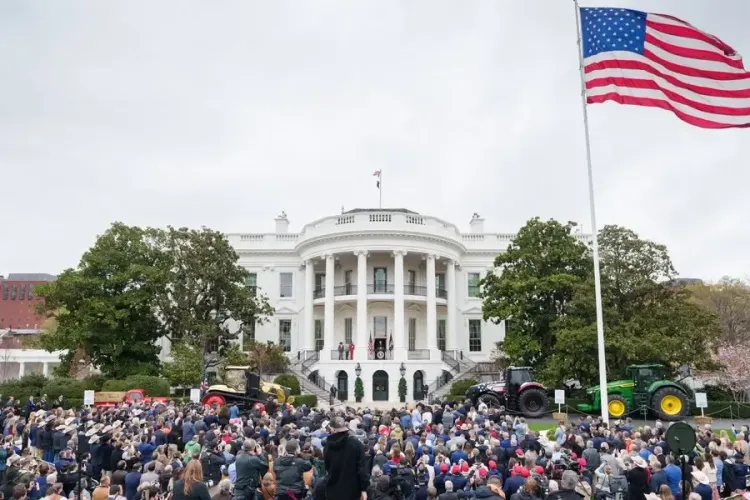
Washington, March 28 (NationPress) US President Donald Trump showcased an extensive array of tax reductions, trade advancements, and regulatory adjustments designed for American farmers. Speaking to a substantial crowd at the White House, he asserted that his administration had successfully 'delivered' after years of policy challenges.
During what he referred to as the 'largest gathering of American farmers in the history of the White House,' Trump stated that his government had already allocated $12 billion in support and noted that farm income had 'increased by 20 percent' during his first term back in office.
'We cherish the American farmer,' Trump declared, affirming that farmers 'once again have a genuine ally and advocate in the Oval Office.'
The president sharply criticized the prior administration of Joe Biden, claiming it had 'burdened America’s farmers with the highest inflation ever' and had failed to finalize 'even one new trade agreement on your behalf.'
Trump highlighted enhanced agricultural exports, especially to China, stating that the US is now exporting 'over $40 billion in American soybeans' after securing a renegotiated agreement with Chinese President Xi Jinping.
On domestic policies, he emphasized what he called the 'largest tax cuts in American history,' which include provisions enabling farmers to deduct '100 percent of the cost of new tractors and all equipment in the first year.'
He also pointed out the repeal of estate taxes on family farms, stating that this change would allow families to preserve generational land ownership. 'You can now keep your family farms within the family,' he remarked.
Trump introduced further regulatory changes, such as a new rule granting farmers the 'right to repair their own equipment,' which he claimed could save 'up to $30,000 on significant repairs.' He also discussed plans to reduce diesel exhaust fluid (DEF) regulations, describing them as 'absurd' and overly expensive.
Other initiatives included expanded loan guarantees through the Small Business Administration for farmers and food suppliers, as well as updated renewable fuel standards for 2026 and 2027, which he said would yield 'over $10 billion in rural economic benefits' and create 'an estimated 100,000 new jobs.'
Agriculture Secretary Brooke Rollins, who spoke at the event, mentioned that the administration had inherited 'an agricultural trade deficit of $50 billion' and emphasized that 'not a single new trade deal' had been made under the previous administration.
The farmers in attendance echoed their support for the administration’s policies. Joel Viereck, a vegetable farmer from New Jersey, urged Congress to pass a new farm bill, labeling it 'essential to everything we do.' Another farmer, Michael Cliver, remarked that tax and energy policies had put 'money back into the farmers' pockets.'
Trump also indicated he would pursue additional farm relief in the next funding bill and urged lawmakers to expedite the passage of a new farm bill.
In broader remarks, he connected agricultural policies with energy and trade strategies, including the emergency approval for E15 fuel sales and expanded biofuel mandates, arguing these measures would lower costs and boost domestic production.
The US agricultural sector remains a vital political constituency, especially in Midwestern states that are crucial in presidential elections. Government support for agriculture, trade access, and biofuel policy have consistently been central to the economics of US agriculture.
Point of View
President Trump's address highlights a concerted effort to address the needs of American farmers. While his claims of economic improvements are noteworthy, the criticisms of the previous administration reflect ongoing political tensions. The proposed policies could have significant implications for the agricultural sector, warranting careful scrutiny from stakeholders.
NationPress
29 Sept 2026
Frequently Asked Questions
What tax cuts did President Trump announce for farmers?
President Trump announced provisions that allow farmers to deduct 100% of the cost of new tractors and equipment in the first year, part of what he described as the largest tax cuts in American history.
How much support has the Trump administration provided to farmers?
The Trump administration has already provided $12 billion in support to American farmers.
What did Trump say about the previous administration's impact on farmers?
Trump criticized the Biden administration for burdening farmers with high inflation and failing to secure new trade agreements.
What changes were made regarding estate taxes on family farms?
Trump emphasized the rollback of estate taxes on family farms, allowing families to maintain generational land ownership.
What new regulatory changes did Trump propose?
Trump proposed a new rule that grants farmers the right to repair their own equipment and plans to reduce diesel exhaust fluid regulations.