Is Trump Setting the Stage for a New Era of Support for US Farmers?
Synopsis
In a bold move, President Trump announces up to $12 billion in aid for American farmers, aiming to reshape agricultural support and tackle inflation issues. This initiative, funded by tariff revenues, promises to stabilize the farming sector as the nation prepares for the next crop year.
Key Takeaways
$12 billion assistance package for farmers.
Funding sourced from tariff revenues.
Immediate availability of $11 billion .
Focus on stabilizing the agricultural sector.
Critique of the previous administration’s economic policies.
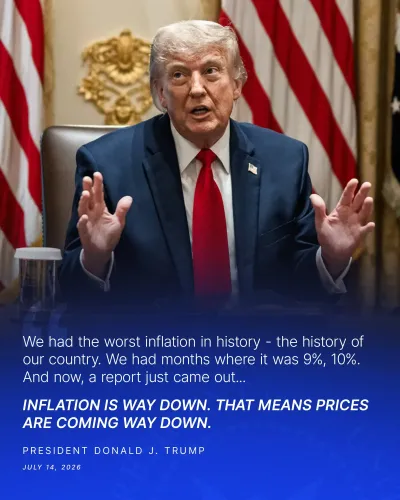
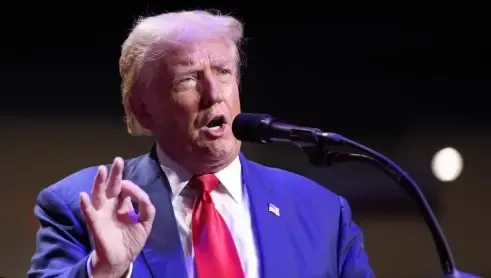
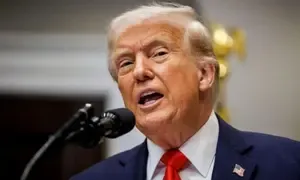
Washington, Dec 9 (NationPress) In a significant announcement, US President Donald Trump revealed a comprehensive support initiative for American farmers, introducing up to $12 billion in what he termed "economic assistance," sourced from tariff revenues. During a White House roundtable, he criticized the prior administration for leaving a "total mess" characterized by "the highest inflation in the country's history."
"We inherited a total mess from the Biden administration," Trump stated at the meeting on Monday, asserting that his administration had "brought prices way down" with gasoline prices hitting $1.99 a gallon in three states. He claimed, "The Democrats caused the affordability problem, and we're the ones that are fixing it."
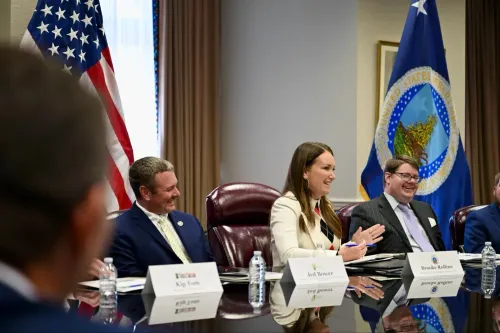
Alongside Agriculture Secretary Brooke Rollins, Treasury Secretary Scott Bessent, and National Economic Council director Kevin Hassett, Trump emphasized that the new initiative would provide "$12 billion in economic assistance to American farmers," promising "much needed certainty" as producers gear up for next year’s crop decisions.
Rollins clarified that $11 billion would be available immediately, with $1 billion reserved for later. "Today we are announcing $11 billion, we are holding $1 billion back," she mentioned, indicating that eligible farmers would learn their payment details by month’s end.
Trump highlighted that the disbursements were enabled by tariff revenue: "We're utilizing a relatively small portion of the hundreds of billions of dollars we receive in tariffs… Without it, we wouldn't be able to help you."
Throughout the event, Trump portrayed farmers as vital for economic recovery. "Farmers are an indispensable national asset, part of the backbone of America," he remarked. He alleged that policies from the Biden era led to a rise in bankruptcies, claiming "farm bankruptcies under Joe Biden surged by 55 percent," and contended that his potential return to office would reverse this trend. "Now we're once again in a position where a president is able to put farmers first."
He also mentioned renewed commitments from trading partners, noting that China was importing "a tremendous amount of soybeans" and that President Xi Jinping "is going to do even more than he promised to do." Additionally, he pointed out that Japan agreed to purchase "$8 billion in corn, soybeans, ethanol, fertilizer, aviation, biofuel, and rice.”
Bessent affirmed that China pledged to buy "at least 12 million metric tons of US soybeans this growing season, followed by a minimum of 25 million tons annually for the next three years." He concluded that Trump was "ushering in a new golden age for agriculture."
Hassett remarked that Biden-era policies significantly inflated costs, stating, "During Biden's term, 150,000 farms closed," and contended that interest expenses had surged by $8 billion each year.
Trump also committed to removing environmental restrictions on farming machinery. "We're going to eliminate many of the environmental restrictions that have been imposed on machinery… This makes the equipment much more expensive and complicated to operate," he explained. "We're going to remove that nonsense that they put on Biden, mostly."
Farmers present shared personal experiences. Iowa producer Cordt Holub described the aid as "Christmas early for farmers," expressing that the package would enable him to "farm another year." Holub also urged Trump to advocate for year-round sales of E15 ethanol. "E15 is a fantastic deal year-round," he stated.
Rice miller Meryl Kennedy from Louisiana voiced concerns over imports from India, Thailand, and China harming local producers. "We believe that countries are dumping rice into this country today," she said. "Puerto Rico was once a significant market for US rice… We've never witnessed such high import levels." Trump responded, "This can all be resolved quickly with tariffs… It solves the issue in no time."
In response to press inquiries, Trump claimed that inflation was "essentially gone," adding, "We have significantly reduced it now." He also expressed a preference for "home-grown" produce, despite occasional cheaper imports.
Trump asserted that the agricultural sector sought no permanent subsidies. "Farmers don’t desire aid; they want a level playing field… If they have a level playing field, they will outperform anyone else."
The US administrations have heavily relied on tariff methods and emergency payments to shield farmers from market fluctuations and trade retaliations, particularly in the soybean, corn, pork, and rice sectors. China stands as the largest foreign buyer of US agricultural products, making its import decisions crucial for the economic landscape of farm states.
The agricultural economy is also closely intertwined with US electoral politics, with rural states forming a significant voter bloc in presidential elections and congressional majorities. Agricultural support programs, biofuel mandates, and tariff strategies frequently dominate domestic policy discussions during election periods.
Point of View
President Trump has made it clear that he intends to prioritize the needs of American farmers, promising substantial financial support amid rising inflation. This initiative could mark a pivotal moment for the agricultural sector, especially as it navigates challenges posed by trade dynamics and economic pressures. It's essential to monitor how these policies unfold and their implications for farmers and the broader economy.
NationPress
30 Sept 2026
Frequently Asked Questions
What is the total amount of aid announced by Trump for farmers?
President Trump announced a total of up to $12 billion in economic assistance for American farmers.
How will the aid be funded?
The aid will be funded through tariff revenues collected by the government.
When can farmers expect to receive their payments?
Eligible farmers will know their payment amounts by the end of this month, with $11 billion being released immediately.
What are the expected benefits of this aid package?
The aid package aims to provide much-needed certainty for farmers as they make decisions for the upcoming crop year.
What does Trump say about the previous administration's impact on farmers?
Trump criticized the previous administration, claiming it led to a surge in farm bankruptcies and economic instability for farmers.