Rubio warns Iran of 'total defeat' over Hormuz, nuclear standoff
Synopsis
Marco Rubio's White House briefing was a full-spectrum ultimatum — military, economic, and nuclear — delivered with unusual bluntness. With Iran's navy and air force reportedly decimated and 90% of its trade halted, Washington is betting that maximum pressure will force Tehran to the table before it crosses the nuclear threshold.
Key Takeaways
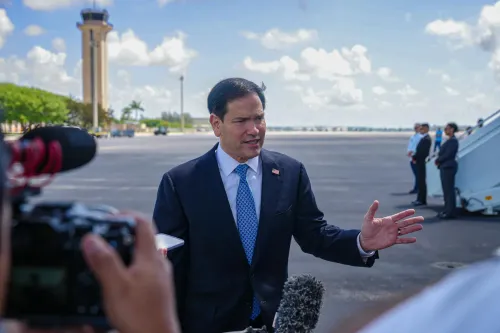
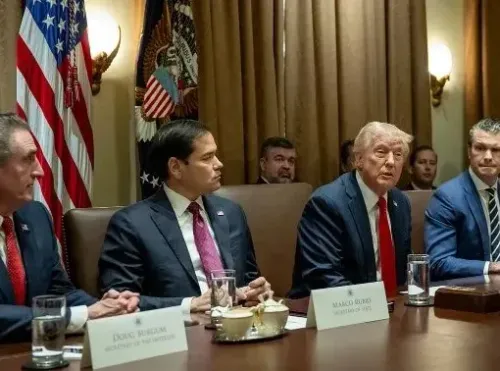
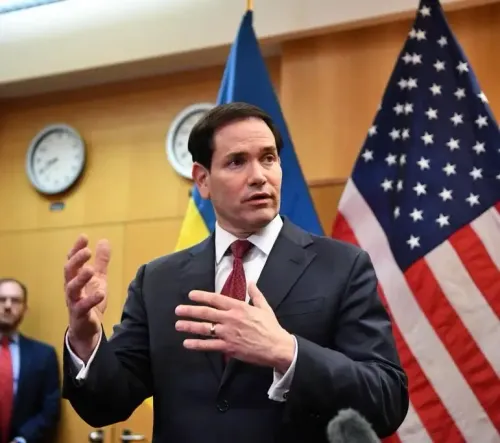
US Secretary of State Marco Rubio warned Iran of "economic collapse" and "total defeat" at a White House briefing on 6 May .
Rubio said the blockade is costing Iran as much as $500 million a day in lost revenue, with 90% of Iranian trade halted.
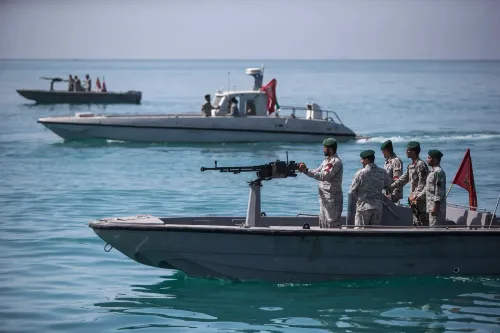
The US military operation "Project Freedom" aims to restore freedom of navigation through the Strait of Hormuz .
Rubio cited Iran's 60% enriched uranium stockpile as evidence of military nuclear intent, saying it has "no civilian use".
He claimed Iran "doesn't have a Navy left" or "an Air Force" following recent US military operations.
Washington warned foreign financial institutions against enabling Iran's sanctions evasion, threatening secondary sanctions .
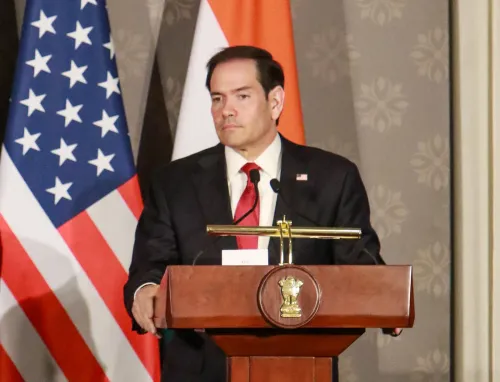
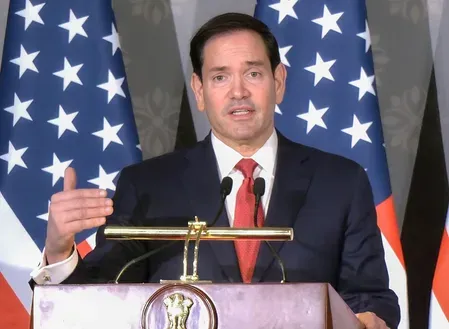
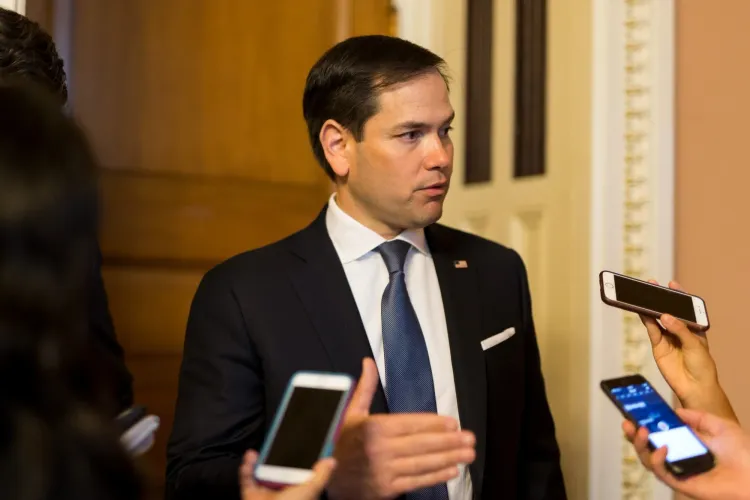
US Secretary of State Marco Rubio on 6 May warned Iran that it faced "economic collapse" and "total defeat" unless it abandoned its campaign to control the Strait of Hormuz and agreed to a diplomatic resolution over its nuclear programme. Speaking at a White House briefing in Washington, Rubio said the Trump administration was intensifying military, economic, and diplomatic pressure on Tehran following weeks of escalating tensions in the Persian Gulf.
The Ultimatum to Tehran
"The time has come for Iran to make a sensible choice," Rubio said. "The alternative is growing isolation, economic collapse, and ultimately total defeat." He accused Iran of illegally mining international waters, targeting commercial ships, and threatening one of the world's most critical shipping lanes. The remarks represent the sharpest public ultimatum the Trump administration has issued to Tehran since the current Gulf crisis intensified.
Operation Project Freedom and the Economic Squeeze
Rubio said the US military operation known as "Project Freedom" was specifically designed to restore freedom of navigation through the Strait of Hormuz, while broader sanctions continued to erode Iran's economy. He claimed the blockade was costing Iran as much as $500 million a day in lost revenue and that 90 per cent of total Iranian trade had been halted. "Any foreign financial institution or commercial actor that enables Iran's sanctions evasion is going to face secondary sanctions exposure," Rubio warned, extending the pressure to third-party actors globally.
The Nuclear Red Line
Rubio repeatedly argued that Iran could not be permitted to acquire nuclear weapons, drawing a direct line between Tehran's actions in the Strait and the danger it would pose if armed with nuclear capability. "A nuclear armed Iran could do whatever the hell they want with the Straits," he said. "That's the world none of us want to leave behind." He pointed to Iran's stockpile of highly enriched uranium at 60 per cent as evidence of military intent. "We know for a fact that they retain highly enriched uranium at 60 per cent, that they did so, and that has no civilian use," Rubio said. He also cited Iran's development of long-range delivery missiles and large underground centrifuges for enrichment as further indicators of a weapons-oriented programme.
Military Damage and Iran's Weakened Position
Rubio claimed that recent US military operations had severely degraded Iran's conventional military capabilities. "They don't have a Navy left," he said. "They don't have an Air Force." He added that Iran's missile-launching capacity and defence industrial base had suffered extensive damage, and that "their ability to build a shield behind which they could hide their nuclear programme was wiped out." Rubio also described Iran's leadership as divided and increasingly isolated under mounting economic pressure, suggesting internal fractures could create a diplomatic opening.
Diplomatic Path Still Open, Washington Says
Despite the combative tone, Rubio insisted that a diplomatic resolution remained possible. "If there's a real diplomatic path, we continue to explore it," he said. "The diplomatic path could lead them to reconstruction, to prosperity and to stability." He framed President Donald Trump as a leader who preferred peace but was prepared to escalate. "The president, our president, has proven time and again that his preference is peace. But Iran must accept the reality of this situation and come to the negotiation table," Rubio said. The administration has made a return to nuclear negotiations the central condition for any easing of pressure, a position that mirrors — yet significantly escalates — the posture of previous US administrations toward Tehran. Whether Iran's leadership, described by Rubio as divided, reads this moment as an opportunity or a provocation will likely determine the next phase of the standoff.
Point of View
Economic, and strategic. The framing is deliberate: by cataloguing devastation before offering a diplomatic exit, Washington is attempting to manufacture a capitulation narrative rather than a negotiation. The 60% enriched uranium figure is the real flashpoint; at that level, Iran is weeks, not months, from weapons-grade material, and no amount of pressure rhetoric changes that physics. The deeper question mainstream coverage is missing is whether a divided Iranian leadership — as Rubio himself described it — has anyone with both the authority and the political survival incentive to actually walk to the table.
NationPress
22 Sept 2026
Frequently Asked Questions
What did Marco Rubio warn Iran about?
US Secretary of State Marco Rubio warned Iran on 6 May that it faced 'economic collapse' and 'total defeat' unless it stopped trying to control the Strait of Hormuz and agreed to diplomatic talks over its nuclear programme. He made the remarks at a White House briefing, framing the ultimatum as a final opportunity before further escalation.
What is Operation Project Freedom?
'Project Freedom' is a US military operation described by Rubio as designed to restore freedom of navigation through the Strait of Hormuz. It is part of a broader strategy combining military, economic, and diplomatic pressure on Iran amid escalating Persian Gulf tensions.
How much is the Iran blockade costing Tehran?
According to Rubio, the blockade is costing Iran as much as $500 million a day in lost revenue, with 90% of total Iranian trade reportedly halted. Washington has also warned third-party financial institutions against helping Iran evade sanctions, threatening secondary sanctions exposure.
Why is Iran's enriched uranium a concern for the US?
Rubio cited Iran's stockpile of highly enriched uranium at 60%, stating it has 'no civilian use' and is consistent with a military nuclear development programme. He argued that a nuclear-armed Iran would pose an existential threat to freedom of navigation in the Strait of Hormuz and global security more broadly.
Is diplomacy still possible between the US and Iran?
Rubio said a diplomatic path remains open, stating it could lead Iran 'to reconstruction, to prosperity and to stability.' However, Washington has made a return to nuclear negotiations the central condition for any easing of pressure, while simultaneously claiming Iran's military has been severely degraded.