White House Signs Oval Office as a National Monument
Synopsis
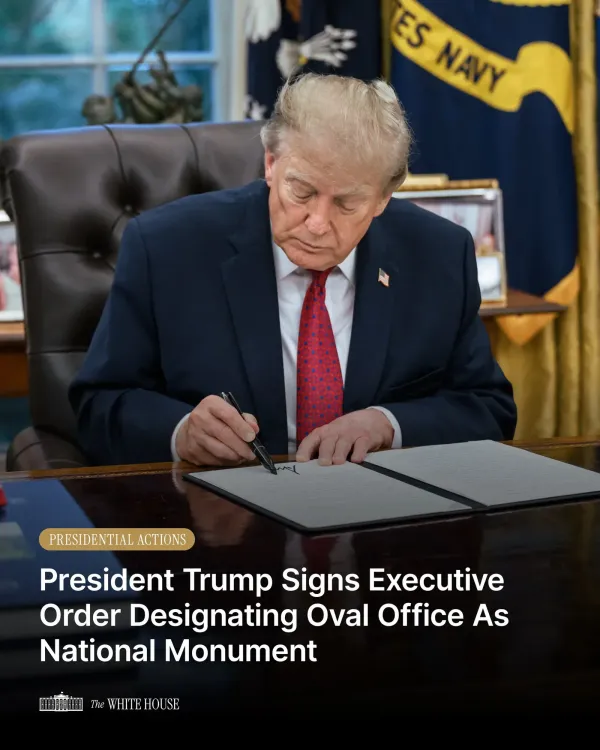
The White House has announced the president signed a proclamation designating the Oval Office as a National Monument under the Antiquities Act of 1906, adding formal federal protection to the historic West Wing office first constructed in 1909.
Key Takeaways
The president signed a proclamation on November 6, 2026 designating the Oval Office as a National Monument .
The move uses the Antiquities Act of 1906 , which grants presidents unilateral authority to protect objects of historic interest on federal lands.
The Oval Office was first constructed in 1909 and is located in the West Wing of the White House .
The White House complex is already administered in part by the National Park Service and holds National Historic Landmark status.
The formal proclamation text and subsequent National Park Service or congressional actions will determine the practical scope of the designation.
In a move that fuses presidential power with historic preservation, The White House announced on Friday, November 6, 2026, that the sitting president has signed a proclamation designating the Oval Office as a National Monument — placing America's most iconic working office under formal federal protection.
What the designation actually means for the Oval Office
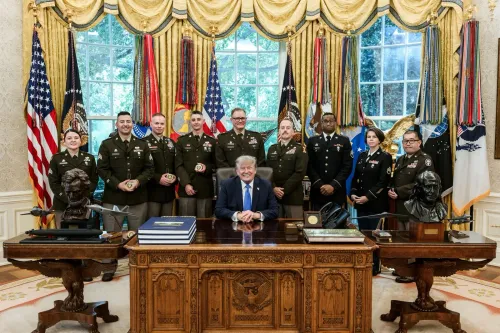
The Oval Office, nestled in the West Wing of the White House, has served as the president's working room since it was first constructed in 1909. The room has been renovated and redecorated by nearly every administration since — a living canvas of presidential priorities — but its core architecture and symbolic weight have remained constant. By invoking National Monument status, the proclamation signals an intent to fix that legacy in law, not just tradition.
The legal muscle behind the move is the Antiquities Act of 1906, which grants U.S. presidents broad, unilateral authority to designate 'objects of historic or scientific interest' on federal lands as national monuments. The White House complex, including the West Wing, is already administered in part by the National Park Service and carries National Historic Landmark status — making it a legally eligible candidate for the additional layer of monument protection.
A landmark that already held landmark status
The White House had already earned its place in the formal preservation framework long before this proclamation. Its National Historic Landmark designation reflects the building's role as an irreplaceable piece of American democratic history. What a National Monument designation adds is a sharper, more explicit presidential imprimatur — and potentially a higher bar for any future structural alterations or administrative changes to the space.
Preservationists have long argued that spaces like the Oval Office represent not just architectural heritage but the living geography of American democracy — rooms where consequential decisions were made and history turned. The formal proclamation text, and any subsequent actions by the National Park Service or Congress on implementation, will determine how much practical force the designation carries day to day.
Antiquities Act: a century-old tool for a 2026 moment
Presidents have wielded the Antiquities Act more than 160 times since Theodore Roosevelt first signed it into law, protecting everything from the Grand Canyon to offshore marine sanctuaries. Using it on a structure already inside the White House complex would mark one of its most intimate and symbolically charged applications. The act's reach on lands already under federal administration is well-established; the question observers will now watch is the specific scope and legal language of this particular proclamation.
Whether this designation reshapes day-to-day operations or stands primarily as a statement of historical intent, the message from the Executive Office is clear: the room where the American presidency lives and works is now, officially, forever.
Point of View
Raising the question of whether the move is substantively transformative or primarily a statement of legacy. For historians and preservationists, the lasting significance will hinge entirely on the specific language of the formal proclamation and whether it places any real constraints on future renovations or administrative use. It also sets a notable precedent for how the Antiquities Act — historically aimed at landscapes and archaeological sites — can be turned inward, toward the architecture of executive power itself.
NationPress
6 Nov 2026
Frequently Asked Questions
What is the Oval Office National Monument designation?
The U.S. president signed a proclamation on November 6, 2026 formally designating the Oval Office in the White House as a National Monument, placing it under explicit federal historic protection under the Antiquities Act of 1906.
What is the Antiquities Act and how does it apply here?
The Antiquities Act of 1906 gives U.S. presidents unilateral authority to designate 'objects of historic or scientific interest' on federal lands as national monuments. The White House West Wing, already administered partly by the National Park Service, qualifies as federal property under this framework.
Was the Oval Office already a protected historic site?
Yes. The White House complex, including the West Wing where the Oval Office is located, already held National Historic Landmark status and was partially administered by the National Park Service before this new National Monument designation.
When was the Oval Office first built?
The Oval Office was first constructed in 1909 in the West Wing of the White House and has been renovated and redecorated by successive administrations throughout its history.
What happens after the Oval Office is designated a National Monument?
Observers will watch for the release of the formal proclamation text and any subsequent actions by the National Park Service or Congress to understand the practical scope, including whether the designation limits future renovations or changes to the space.