Trump Showcases White House Renovations and Economic Vision
Synopsis
In a recent Oval Office interview, President Trump unveiled significant renovations to the White House, including a newly designed Oval Office and plans for a ballroom. He also discussed his administration's tariffs, AI advancements, and their impact on U.S. manufacturing, painting a picture of economic growth and modernization.
Key Takeaways
Oval Office Renovation: Trump personally chose new artwork for the Oval Office.
Rose Garden Changes: The old grassy layout was replaced with white stone for practicality.
Ballroom Plans: A long-desired ballroom is set for construction soon.
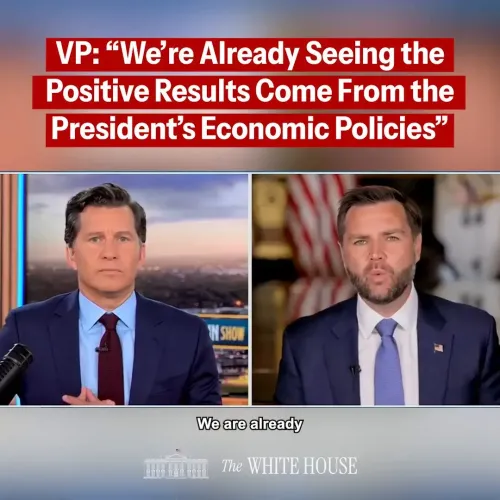
Economic Focus: Trump emphasized tariffs and AI as key growth drivers.
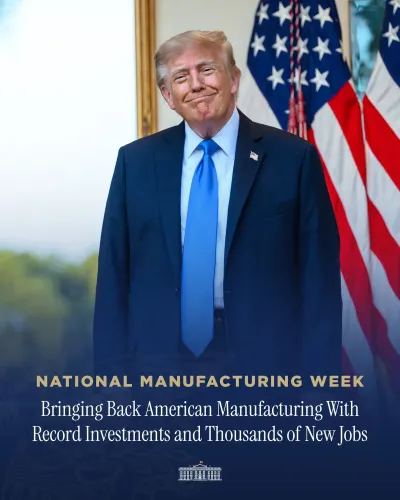
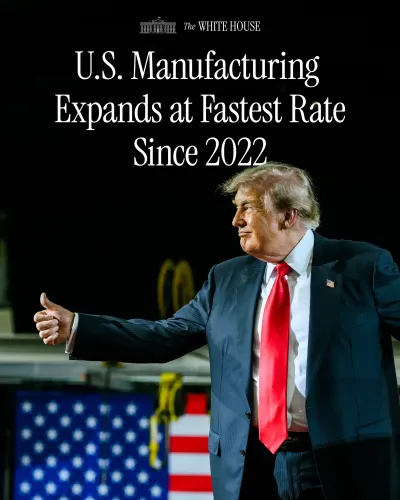
Manufacturing Return: Companies are bringing production back to the U.S. to avoid tariffs.
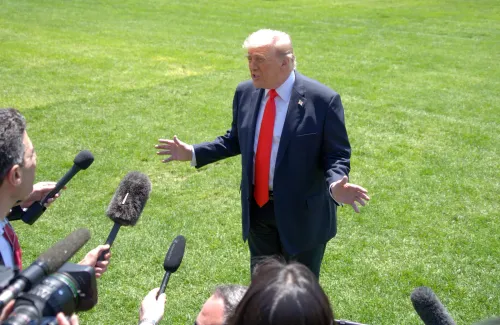
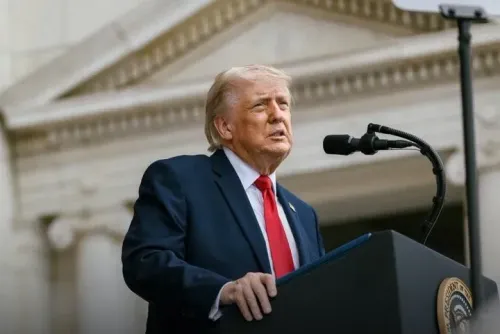
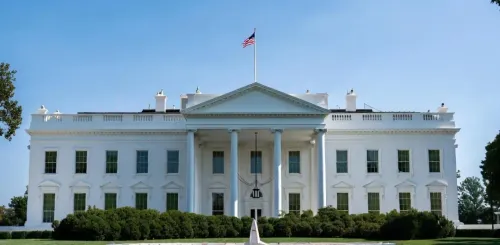
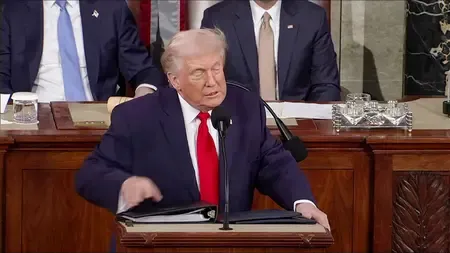
Washington, March 11 (NationPress) President Donald Trump highlighted his transformation of the White House during an interview in the Oval Office with the All-In Podcast. He discussed his modifications to the Rose Garden, unveiled plans for a new ballroom, and swiftly transitioned to a broader discussion about tariffs, artificial intelligence, and manufacturing.
Referring to the newly updated Oval Office, Trump emphasized that he personally chose the artwork displayed, many of which had been stored in the White House vaults for years. “I selected them all,” he proudly stated while gesturing towards portraits of prominent figures such as George Washington, Abraham Lincoln, Ulysses S. Grant, Thomas Jefferson, Franklin D. Roosevelt, and Ronald Reagan.
He remarked that some of these pieces had been kept in storage for more than a century, stating, “They were in the vaults for many -- over 100 years.”
The President also defended his alterations to the Rose Garden, arguing that the previous grassy layout posed challenges during events and press conferences. “We laid down beautiful white stone, and now we can host all sorts of activities,” he explained.
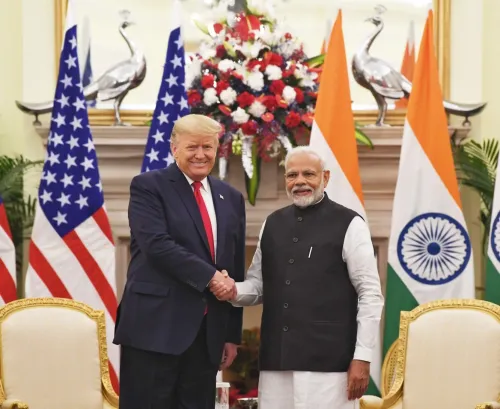
Trump recounted a recent press conference with Indian Prime Minister Narendra Modi, noting that the old setup caused issues as “the women with their high heels were -- it was not a pretty picture. It was wet.” Modi had visited the White House in February 2025, just weeks into his second term. The two leaders held a joint press conference in the Rose Garden back in June 2017, during Trump’s first term.
“For 150 years, they wanted a ballroom at the White House,” Trump pointed out, advocating that significant state events should not rely on temporary tents on the lawn. When asked about the timeline for construction, he replied, “A couple of years. Take a couple of -- starting in about two weeks.”
On the economic front, Trump claimed that the United States is experiencing significant tariff revenue influx. “We’re collecting hundreds of billions of dollars in tariffs,” he stated. “The money is coming in at levels that nobody ever thought possible.”
He linked this financial success to his broader economic agenda, asserting that investments in AI, domestic manufacturing, and energy expansion were fueling growth. “We have a country that’s doing remarkably well, and leading in AI is an honor,” Trump noted. He further mentioned that developers in data and AI infrastructure were permitted to construct their own power facilities due to limitations of the old grid.
Trump indicated that automobile and chip manufacturing are returning to the U.S. because companies “don’t want to pay tariffs.”
Discussing substantial industrial investments, he stated, “When these plants start opening, you know, we have a lot of construction jobs being created. But when these plants that you guys are so fond of start beginning operations, nobody’s ever witnessed plants like this.”
While ideas for White House expansion are not novel, alterations to the executive mansion and its grounds often attract public attention due to the building’s historical and political significance. Trump’s statements masterfully intertwined his visual renovation proposal with a larger narrative about tariffs, energy, and AI as pivotal elements of his economic message for a second term.
Point of View
Trump's statements reflect a blend of personal pride in his renovations and a broader agenda focused on economic growth through tariffs and technological advancement. His emphasis on historical significance and modernization aims to resonate with both supporters and critics alike.
NationPress
16 Oct 2026
Frequently Asked Questions
What renovations did Trump announce for the White House?
Trump showcased his redesign of the Oval Office, discussed changes to the Rose Garden, and announced plans for a new ballroom.
Why did Trump change the Rose Garden?
He claimed the previous grassy layout was impractical for events and press appearances, opting for beautiful white stone instead.
What economic topics did Trump address?
Trump spoke about tariffs, artificial intelligence, and the resurgence of manufacturing in the U.S.
When are the ballroom renovations expected to start?
Trump mentioned that construction would begin in a couple of years, starting in about two weeks.
How does Trump view the current economic situation?
He believes the U.S. is benefiting from unprecedented tariff revenue and leading in AI development.