What Challenges Did the India–US Partnership Face in 2025?
Synopsis
2025 marked a tumultuous year for India-US relations, starting positively but quickly descending into political and trade disputes. As both nations navigated complex challenges, the partnership's resilience faced tests amid evolving global dynamics.
Key Takeaways
India-US relations faced significant challenges in 2025.
Political differences and trade disputes tested the partnership.
Despite tensions, defence cooperation remained strong.
Bilateral trade showed resilience amidst tariffs.
Future relations will require ongoing political alignment.
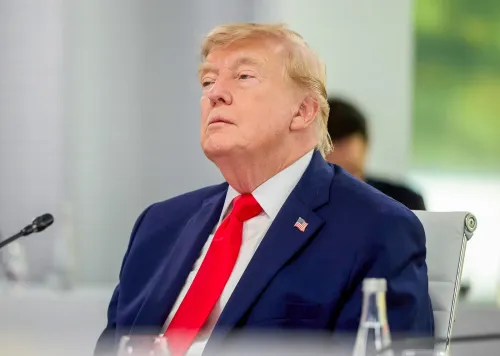
Washington, Dec 31 (NationPress) The India–US partnership encountered significant challenges in 2025, despite starting on a positive trajectory. Political disagreements, trade disputes, and sharp public rhetoric swiftly strained relations. The year commenced with optimism following Donald Trump's return to the White House on January 20. In the first 100 days, both nations acted swiftly, signaling a commitment to their partnership.
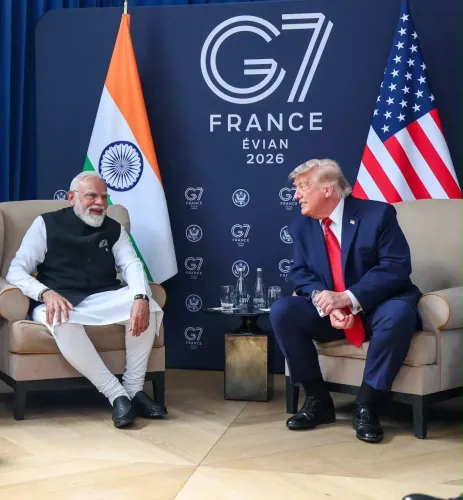
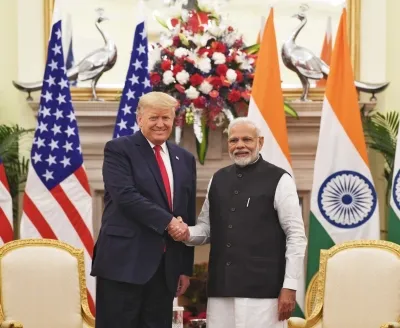
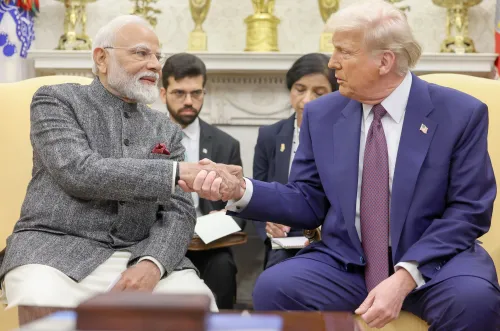
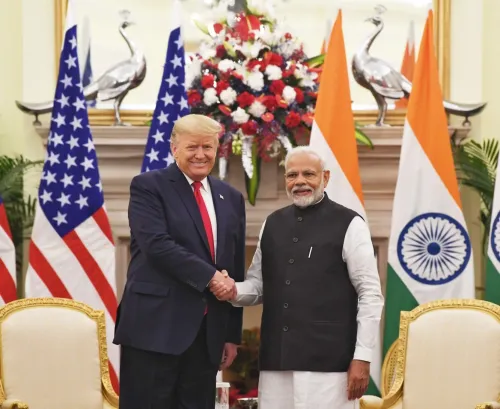
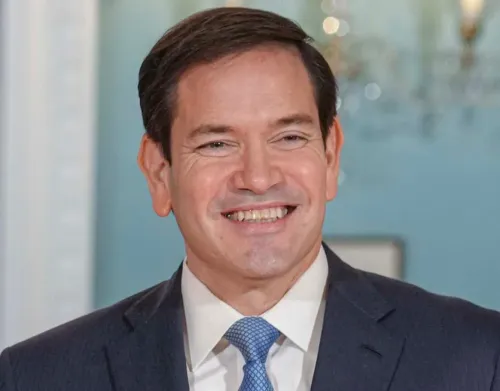
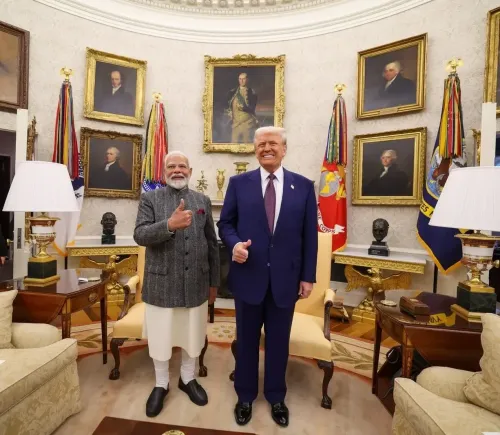
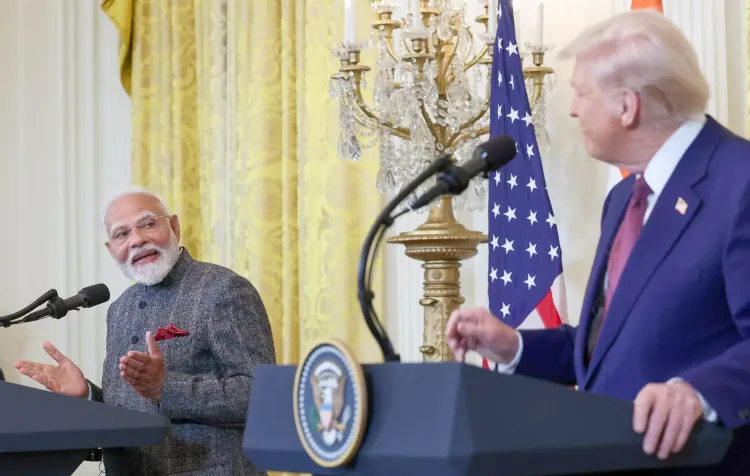
On January 21, Secretary of State Marco Rubio conducted his inaugural bilateral meeting with External Affairs Minister (EAM) S Jaishankar in Washington, just a day after the inauguration. Prime Minister Narendra Modi met with President Trump in the Oval Office on February 13, and US Vice President J D Vance visited India from April 20-24.
The optics were significant, drawing attention from around the globe.
India faced scrutiny when EAM Jaishankar was granted a prominent front-row seat at Trump's inauguration, a rare privilege for foreign ministers. This was interpreted in diplomatic circles as a positive signal regarding India's standing with the new administration.
Expectations were high at that point. Defence collaboration was robust, Indo-Pacific coordination was ongoing, and technology and supply chain issues loomed large on the agenda. There was also optimism that a long-stalled trade deal could finally gain traction.
However, this phase was short-lived.
By mid-year, the relationship soured. The initial public rift occurred when President Trump and his senior aides claimed that the US had facilitated peace between India and Pakistan. New Delhi reacted strongly, dismissing any notion of third-party intervention, a stance that has been consistent across administrations.
This disagreement indicated a deeper communication divide.
Shortly thereafter, the Trump administration enacted a 50% tariff on imports from India, severely impacting trade negotiations. The anticipated bilateral trade agreement fell through, and plans for a Quad leadership summit in India were shelved. The annual 2+2 dialogue between foreign and defence ministers was also cancelled.
For the first time in years, senior US officials openly criticized India, adopting a blunt tone that was absent in previous years.
Simultaneously, India's strengthening ties with other major powers added to Washington's uneasiness.
New Delhi continued to enhance its relationship with Russia, with the personal rapport between PM Modi and President Vladimir Putin remaining evident. India persisted in purchasing discounted Russian oil, a move that raised concerns in Washington.
High-ranking US officials, including members of Trump's Cabinet, publicly condemned India, with some accusing New Delhi of financing Russia's war in Ukraine through energy purchases.
India refrained from publicly engaging in a war of words, but the tension was palpable. Indian officials reiterated that energy security and strategic autonomy were non-negotiable.
India's outreach to China also attracted attention.
PM Modi's meeting with President Xi Jinping during the Shanghai summit was framed by New Delhi as an effort to stabilize relations. However, Washington interpreted this differently, with some US officials viewing the optics with suspicion.
The situation escalated when President Trump referenced the meeting on social media, delivering a brief yet clear message of displeasure.
If these actions disturbed Washington, developments involving Pakistan caused even greater concern for New Delhi.
India was surprised when Pakistan's Army Chief, General Asim Munir, received an invitation to the White House and had a private lunch with Trump. Indian officials privately described this access as unexpected.
The unease intensified months later when Munir returned to Washington, this time joining Pakistan Prime Minister Shehbaz Sharif for a meeting in the Oval Office. In New Delhi, this engagement was viewed as a setback, raising longstanding concerns about US interactions with Pakistan's military leadership.
Despite the political tensions, the strategic foundation of the relationship remained intact.
Defence and intelligence cooperation persisted, quietly yet steadily. India and the United States signed a new 10-year defence framework agreement, signed by Defence Minister Rajnath Singh and Secretary of War Pete Hegseth, outlining the future of military cooperation, technology sharing, and interoperability.
Officials from both nations emphasized that shared interests outweighed momentary disputes. Common priorities included maritime security, counterterrorism, and regional stability.
Trade also told a different story.
Despite the tariff, bilateral trade appears to have increased over the year. Companies adapted, supply chains shifted, and business activity persisted. The figures indicated that commercial ties had developed a resilience. Major US firms such as Microsoft, Google, and Amazon collectively announced nearly USD 70 billion in investments in India's AI sector.
In December, cooperation took a notable turn when the Indian Space Research Organisation (ISRO) successfully launched a US satellite into orbit. This mission highlighted a reality often overlooked in political discussions: the high-tech collaboration between the two nations remained robust. India's Ambassador to the US, Vinay Mohan Kwatra, was even invited to Mar-a-Lago.
However, people-to-people relations faced challenges this year. As H-1B visa restrictions intensified and new regulations were introduced, Indian professionals in technology, healthcare, and research felt the repercussions. Delays in processing and visa appointments increased, leaving hundreds of families in limbo.
Moreover, Indian students, who constitute one of the largest groups of foreign students, were also affected. Uncertainties surrounding visas disrupted their academic plans and admissions. This issue prominently featured in discussions between Indian officials and US lawmakers. By year-end, relief was scarce.
As the year drew to a close, signs of improvement emerged as PM Modi and Trump engaged in direct phone conversations at least four times, as noted on their social media platforms. Officials characterized these discussions as candid and constructive, suggesting that the goal was stabilization rather than sweeping declarations.
By year's end, India-US relations seemed to have stabilized. Although they had not returned to the optimism of early 2025, the overt tensions had diminished.
The year imparted clear lessons. The India–US partnership is resilient, yet not impervious to challenges. A strategic rationale still binds New Delhi and Washington, but political alignment should not be taken for granted.
As both nations approach 2026, the relationship appears recalibrated, not reset, sustained by defence, trade, and technology, yet tested by a year that revealed both its strengths and weaknesses.
Point of View
It is important to recognize that while the India-US relationship is solid at its core, it faced substantial challenges in 2025. The ability to navigate political disputes and trade tensions will be crucial for both nations as they move forward. The partnership remains valuable, but continued efforts are necessary to ensure its success.
NationPress
5 Oct 2026
Frequently Asked Questions
What were the major challenges faced by India-US relations in 2025?
In 2025, India-US relations were strained by political differences, trade disputes, and public criticisms, particularly after Donald Trump returned to the White House.
How did the leadership changes affect the partnership?
The return of Donald Trump to the White House initially brought optimism, but quickly led to tensions over issues like tariffs and third-party mediation in the India-Pakistan conflict.
What impact did tariffs have on trade between India and the US?
The imposition of a 50% tariff on Indian imports significantly hampered trade negotiations and led to the collapse of anticipated bilateral agreements.
Did defence cooperation between India and the US continue despite tensions?
Yes, despite political friction, defence and intelligence cooperation remained steady, with a new 10-year defence framework agreement signed.
What are the implications for the future of India-US relations?
While the partnership showed resilience in 2025, ongoing political alignment will be essential as both nations look to strengthen their ties moving into 2026.