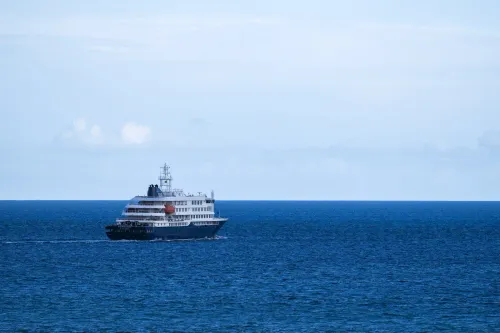
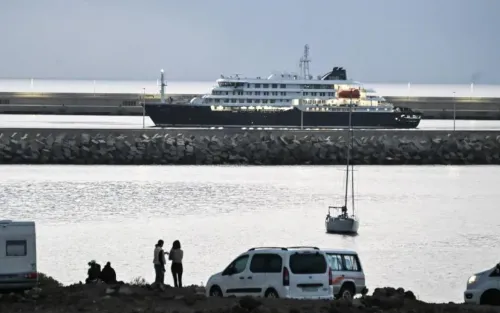
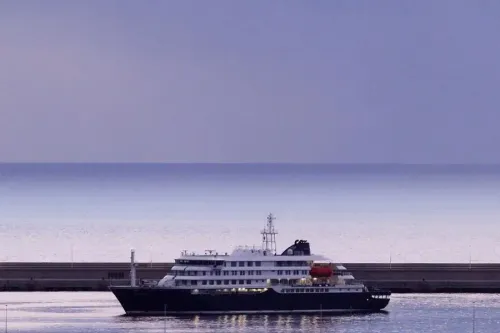
WHO flags all aboard hantavirus cruise ship as 'high-risk' contacts

Synopsis
A hantavirus outbreak aboard cruise ship MV Hondius has turned into a multi-country public health emergency, with the WHO classifying all 147-plus passengers and crew as high-risk contacts. Three people are dead, six cases are lab-confirmed as the Andes virus — one of the only hantavirus strains known to spread person-to-person — making the 42-day monitoring window critical.
Key Takeaways
The WHO has classified all passengers and crew aboard MV Hondius as "high-risk" contacts following a confirmed hantavirus outbreak.
As of 8 May , eight symptomatic cases have been reported, including three deaths ; six cases are laboratory-confirmed as Andes virus (ANDV) .
Severe respiratory illness was first reported on 2 May , when 147 passengers and crew were onboard and 34 others had already disembarked.
The WHO recommends active monitoring for 42 days for all who disembark, plus self-monitoring and mask-wearing for low-risk contacts if symptoms appear.
The ship was expected to dock at the Canary Islands on Sunday; overall public risk in the islands is assessed as "low" by the WHO.
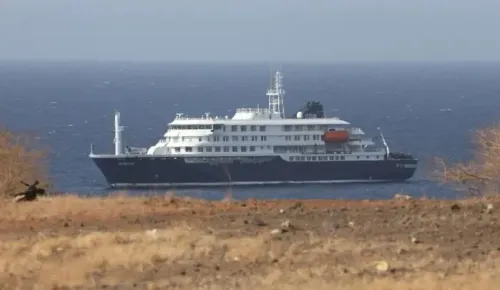
The World Health Organization (WHO) has declared all passengers and crew aboard the cruise ship MV Hondius as "high-risk" contacts following a confirmed hantavirus outbreak onboard, recommending active monitoring for a 42-day period after disembarkation. As of 8 May, the outbreak has claimed three lives, with eight symptomatic cases reported and six laboratory-confirmed as Andes virus (ANDV) infections.
WHO's Risk Classification and Monitoring Guidelines
Maria Van Kerkhove, WHO's Director of Epidemic and Pandemic Preparedness and Prevention, told a media briefing that the organisation has classified everyone onboard as a high-risk contact. "We classify everybody on board as what we call a high-risk contact," she said, adding that currently "nobody on board has any symptoms." She recommended "active monitoring and follow-up of all the passengers and crew who disembark for a 42-day period."
Despite the severity of the classification, Van Kerkhove stressed that the risk to the general public and to residents of the Canary Islands — where the MV Hondius was expected to dock on Sunday — remains "low."
Timeline of the Outbreak
According to a WHO Disease Outbreak News update issued on Saturday, severe respiratory illness was first reported aboard the cruise ship on 2 May. At that time, 147 passengers and crew members were onboard, while 34 others had already disembarked. All WHO contact points in the concerned countries have since been informed and are actively supporting international contact tracing efforts.
The Andes virus, a strain of hantavirus, is notably one of the few hantavirus variants where person-to-person transmission has been documented in past outbreaks — a factor that underpins the WHO's cautious approach. This is among the most significant hantavirus incidents to affect a cruise vessel in recent recorded history.
Symptoms and What to Watch For
The WHO notes that early symptoms of hantavirus infection include headache, dizziness, chills, fever, myalgia, and gastrointestinal problems such as nausea, vomiting, diarrhoea, and abdominal pain. Given that pre-symptomatic transmission in past ANDV outbreaks cannot be entirely ruled out, the WHO also recommends self-monitoring, medical evaluation, and mask-wearing for low-risk contacts should symptoms develop.
International Coordination and Next Steps
The WHO has urged all countries involved to continue public health coordination, encompassing contact tracing, case management, infection prevention, and transparent communication. Health authorities across multiple nations are now tracking individuals who disembarked before the outbreak was identified, making this a cross-border public health response. The coming days will be critical in determining whether secondary cases emerge among those who left the ship before monitoring protocols were activated.
Point of View
Not just from rodents. That distinction makes the 42-day monitoring window more than bureaucratic caution. What mainstream coverage risks underplaying is the contact-tracing complexity: 34 people had already disembarked before the outbreak was identified, meaning the exposure window is wider than the ship's current manifest. If secondary cases emerge on land, the response shifts from ship-based containment to a dispersed, multinational outbreak investigation — a far harder problem to manage.
NationPress
23 Sept 2026
Frequently Asked Questions
What is the hantavirus outbreak on the MV Hondius cruise ship?
A hantavirus outbreak aboard the cruise ship MV Hondius resulted in eight symptomatic cases and three deaths as of 8 May, with six cases laboratory-confirmed as Andes virus (ANDV) infections. Severe respiratory illness was first reported onboard on 2 May, prompting the WHO to classify all passengers and crew as high-risk contacts.
Why has the WHO recommended 42-day monitoring for those aboard?
The WHO recommends a 42-day active monitoring period because the Andes virus, unlike most hantavirus strains, has been associated with person-to-person transmission in past outbreaks, meaning pre-symptomatic spread cannot be entirely ruled out. The 42-day window covers the maximum known incubation period for the virus.
What are the symptoms of hantavirus infection?
Early symptoms include headache, dizziness, chills, fever, muscle pain (myalgia), and gastrointestinal problems such as nausea, vomiting, diarrhoea, and abdominal pain, according to the WHO. The infection can progress to severe respiratory illness.
Is the public in the Canary Islands at risk from the hantavirus outbreak?
The WHO has assessed the risk to the general public and residents of the Canary Islands — where MV Hondius was expected to dock — as 'low'. However, all concerned country health authorities have been notified and are supporting international contact tracing.
What is the Andes virus and why is it significant?
The Andes virus (ANDV) is a strain of hantavirus and is notable for being one of the very few hantavirus variants where person-to-person transmission has been documented. This characteristic makes outbreaks involving ANDV particularly complex to contain compared to other hantavirus strains.