Pralhad Joshi: Hubballi Airport New Terminal at ₹340 Cr

Synopsis
Union Minister Pralhad Joshi announced that construction of Hubballi Airport's new ₹340-crore terminal is progressing rapidly. The 15,950 sq m facility will serve 2,400 simultaneous passengers, feature 4 aero-bridges and 14 check-in counters, and fulfil a decades-long aspiration for international-grade air connectivity in North Karnataka.
Key Takeaways
The new Hubballi Airport terminal is being built at an estimated cost of ₹340 crore .
The terminal will cover 15,950 square metres and handle up to 2,400 passengers simultaneously .
It will include 4 aero-bridges , 14 check-in counters , and parking for approximately 500 vehicles .
The project is intended to boost North Karnataka's global connectivity and reduce dependence on Bengaluru airport.
Union Minister Pralhad Joshi , who represents the Dharwad constituency , described it as a decades-long dream for the Hubballi-Dharwad twin cities.
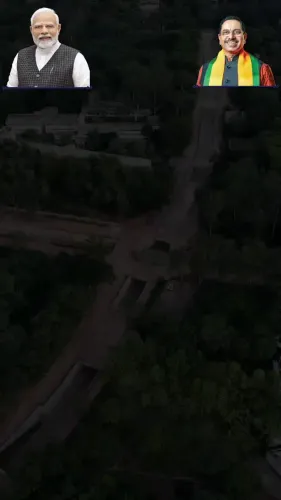
A ₹340-crore transformation is under way at Hubballi Airport — and Union Minister Pralhad Joshi wants North Karnataka to know it is moving fast. On Friday, 6 November 2026, the senior BJP leader and Dharwad MP posted a progress update on X, calling the new terminal a dream decades in the making for the twin cities of Hubballi and Dharwad.
The numbers behind the project are substantial. The new terminal will spread across 15,950 square metres — large enough to handle 2,400 passengers simultaneously, a dramatic leap from current capacity. It will be equipped with 4 modern aero-bridges, 14 state-of-the-art check-in counters, and a multi-vehicle parking facility capable of accommodating roughly 500 cars, buses, and taxis.
What this means for Hubballi's commercial ambitions and Dharwad's cultural identity
Joshi described Hubballi as a commercial city and Dharwad as a cultural one — two cities that have long shared an identity but lacked an airport befitting their combined weight. The new terminal, he said, is designed to deliver 'international-standard' infrastructure and to strengthen North Karnataka's global connectivity. The hashtag #DharwadConstituency anchors the update squarely in his political home ground.
The expansion fits a well-established national pattern. Since the launch of the UDAN regional connectivity scheme in 2016 and the National Civil Aviation Policy, India has systematically prioritised upgrading airports in tier-2 cities to reduce the stranglehold of gateway hubs. For northern Karnataka, that means cutting dependence on Bengaluru's Kempegowda International Airport — a journey of several hours by road — for travellers seeking anything beyond a handful of domestic routes.
North Karnataka's long wait for international-grade air access
The Hubballi-Dharwad belt is one of Karnataka's most economically active non-metro corridors — home to major industries, a thriving education sector, and significant agricultural trade. Yet air connectivity has lagged behind that economic footprint for years. A terminal capable of handling nearly 2,400 passengers at a time, backed by aero-bridge boarding and modern landside infrastructure, would materially change the calculus for businesses weighing investment in the region.
What to watch next: the project's completion timeline, whether the airport receives a formal upgrade in its operational category to handle international flights, and which new routes carriers announce once the terminal is ready. The infrastructure is being built — the routes and the status will be the next chapter.
Point of View
The project reinforces his profile as a minister who can direct central resources toward Karnataka's historically underserved northern districts. More broadly, the upgrade reflects the Modi government's sustained bet that tier-2 airport modernisation can unlock regional economic growth and reduce the geographic inequality in India's air travel network. The real test will come when the terminal opens: whether new domestic and international routes actually materialise will determine whether this remains a construction milestone or becomes a genuine connectivity inflection point for North Karnataka.
NationPress
6 Nov 2026
Frequently Asked Questions
What is the cost of the new Hubballi Airport terminal?
The new terminal at Hubballi Airport is being built at an estimated cost of approximately ₹340 crore , according to Union Minister Pralhad Joshi's post on 6 November 2026.
How many passengers can the new Hubballi Airport terminal handle?
The new terminal is designed to handle 2,400 passengers simultaneously , spread across a floor area of 15,950 square metres .
What facilities will the new Hubballi Airport terminal have?
The terminal will feature 4 aero-bridges , 14 modern check-in counters , and a large parking facility for around 500 cars, buses, and taxis .
Will Hubballi Airport become an international airport?
Minister Joshi described the project as an 'international-standard' airport for the region. Whether it receives a formal international airport designation is yet to be officially confirmed and will depend on completion and regulatory approvals.
Which scheme supports regional airport upgrades like Hubballi in India?
India's UDAN regional connectivity scheme , launched in 2016 , along with the National Civil Aviation Policy , has driven upgrades at tier-2 city airports across the country, including the Hubballi expansion.