Tharoor asks if this is India's 'middle power moment'
Synopsis
Congress MP Dr. Shashi Tharoor, writing in a leading English daily on 6 November 2026, argues that a fragmenting world order offers India and other middle powers a historic opportunity to build a more inclusive international system through strategic autonomy and multilateral cooperation.
Key Takeaways
Shashi Tharoor published an opinion piece on 6 November 2026 asking whether this is a 'middle power moment' for countries like India.
He argues that rising great-power rivalry and a fragmenting international order create a historic opening for middle powers to shape a more equitable global system.
The piece identifies diplomacy, strategic autonomy, and multilateral cooperation as the three key instruments for middle-power agency.
India's strategic autonomy doctrine traces back to the post-1947 Non-Aligned Movement and was most recently demonstrated during its 2023 G20 presidency .
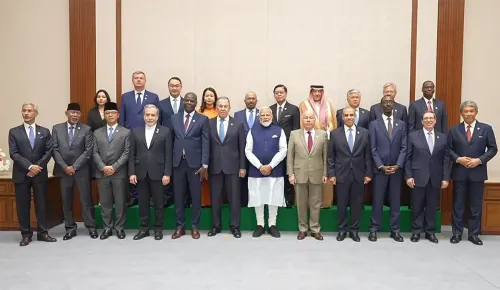
Upcoming engagements in BRICS and SCO summits , and the push for UN Security Council reform , will serve as near-term tests of India's middle-power ambitions.
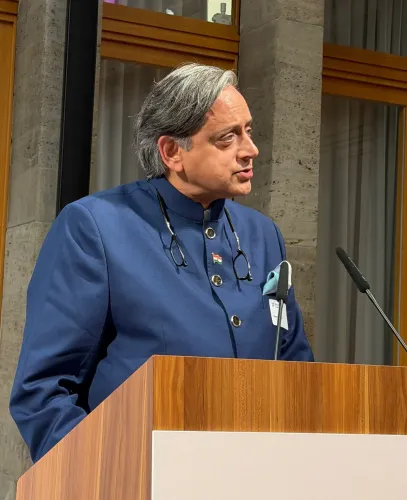
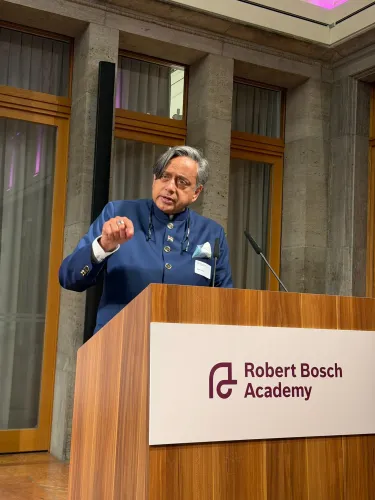
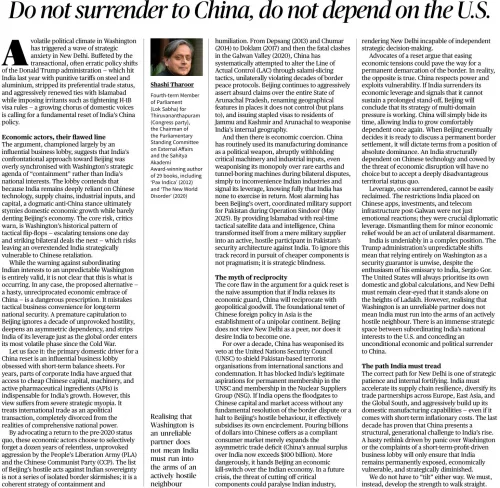
A fragmenting world order — riven by US-China rivalry, the war in Ukraine, and deepening fractures in multilateral institutions — may be handing countries like India a rare, generational opening. Congress MP Dr. Shashi Tharoor argued precisely that in an opinion piece published Friday, 6 November 2026, posing the pointed question: is this a 'middle power moment'?
Writing in a prominent Indian English-language daily, Tharoor frames the current turbulence not as a crisis to endure but as a historic opportunity for powers like India to actively shape a more inclusive, equitable, and cooperative international system. His argument turns on three levers: diplomacy, strategic autonomy, and multilateral cooperation — the tools, he contends, that can move the world beyond the zero-sum logic of great-power bloc competition.
The 'middle power' argument and what it demands of India
The concept of 'middle power diplomacy' is not new, but Tharoor's framing lands with fresh urgency in 2026. India, Brazil, Indonesia, and a cluster of other large democracies have spent the past several years refusing clean alignment with either Washington or Beijing — diversifying partnerships, amplifying Global South voices, and insisting on a seat at every table that matters. India's 2023 G20 presidency became the clearest proof of concept: New Delhi successfully reframed the summit agenda around multilateral reform and development finance for the world's emerging economies. Tharoor, who served as UN Under-Secretary-General before entering Indian politics, brings unusual credibility to this argument. He has watched from both the inside of multilateral institutions and the floor of the Indian Parliament as the gap between the UN's founding architecture and the realities of a multipolar world has grown wider. His central challenge to Indian foreign policy is essentially a call to close that gap — not by picking a superpower patron, but by building bridges.Strategic autonomy's long roots — and its present test
India's instinct for strategic autonomy traces back to the Non-Aligned Movement of the post-1947 era. What was once framed as moral neutrality has evolved into something more assertive and transactional: a deliberate policy of engaging every major power bloc on India's own terms. That posture has served New Delhi well — but it now faces its stiffest test as great-power competition intensifies and fence-sitting becomes harder to sustain without a proactive agenda. The next stress tests are already on the calendar. India's engagement in forthcoming BRICS and SCO summits, alongside persistent calls for UN Security Council reform, will reveal whether the country's middle-power ambitions are backed by the diplomatic architecture to match. Tharoor's piece, in that sense, is less an observation than a provocation — asking whether India will step into the opening history is offering, or simply describe it. The world is not waiting for an answer. That urgency is the whole point.Point of View
But as an agenda-setter in its own right. For the Congress MP, this is also a subtle critique of the current government's foreign policy: the implied argument is that strategic opportunity requires not just instinctive autonomy, but active, values-driven bridge-building. The piece lands at a moment when India's credibility in the Global South is high but its capacity to translate influence into institutional reform remains unproven. Whether the 'middle power moment' thesis becomes policy doctrine or remains a think-piece provocation will depend on the choices New Delhi makes in the multilateral arenas opening up over the next twelve months.
NationPress
6 Nov 2026
Frequently Asked Questions
What is Shashi Tharoor's 'middle power moment' argument?
Tharoor argues that the current fragmentation of the world order — driven by US-China rivalry and the war in Ukraine — gives countries like India a historic opportunity to move beyond great-power bloc competition and shape a more inclusive, equitable, and cooperative international system through diplomacy, strategic autonomy, and multilateral cooperation.
What is India's strategic autonomy in foreign policy?
India's strategic autonomy refers to its longstanding policy of engaging all major powers on its own terms without formal alignment with any single bloc. Rooted in the post-1947 Non-Aligned Movement, it has evolved into a more transactional approach under successive governments, most visibly demonstrated during India's 2023 G20 presidency.
What is a 'middle power' in international relations?
A middle power is a state that lacks superpower status but wields significant regional or thematic influence. Countries like India, Brazil, and Indonesia are frequently cited as middle powers that can shape international norms and institutions without being bound to a superpower patron.
What role did India's G20 presidency play in its global influence?
India's 2023 G20 presidency was widely seen as a demonstration of its middle-power credentials. New Delhi successfully placed multilateral reform and Global South development priorities at the centre of the summit's agenda, amplifying voices from emerging economies.
What upcoming diplomatic tests will show if India can act as a middle power?
India's engagements at forthcoming BRICS and SCO summits, as well as its continued push for UN Security Council reform, are the most immediate tests of whether its middle-power ambitions are backed by concrete diplomatic strategy.