India's BRICS presidency 2026: Driving a Global South agenda amid West Asia tensions
Synopsis
India's BRICS presidency is being tested before the September summit even begins. With Iran and the UAE at odds inside the bloc and the US-Iran-Israel conflict casting a shadow over consensus outcomes, New Delhi must do what it did at the G20 in 2023 — hold a fractious multilateral together through sheer diplomatic weight. Former diplomat Anil Trigunayat's analysis makes clear: the 'non-Western but not anti-Western' line is India's tightrope, and the Global South is watching.
Key Takeaways
India holds the BRICS presidency in 2026 , with the BRICS Summit scheduled for September 2026 .
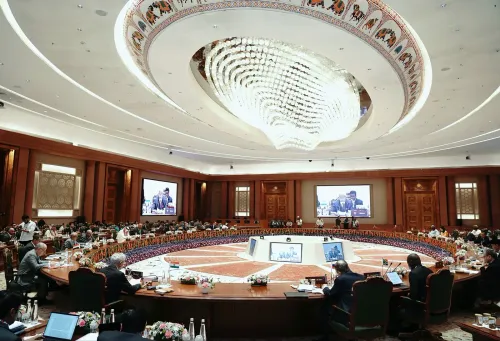
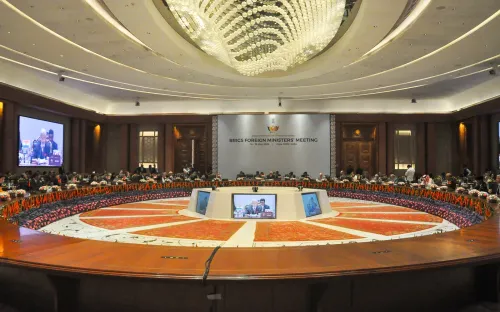
The BRICS Foreign Ministers' Meeting in New Delhi revealed divisions between member states Iran and the UAE over the West Asia conflict .
Former diplomat Anil Trigunayat , writing in 'Saviours' , warns the US-Iran-Israel conflict threatens a consensus outcome document at the September summit.
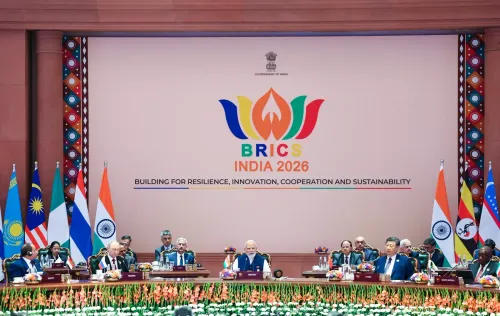
PM Modi recast the BRICS acronym as 'Building for Resilience, Innovation, Cooperation and Sustainability' for India's presidency theme.
India's nearly 10-million-strong diaspora in West Asia is a key factor shaping New Delhi's regional de-escalation diplomacy.
EAM Jaishankar reaffirmed India's commitment to BRICS on the basis of 'mutual understanding, solidarity, openness, inclusiveness, full consultation, and consensus.'
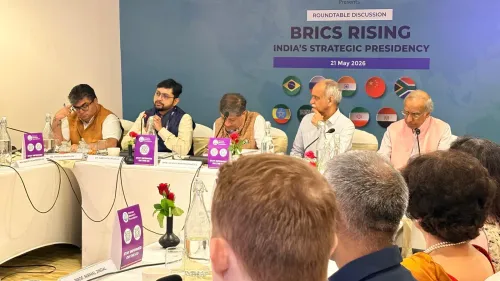
India's BRICS presidency in 2026 is shaping up as a pivotal diplomatic exercise, with New Delhi pushing a forward-looking agenda for the Global South even as geopolitical fault lines — particularly the US-Iran-Israel conflict — threaten to fracture consensus within the bloc. The assessment comes from Anil Trigunayat, a former Indian diplomat, writing in his book 'Saviours'.
Fractured Views at the BRICS Foreign Ministers' Meeting
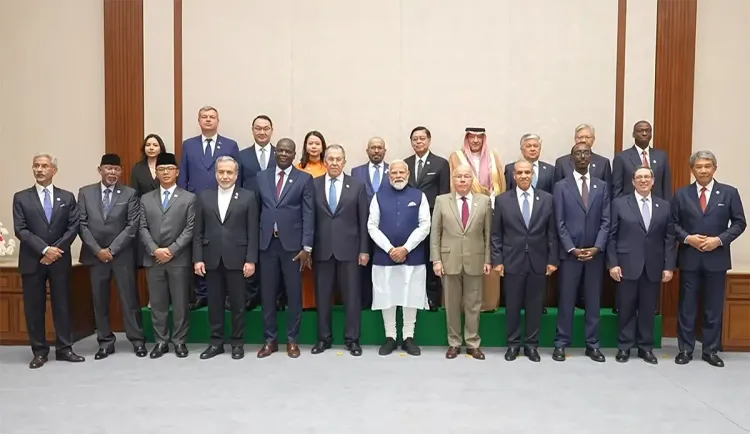
The BRICS Foreign Ministers' Meeting, held in New Delhi against the backdrop of escalating hostilities in West Asia, exposed sharp divisions within the grouping — most notably between member states Iran and the UAE. According to Trigunayat, the lack of consensus at that meeting underscored the deeper challenges BRICS could face if regional hostilities do not de-escalate soon.
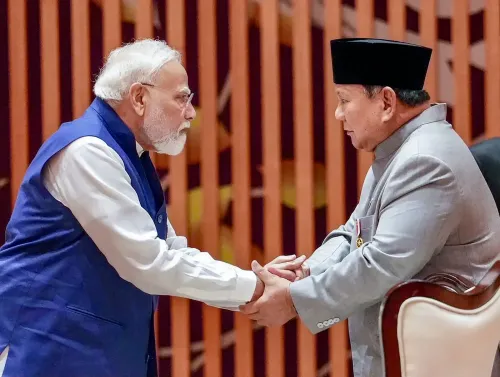
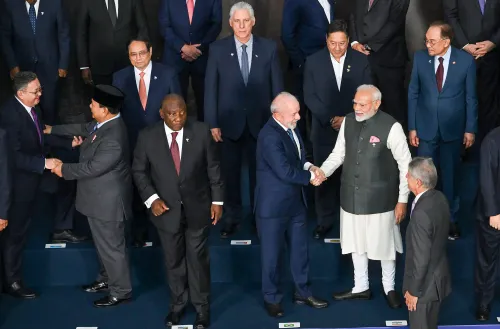
India, he noted, has consistently favoured 'dialogue, diplomacy, and de-escalation' as its preferred framework for managing regional tensions. Prime Minister Narendra Modi and External Affairs Minister S. Jaishankar engaged extensively with counterparts across the region, partly to safeguard the interests of India's nearly 10-million-strong diaspora in West Asia.
India's Presidential Theme and Its Strategic Meaning
Trigunayat highlighted that Modi recast the BRICS acronym through the theme of India's presidency: 'Building for Resilience, Innovation, Cooperation and Sustainability'. This framing, the former diplomat argued, signals the direction in which BRICS — as a non-Western platform in an increasingly fractured global order — is likely to evolve.
Crucially, India has maintained that 'non-Western' should not be equated with 'anti-Western' — a distinction New Delhi considers essential to preserving the grouping's non-adversarial character. Trigunayat noted that as major powers increasingly depart from established norms of international law and post-Second World War conventions, the search for alternative frameworks of global engagement has intensified, lending greater urgency to India's presidency.
The September BRICS Summit: Consensus at Risk
India is set to chair the BRICS Summit in September 2026. According to Trigunayat, the US-Iran-Israel conflict has cast uncertainty over the prospects of securing a consensus-driven outcome document — a standard deliverable for such summits. The divisions surfaced at the Foreign Ministers' Meeting are seen as an early indicator of the negotiating difficulty ahead.
Notably, this comes after India successfully navigated a similarly complex multilateral environment during its G20 presidency in 2023, when it managed to secure a consensus leaders' declaration despite deep divisions over the Russia-Ukraine war.
Broad BRICS Agenda Beyond the Conflict
Trigunayat stressed that BRICS extends well beyond the immediate geopolitical crisis. The grouping's agenda under India's presidency encompasses economic cooperation, counter-terrorism, climate action, trade, technology, connectivity, people-to-people exchanges, and sustainable development. Several practical, forward-looking initiatives are expected to emerge aimed at enhancing security, prosperity, and equitable development across the Global South.
EAM Jaishankar reinforced this commitment, stating: 'India remains committed to strengthening BRICS in line with the principles of mutual understanding, solidarity, openness, inclusiveness, full consultation, and consensus.'
What India Wants BRICS to Stand For
According to Trigunayat, the principles of 'equity, equality, and equanimity' — driven by consensus, inclusiveness, and sustainable growth — increasingly define both BRICS's foundational values and India's broader diplomatic priorities. These principles, he argued, have acquired growing relevance among countries of the Global South, or what is increasingly termed the 'Global Majority', despite the many internal and external challenges confronting the grouping.
With the September summit approaching, the degree to which India can translate these principles into a unified BRICS position will be the defining test of its presidency.
Point of View
Once a diplomatic formality, is now genuinely at risk. What is often missed in coverage of India's 'non-Western but not anti-Western' positioning is how much load-bearing work that phrase is doing: it is the only formula that keeps New Delhi credible to both the Global South and Western capitals simultaneously. If the West Asia conflict drags on, that balance becomes harder to hold — and India's G20 success in 2023 may prove a harder act to follow than it looks.
NationPress
20 Sept 2026
Frequently Asked Questions
What is India's theme for its BRICS presidency in 2026?
India's BRICS presidency theme is 'Building for Resilience, Innovation, Cooperation and Sustainability' — a phrase that also reframes the BRICS acronym. The theme reflects New Delhi's emphasis on geo-economic cooperation, sustainable development, and an inclusive Global South agenda.
When is the BRICS Summit under India's presidency?
India is set to chair the BRICS Summit in September 2026. According to former diplomat Anil Trigunayat, the ongoing US-Iran-Israel conflict has cast uncertainty over whether a consensus-driven outcome document can be secured at the summit.
Why did the BRICS Foreign Ministers' Meeting in New Delhi reveal divisions?
The meeting, held amid escalating US-Israeli conflict with Iran, exposed conflicting views between BRICS members Iran and the UAE. The lack of consensus highlighted the difficulty of maintaining bloc unity when member states are on opposing sides of a regional conflict.
What is India's diplomatic approach to the West Asia conflict?
India has consistently favoured dialogue, diplomacy, and de-escalation. PM Modi and EAM Jaishankar engaged extensively with regional counterparts to help reduce tensions while protecting the interests of India's nearly 10-million-strong diaspora in West Asia.
What does India mean by 'non-Western but not anti-Western' in the BRICS context?
India has argued that BRICS, as a non-Western platform, should not be treated as an adversarial bloc against the West. New Delhi maintains that its Global South priorities and its engagement with Western nations are complementary, not contradictory — a distinction it considers central to BRICS's long-term credibility.