India's BRICS 2026 presidency: Shaping a stable, multipolar world order
Synopsis
At a closed-door New Delhi roundtable, former BRICS Sherpas and diplomats argued that India's 2026 presidency is a rare window to move the bloc from broad declarations to tangible outcomes — on trade, supply chains, and digital governance. The core tension: can an expanding, increasingly diverse BRICS stay coherent enough to matter?
Key Takeaways
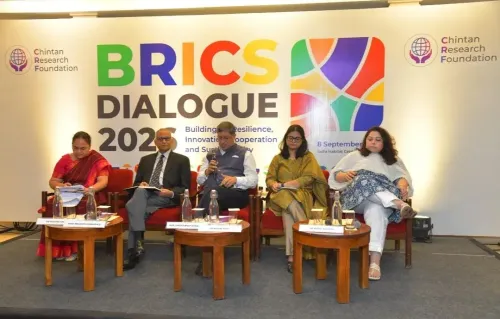
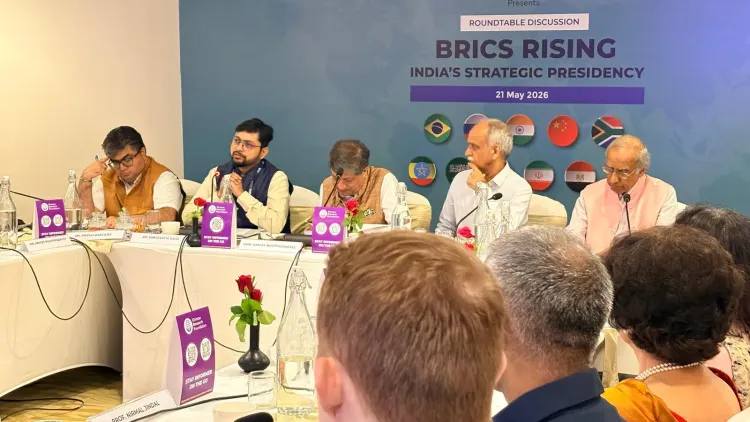
The Chintan Research Foundation (CRF) held a closed-door roundtable titled 'BRICS Rising: India's Strategic Presidency' in New Delhi on 21 May 2025 .
Experts said India's 2026 BRICS presidency is an opportunity to shape a more stable, inclusive, and pragmatic international order.
Participants stressed that BRICS was never designed for binding agreements like FTAs and should be treated as a platform for multipolarity and trust-building.
A more action-oriented 'Trade+' agenda — covering trade policy, supply-chain resilience, digital governance, and regulatory cooperation — was identified as a priority.
India was seen as best placed to serve as a bridge-builder among divergent BRICS+ members while steering the grouping toward practical outcomes.
Participants flagged that BRICS expansion strengthens global leverage only if matched by clearer purpose and stronger coordination among members.
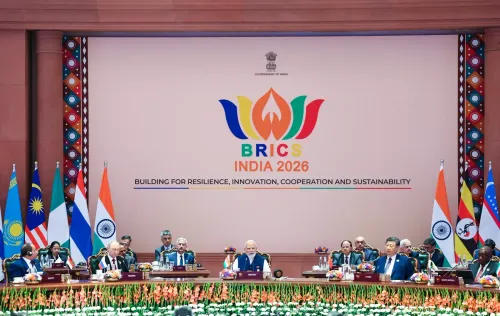
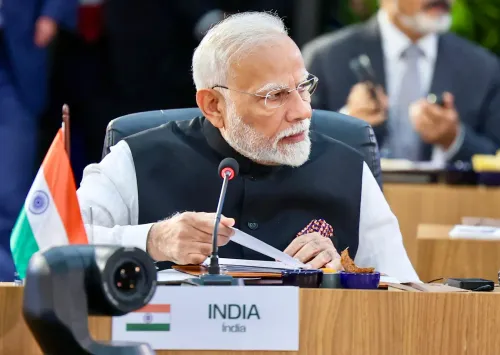
India's 2026 BRICS presidency arrives at a moment of acute geopolitical and geo-economic turbulence, presenting New Delhi with both a significant challenge and a strategic opportunity to help forge a more stable, inclusive, and pragmatic international order, senior representatives from government, industry, and the strategic community said on Thursday, 21 May 2025.
The Roundtable and Its Purpose
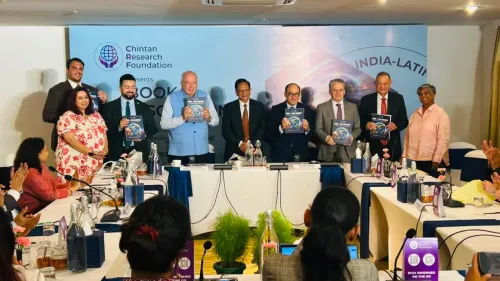
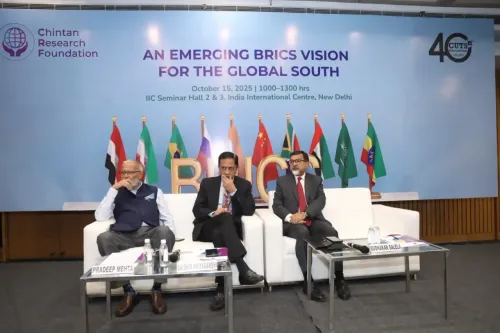
The Chintan Research Foundation (CRF) convened a closed-door roundtable titled 'BRICS Rising: India's Strategic Presidency' in the national capital. The gathering brought together former BRICS Sherpas, diplomats, senior government and industry representatives, and strategic affairs experts for a candid assessment of how India can guide the BRICS+ grouping through a period of deep global uncertainty.
A central observation from the CRF framed the discussion: BRICS was never designed as a platform for binding agreements such as free trade agreements (FTAs), yet expectations have persistently drifted in that direction. 'The need of the hour is to look at BRICS as it is — an important platform for multipolarity, economic cooperation, and trust-building,' the CRF said in a statement.
Key Themes: Cohesion, Identity, and the Global South
A major focus of the deliberations was the evolving character of BRICS following its expansion into a more diverse grouping. Participants noted that as membership and strategic reach grow, questions of cohesion, identity, and direction become more pressing. The CRF statement noted that 'expansion can strengthen the bloc's global leverage, but only if it is matched by a clearer sense of purpose and stronger coordination among members.'
The roundtable also examined BRICS's relationship with the Global South, assessing whether the enlarged grouping can continue to credibly represent developing countries' interests — including development, strategic autonomy, and global governance reform — without diluting its original identity. Participants stressed that BRICS must remain responsive to member priorities while demonstrating relevance to a wider international audience.
India's Role as Bridge-Builder
India's specific role during its presidency emerged as a central point of reflection. Participants assessed how New Delhi can steer BRICS toward practical outcomes without allowing it to become an unwieldy coalition shaped by competing national agendas. The conversation emphasised India's capacity to serve as a bridge between divergent perspectives and to channel the grouping's momentum into focused initiatives covering trade, investment, supply-chain resilience, digital interoperability, and institutional reform.
This comes amid a fragmented global environment marked by sanctions, export controls, rising protectionism, weakened multilateral norms, and mounting uncertainty in global trade and investment flows.
The Economic Agenda: A 'Trade+' Framework
The roundtable devoted significant attention to the economic dimension of BRICS cooperation. With intra-BRICS trade and economic engagement rising steadily, participants discussed how this growth can be translated into deeper, more structured integration. Highlighted areas included trade facilitation, standards cooperation, digital governance, sector-specific partnerships, and regulatory friction reduction.
Participants called for a more action-oriented 'Trade+' agenda that brings together trade policy, industrial policy, supply-chain resilience, and regulatory cooperation. Greater coordination on payment systems, local currency trade, infrastructure connectivity, logistics corridors, and investment support was also flagged as essential in an increasingly volatile global trading environment.
What Comes Next for BRICS+
The roundtable concluded with broad agreement that BRICS+ under India's presidency has a meaningful opportunity to demonstrate that multilateral cooperation can remain relevant in a fragmented world. While expectations should remain realistic, participants agreed the grouping can still advance practical cooperation, encourage institutional reform, and help shape a more balanced global order.
For India, the presidency offers a timely platform to reinforce its diplomatic standing while advancing a vision of BRICS that is, in the CRF's framing, 'more coherent, more responsive, and more consequential.' How New Delhi translates that vision into tangible outcomes over the coming months will be closely watched by both member states and the broader international community.
Point of View
From Gulf petrostates to African frontier markets. New Delhi's bridge-builder reputation is an asset, but bridging is not the same as leading. The 'Trade+' framing is sensible, but without enforceable deliverables or a credible secretariat function, it risks becoming another layer of aspirational language. The real test of India's presidency will be whether it can point to even two or three concrete, measurable outcomes by the time the gavel passes — not another communiqué, but something that moves goods, capital, or data across borders more efficiently than before.
NationPress
16 Sept 2026
Frequently Asked Questions
What is India's 2026 BRICS presidency about?
India holds the BRICS presidency in 2026 and is expected to steer the grouping toward practical cooperation on trade, supply-chain resilience, digital governance, and institutional reform. Experts at a New Delhi roundtable on 21 May 2025 said the presidency is a strategic opportunity to shape a more stable and multipolar international order.
What is the 'Trade+' agenda discussed at the BRICS roundtable?
The 'Trade+' agenda is a framework proposed by roundtable participants that goes beyond conventional trade policy to include industrial policy, supply-chain resilience, regulatory cooperation, and digital governance. It aims to produce tangible, scalable outcomes for BRICS+ economies rather than broad declarations.
Why is BRICS expansion seen as both an opportunity and a risk?
Expansion broadens BRICS's global leverage and strengthens its claim to represent the Global South, but it also introduces greater diversity of interests, making cohesion harder to maintain. Participants at the CRF roundtable noted that expansion only strengthens the bloc if matched by a clearer sense of purpose and stronger coordination among members.
What role can India play within BRICS during its presidency?
India is seen as a natural bridge-builder among divergent BRICS+ members, capable of channelling the grouping's momentum into focused initiatives on trade, investment, digital interoperability, and institutional reform. Experts said New Delhi must steer the bloc toward practical outcomes without letting it become an unwieldy coalition of competing national agendas.
What is the Chintan Research Foundation and why did it hold this roundtable?
The Chintan Research Foundation (CRF) is a New Delhi-based think tank that convened the closed-door roundtable titled 'BRICS Rising: India's Strategic Presidency' to assess how India can guide BRICS+ through a period of global uncertainty. The gathering included former BRICS Sherpas, diplomats, and strategic community members.