BRICS 2026: India bets on culture and people-to-people ties under its chairship
Synopsis
India's fourth BRICS Chairship in 2026 is quietly making the case that cultural diplomacy — backed by a proposed culture fund, AI-enabled heritage preservation, and youth fellowships — could be the glue that makes BRICS more than a bloc of states. If the proposals gain traction, the grouping may emerge as a partnership of civilisations, not just economies.
Key Takeaways
India holds the BRICS Chairship for the fourth time in 2026 , with culture and P2P exchanges as a core pillar alongside political and economic cooperation.
The BRICS Civil Forum 2026 convened nearly 80 CSOs , including 26 from India , calling for a dedicated BRICS culture fund for sustained programming.
Proposals include Cultural Tourism Corridors , a BRICS Interactive Heritage Map with GI tags, and digital marketplaces for local artisans.
AI and digitisation were highlighted as tools for preserving tangible and intangible cultural heritage across member nations.
Under the ICCR framework, India is positioned to promote Culture Diplomacy Fellowships and the Annual BRICS Culture Festival , with women and youth as focal groups.
The author argues culture is a strategic resource — not peripheral — capable of transforming BRICS from a partnership of states into a partnership of societies.
As India holds the BRICS Chairship for the fourth time in 2026, a growing consensus is emerging within the grouping that cultural diplomacy and people-to-people (P2P) exchanges — long treated as peripheral — must be elevated to a strategic priority alongside trade and political coordination. In a world marked by escalating geopolitical tensions, analysts and civil society voices argue that durable bonds between BRICS societies cannot be built on economic interest alone.
The Three Pillars of India's BRICS Agenda
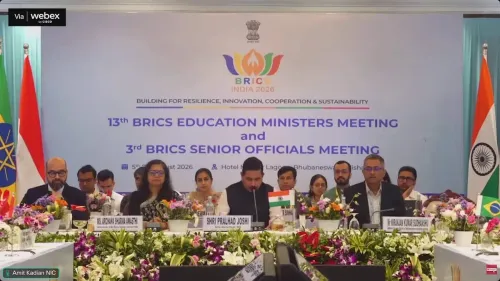
India's BRICS Chairship is structured around three core pillars: political and security cooperation; economy and finance; and culture and P2P exchanges. The chairship theme — 'Building for Resilience, Innovation, Cooperation and Sustainability' — reflects a people-centric orientation that Prime Minister Narendra Modi articulated at last year's BRICS Summit, where he called for advancing the forum in the spirit of 'Humanity First'.
This framing is significant. While government-to-government relations are frequently reshaped by shifting geopolitical and economic pressures, proponents argue that P2P ties have the potential to create bonds that outlast diplomatic cycles. BRICS nations share deep historical connections — India, China, and Russia, for instance, were linked through the ancient Silk Routes, which carried not only goods but also religions, philosophies, knowledge systems, and artistic traditions. Many BRICS members also share the experience of colonialism, struggles for sovereignty, and the challenges of development — a common inheritance that, according to analysts, can serve as a foundation for greater cohesion.
Civil Society Calls for a BRICS Culture Fund
The BRICS Civil Forum 2026 brought together nearly 80 Civil Society Organisations (CSOs) from across member countries, including 26 CSOs from India. Deliberations in the culture working group produced a pointed recommendation: the long-term success of BRICS cultural cooperation will ultimately depend on institutional continuity and predictable financing.
Participants called on BRICS to consider establishing a dedicated culture fund — an instrument that could sustain regular programmes and partnerships rather than relying on one-time events. The forum also highlighted the role of emerging technologies, including digitisation and Artificial Intelligence (AI), in preserving both tangible and intangible cultural heritage and enabling inter-generational transmission of indigenous knowledge.
Cultural Tourism Corridors and Digital Marketplaces
One of the more concrete proposals to emerge from cultural cooperation discussions is the development of Cultural Tourism Corridors connecting heritage destinations across BRICS member countries. Such corridors, proponents argue, would simultaneously foster P2P contact and generate employment and income for local communities.
A complementary idea — a BRICS Interactive Heritage Map combined with Geographical Indicators (GI), digital marketplaces, and e-commerce platforms — could help local artists, artisans, and cultural entrepreneurs access wider domestic and international markets, strengthening both the visibility and economic value of community-based cultural products.
Youth and Women at the Centre of Cultural Cooperation
Cultural relationships, analysts note, become durable when they are experienced directly by younger generations rather than confined to institutional exchanges. Under the Indian Council for Cultural Relations (ICCR) framework, India is positioned to promote the Annual BRICS Culture Festival and provide Culture Diplomacy Fellowships to artists, curators, and researchers across member states.
The emphasis on placing women and youth at the centre of cultural cooperation reflects a broader argument: that BRICS must transform from a partnership of states into a broader partnership of societies. As a civilisation home to hundreds of living languages, thousands of dialects, and an extraordinary range of art forms, textile traditions, culinary practices, and spiritual expressions, India is, according to the author, uniquely placed to lead this conversation — embodying the principle that unity does not require uniformity.
Why Culture Cannot Remain a Diplomatic Afterthought
The core argument advanced by analysts and civil society representatives is that culture is a strategic resource — not a soft add-on. It embodies the value systems, identity, and ethos of societies, and is described as the foundation for resilience, inclusive development, and social cohesion. The rich cultural diversity of BRICS countries, they argue, offers pathways for sustainable living, with indigenous knowledge and traditions containing lessons on biodiversity, agriculture, community organisation, and environmental stewardship that are directly relevant to contemporary challenges including climate change and food security.
With the leaders' declaration still ahead, the trajectory of India's BRICS Chairship will be watched closely — not only for its economic and political outcomes, but for whether cultural cooperation moves from aspiration to architecture.
(This article draws on the views of a consultant at the Research and Information System for Developing Countries, New Delhi. Views expressed are personal.)
Point of View
But the gap between aspiration and architecture is wide. Proposals for a culture fund and tourism corridors have circulated in various forms for years without binding commitments or financing mechanisms. The real test of India's chairship will be whether it can translate these ideas into institutional structures that survive the annual rotation of the chair. With BRICS expanding and internal divergences on geopolitics deepening, cultural diplomacy may be the one lane where consensus is genuinely achievable — but only if it is resourced, not merely rhetoricised.
NationPress
24 Oct 2026
Frequently Asked Questions
Why is India holding the BRICS Chairship in 2026?
India assumed the BRICS Chairship for the fourth time in 2026 as part of the grouping's rotating leadership structure. India's chairship theme is 'Building for Resilience, Innovation, Cooperation and Sustainability,' reflecting a people-centric approach.
What is the proposed BRICS culture fund?
The proposed BRICS culture fund is a recommendation that emerged from the BRICS Civil Forum 2026, calling for a dedicated financing mechanism to sustain regular cultural programmes and partnerships across member countries. It aims to move beyond one-time events toward institutional continuity in cultural cooperation.
What are BRICS Cultural Tourism Corridors?
Cultural Tourism Corridors are a proposed initiative to connect heritage destinations across BRICS member countries, fostering people-to-people contact while generating local employment and income. A complementary BRICS Interactive Heritage Map with Geographical Indicators and digital marketplaces is also proposed to support local artisans and cultural entrepreneurs.
How does India plan to lead BRICS cultural diplomacy?
Under the Indian Council for Cultural Relations (ICCR) framework, India is positioned to promote the Annual BRICS Culture Festival and offer Culture Diplomacy Fellowships to artists, curators, and researchers from member states. The approach places women and youth at the centre of cultural exchange.
Why is cultural cooperation considered strategic for BRICS?
Analysts and civil society representatives argue that culture embodies the value systems and identity of societies, making it a foundation for resilience and social cohesion — not a soft diplomatic add-on. With BRICS members sharing historical experiences of colonialism and development challenges, cultural ties are seen as capable of creating bonds that outlast shifting geopolitical alignments.