BRICS Culture Working Group opens in Bhopal, heritage and creative economy on agenda
Synopsis
India is using the BRICS Culture Working Group in Bhopal to do something rarely attempted at multilateral forums — make culture a strategic instrument. With 1.19 crore manuscripts being digitised using AI, a UNESCO maritime heritage nomination in the works, and 10 nations at the table, this four-day meeting is less about folk performances and more about India asserting civilisational soft power at scale.
Key Takeaways
The BRICS Culture Working Group opened in Bhopal on 5 August 2025 , running through 8 August at the Kushabhau Thakre International Convention Centre .
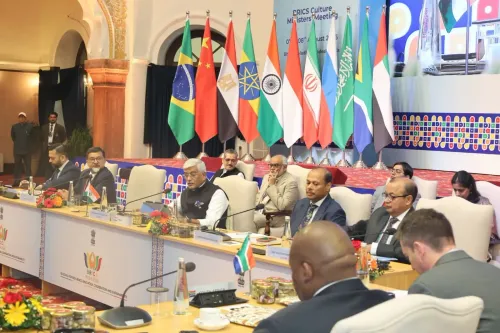
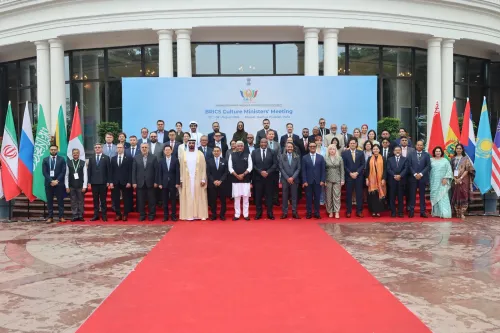
Delegations from 10 nations — including India, Brazil, China, Russia, UAE, and Ethiopia — attended; Egypt joined via hybrid mode.
India's 'Culture Track' priorities include the creative economy, heritage preservation, and culture-led sustainable development.
The Gyan Bharatam initiative has documented more than 1.19 crore manuscripts , with artificial intelligence used for preservation.
Project Mausam is advancing a multinational UNESCO World Heritage nomination for interconnected Indian Ocean maritime heritage sites.
The three thematic exhibitions will be open to the public on 7 and 9 August .
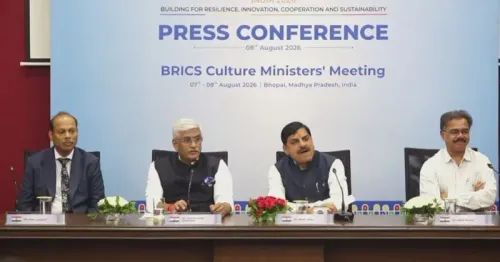
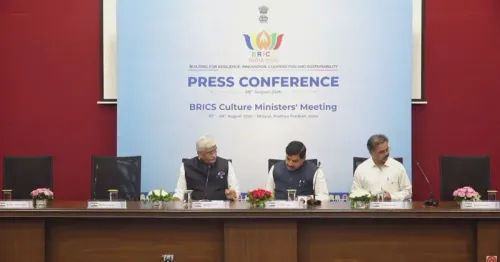
The BRICS Culture Working Group meeting commenced in Bhopal on 5 August 2025, bringing together delegations from 10 member and partner nations to deliberate on cultural cooperation, heritage preservation, and the creative economy, according to a statement issued by the Madhya Pradesh government. The four-day gathering precedes the formal BRICS Culture Ministers' Meeting and marks India's turn to steer the bloc's cultural agenda.
Key Developments on Day One
Delegations from India, Brazil, China, South Africa, the United Arab Emirates, Indonesia, Iran, Russia, and Ethiopia attended the inaugural session in person at the Kushabhau Thakre International Convention Centre. Egypt participated through a hybrid mode. The first day's deliberations centred on India's priorities under the BRICS 'Culture Track', covering the creative economy, cultural and creative industries, heritage preservation, and culture-led sustainable development.
What the Government Said
Vivek Agrawal, Union Culture Secretary and Chair of the BRICS Culture Working Group, addressed the inaugural session, stating that the discussions reflected a shared belief that culture was 'not merely a legacy of the past but a driving force for innovation, resilience, inclusive growth and stronger people-to-people ties.' His remarks set the tone for a meeting that organisers say goes beyond ceremonial exchange toward actionable cultural frameworks.
Three Thematic Exhibitions Unveiled
Alongside the official proceedings, three exhibitions were opened to delegates. Project Mausam highlights the shared maritime heritage of nations connected through the Indian Ocean over more than two millennia, and presents the concept of a multinational UNESCO World Heritage nomination for interconnected maritime heritage sites. The Brihattar Bharat (Greater India) exhibition traces India's historical, cultural, spiritual, and intellectual links with countries across Asia through inscriptions, manuscripts, monuments, and artistic traditions. The Gyan Bharatam exhibition showcases India's manuscript heritage and the national initiative to preserve and digitally document ancient texts — more than 1.19 crore manuscripts have been documented under the initiative, with artificial intelligence deployed for their preservation.
Cultural Immersion for Delegates
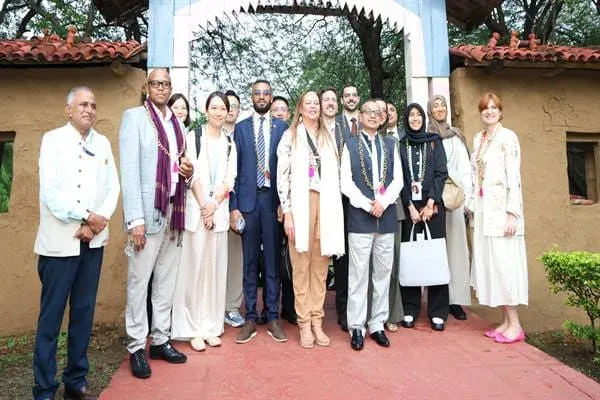
In the evening, delegates visited the Indira Gandhi Rashtriya Manav Sangrahalaya, exploring India's folk and tribal traditions through open-air museum galleries, traditional architecture, and cultural exhibits. They also witnessed Kathak performances, folk songs by artists from Nagaland, and a cultural presentation depicting India's geographical and cultural diversity. A specially designed Madhya Pradesh pavilion drew attention by showcasing the state's UNESCO World Heritage sites, wildlife, tribal and folk art, handicrafts, tourism destinations, and local products.
What Comes Next
The working group sessions continue through 8 August, culminating in the BRICS Culture Ministers' Meeting. The three thematic exhibitions will be open to the public on 7 and 9 August. This comes amid a broader push by India to use its BRICS chairmanship to foreground civilisational diplomacy — positioning culture not as a soft add-on but as a structural pillar of multilateral engagement.
Point of View
Away from the usual diplomatic circuit. The three exhibitions are not incidental: Project Mausam's UNESCO nomination push and the AI-driven manuscript digitisation under Gyan Bharatam are long-game moves to anchor India's cultural claims in verifiable, internationally recognised frameworks. What mainstream coverage tends to miss is that the 'creative economy' agenda is where the real commercial stakes lie — BRICS nations collectively represent a massive market for cultural content, and India's creative industries have been notably absent from that conversation. Whether this working group translates into binding cooperation frameworks or remains a showcase event will depend on what the Culture Ministers' Meeting produces in the days ahead.
NationPress
20 Sept 2026
Frequently Asked Questions
What is the BRICS Culture Working Group meeting in Bhopal?
It is a four-day multilateral meeting held from 5 to 8 August 2025 at the Kushabhau Thakre International Convention Centre in Bhopal, where delegates from BRICS member and partner nations discuss cultural cooperation, heritage preservation, and the creative economy. The meeting precedes the formal BRICS Culture Ministers' Meeting and is being chaired by India.
Which countries are participating in the Bhopal BRICS culture meeting?
India, Brazil, China, South Africa, the United Arab Emirates, Indonesia, Iran, Russia, and Ethiopia attended in person, while Egypt participated through a hybrid mode — totalling 10 nations.
What is the Gyan Bharatam initiative showcased at the event?
Gyan Bharatam is India's national initiative to preserve and digitally document ancient manuscripts using modern technologies, including artificial intelligence. More than 1.19 crore manuscripts have been documented under the programme so far.
What is Project Mausam and why does it matter?
Project Mausam highlights the shared maritime heritage of countries connected through the Indian Ocean over more than two millennia. It is advancing the concept of a multinational UNESCO World Heritage nomination for interconnected maritime heritage sites, positioning India as a custodian of pan-Indian Ocean civilisational links.
When will the BRICS culture exhibitions be open to the public?
The three thematic exhibitions — Project Mausam, Brihattar Bharat, and Gyan Bharatam — will be open to the public on 7 and 9 August 2025.