Cabinet Clears Four Mega Schemes Worth ₹25,473 Crore
Synopsis
The Union Cabinet cleared four schemes on 4 November 2026 worth over ₹25,473 crore: critical mineral processing support, grid-scale energy storage funding, extension of fast-track POCSO courts, and a statistical modernisation initiative called VISTAR.
Key Takeaways
₹2,814 crore Capex Support Scheme to establish domestic critical mineral processing facilities and reduce import dependence. ₹14,500 crore Viability Gap Funding to develop 92 GWh of grid-scale energy storage by FY 2030-31 , against India's target of 411 GWh by 2031-32 .
Fast Track Special Courts scheme, including exclusive POCSO Courts, extended for five years from 1 April 2026 to 31 March 2031 at a cost of ₹3,788.04 crore .
VISTAR scheme allocated ₹4,371.10 crore to build AI-ready datasets and modernise India's national statistical systems for real-time policymaking.
Total combined outlay across all four Cabinet approvals exceeds ₹25,473 crore .
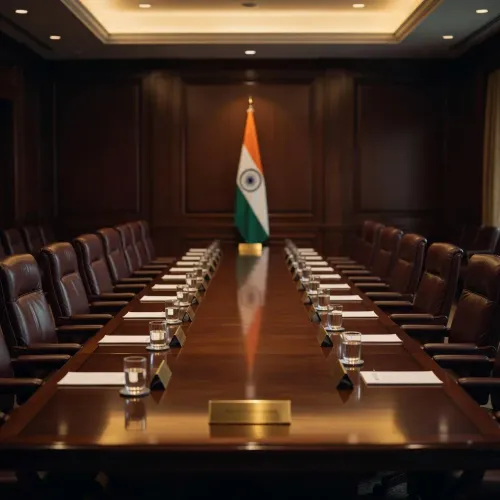
Four sweeping policy decisions — spanning critical minerals, grid-scale energy storage, fast-track justice, and national statistics — cleared the Union Cabinet on Wednesday, 4 November 2026, under the chairmanship of Prime Minister Narendra Modi, with Union Power and Housing Minister Manohar Lal Khattar detailing the approvals in a post on X. The combined financial outlay across all four schemes stands at over ₹25,473 crore.
₹2,814 Crore to Build India's Critical Mineral Supply Chain
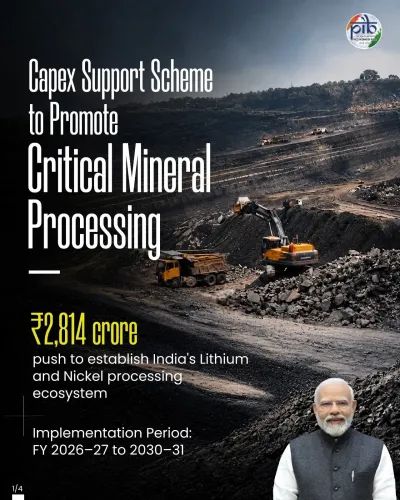
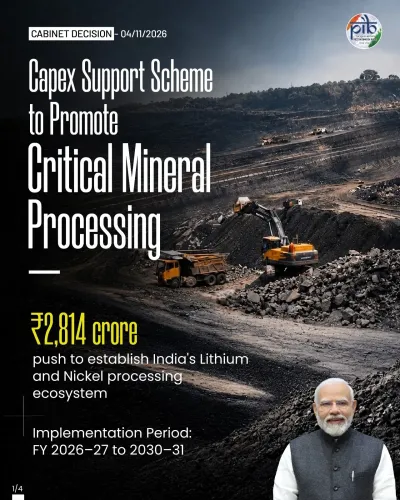
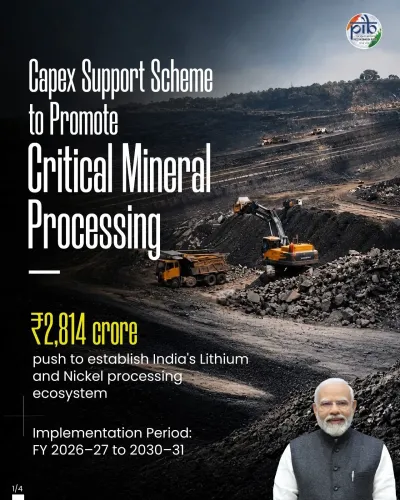
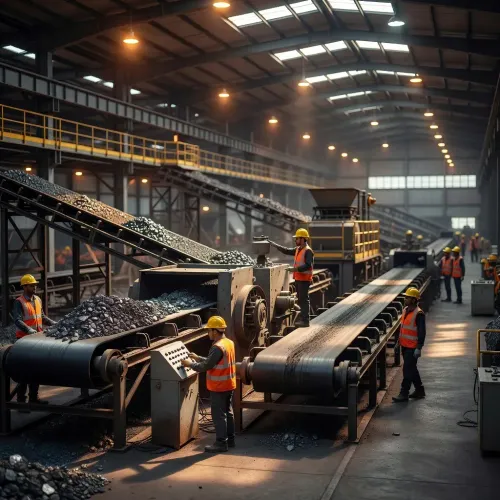
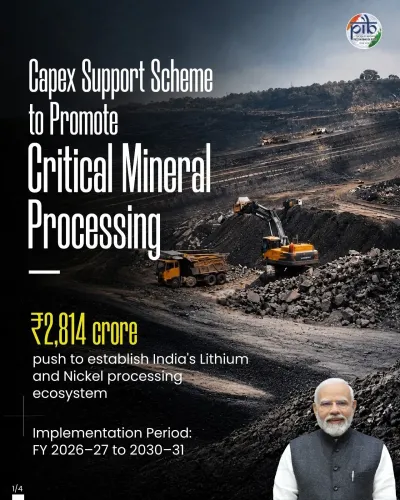
The Cabinet approved a Capex Support Scheme for Critical Mineral Processing with an outlay of ₹2,814 crore, designed to fund domestic facilities for processing materials such as lithium and cobalt — the building blocks of electric-vehicle batteries and clean-energy technology. India currently imports the bulk of its processed critical minerals, leaving its green-energy ambitions exposed to global supply disruptions.
The scheme builds on the Mines and Minerals (Development and Regulation) Amendment Act of 2023, which had already loosened rules on critical-mineral exploration to attract private investment. The new capital-expenditure push takes the next logical step: ensuring that ore extracted or imported in raw form is refined and value-added inside Indian borders rather than shipped out for processing elsewhere.
92 GWh of New Storage to Back India's Renewable Grid
The single largest outlay in Wednesday's package goes to the Viability Gap Funding Scheme for Grid-Scale Energy Storage Systems — ₹14,500 crore committed across FY 2026-27 to FY 2030-31. The funding is targeted at unlocking 92 GWh of new battery and grid-storage capacity, a figure framed against India's projected storage requirement of 411 GWh by 2031-32.
The arithmetic matters: 92 GWh is roughly a quarter of that target, meaning the scheme is a catalyst, not a complete solution. But in a market where grid-scale storage projects have struggled to find commercial viability without state support, the viability gap mechanism is designed to tip the investment calculus in developers' favour — making projects bankable that would otherwise stall on the drawing board.
POCSO Courts Get Five More Years and ₹3,788 Crore
The Cabinet extended the Fast Track Special Courts (FTSC) scheme — including exclusive POCSO Courts — for a further five years from 1 April 2026 to 31 March 2031, with an outlay of ₹3,788.04 crore. The scheme, first launched in 2019 as a centrally sponsored initiative, was designed to cut through the backlog of cases involving sexual offences, particularly crimes against children under the Protection of Children from Sexual Offences Act.
The continuation signals institutional staying power: rather than winding down a scheme that served a crisis moment, the government is embedding fast-track justice as a permanent structural feature of the judicial landscape. Quick disposal of POCSO cases has long been flagged by child rights groups as a prerequisite for deterrence to work.
VISTAR: ₹4,371 Crore to Rewire How India Reads Its Own Data
The fourth approval — VISTAR (Viksit Bharat Initiative for Statistical Transformation, Analytics and Research) — carries an outlay of ₹4,371.10 crore and may be the least visible but most foundational of the four decisions. The scheme aims to build AI-ready datasets, improve data interoperability across government systems, and shift India's statistical machinery from periodic surveys toward real-time intelligence.
Policymakers have long complained that India's data ecosystem — GDP revisions, employment figures, poverty metrics — arrives too late to shape live decisions. VISTAR is explicitly framed as the infrastructure fix: a modern statistical backbone that lets evidence feed into policy in something closer to real time, not years after the fact.
Four decisions, one cabinet sitting, and a roadmap that stretches to 2031 — India is now obligated to show that the outlays become operational infrastructure, not just approved line items.
Point of View
Renewable energy storage scale-up, judicial capacity, and data infrastructure simultaneously. The critical minerals and grid-storage decisions together reveal a coherent industrial logic — India is trying to own both the input supply chain and the storage layer of its clean-energy transition, rather than remain a buyer at both ends. The FTSC extension, meanwhile, reflects a government unwilling to let an effective judicial scheme lapse simply because its original mandate has formally ended. VISTAR, the least headline-grabbing of the four, may prove the most consequential: real-time data governance is the unsexy foundation on which every other evidence-based scheme ultimately depends.
NationPress
4 Nov 2026
Frequently Asked Questions
What is the Cabinet's Viability Gap Funding scheme for energy storage?
The scheme provides ₹14,500 crore in financial support between FY 2026-27 and FY 2030-31 to develop 92 GWh of new grid-scale energy storage capacity in India, helping make large battery projects commercially viable and supporting the country's projected storage requirement of 411 GWh by 2031-32 .
What is the Critical Mineral Processing Capex Support Scheme approved by the Cabinet?
It is a new scheme with an outlay of ₹2,814 crore that provides capital expenditure support to build domestic facilities for processing critical minerals such as lithium and cobalt, aiming to reduce India's dependence on imports and develop a local value chain.
How long have Fast Track Special Courts been extended and what is the budget?
The Union Cabinet extended the Fast Track Special Courts scheme , including exclusive POCSO Courts, for five years from 1 April 2026 to 31 March 2031 , with a total outlay of ₹3,788.04 crore .
What is VISTAR and why did the Cabinet approve it?
VISTAR stands for Viksit Bharat Initiative for Statistical Transformation, Analytics and Research. Approved with an outlay of ₹4,371.10 crore , it aims to create AI-ready datasets, improve data interoperability across government systems, and modernise India's statistical infrastructure for real-time, evidence-based policymaking.
What was the total outlay of Cabinet decisions on 4 November 2026?
The four schemes approved by the Union Cabinet on 4 November 2026 carry a combined outlay of over ₹25,473 crore , covering critical minerals, grid-scale energy storage, fast-track courts, and national statistical modernisation.