Cabinet Clears ₹14,500 Cr Energy Storage, Court Extension
Synopsis
The Union Cabinet cleared four major decisions: a ₹14,500 crore, 92 GW energy storage programme; ₹2,814 crore for critical mineral processing; the VISTAR statistical modernisation scheme; and a five-year extension of Fast Track Special Courts for women and children's cases.
Key Takeaways
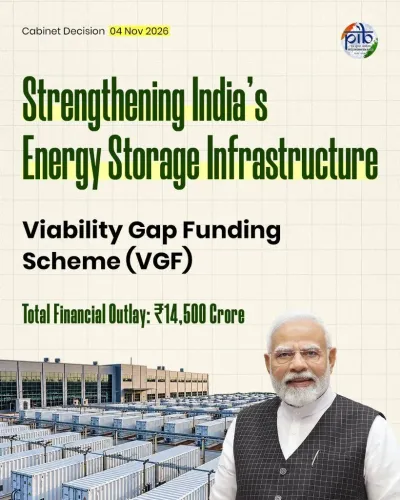
The Cabinet approved ₹14,500 crore for 92 GW of energy storage capacity spanning 2026-27 to 2030-31 . ₹2,814 crore was cleared to promote domestic critical mineral processing, targeting supply-chain resilience.
The VISTAR scheme was approved to modernise India's statistical infrastructure and data systems.
Fast Track Special Courts for rape and POCSO cases receive a five-year extension under continued central funding.
The decisions align with the government's Viksit Bharat 2047 framework combining infrastructure, governance, and judicial reform.
The FTSC scheme was originally launched in 2019 under the Nirbhaya Fund to clear backlogs in crimes against women and children.
Four decisions, four fronts — and each one aimed at a structural gap India has long needed to close. The Union Cabinet, chaired by Prime Minister Narendra Modi, approved a sweeping cluster of measures on Wednesday, 4 November 2026, spanning clean energy storage, critical minerals processing, statistical modernisation, and fast-track justice for women and children. Union Food Processing Minister Chirag Paswan shared the outcomes on X, calling the decisions catalysts for Viksit Bharat (Developed India).
₹14,500 Crore and 92 GW: India's Energy Storage Push
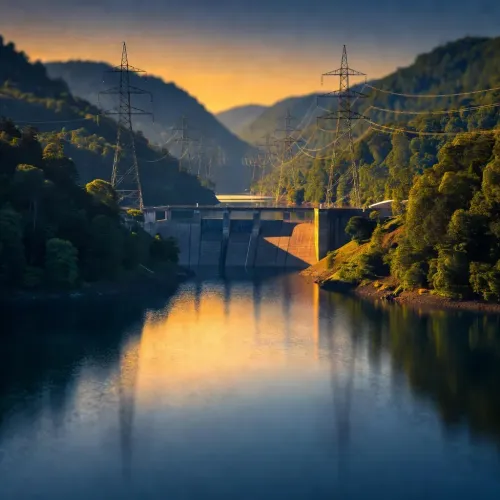
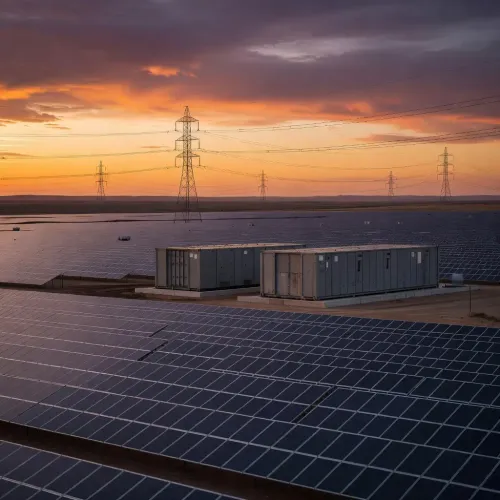
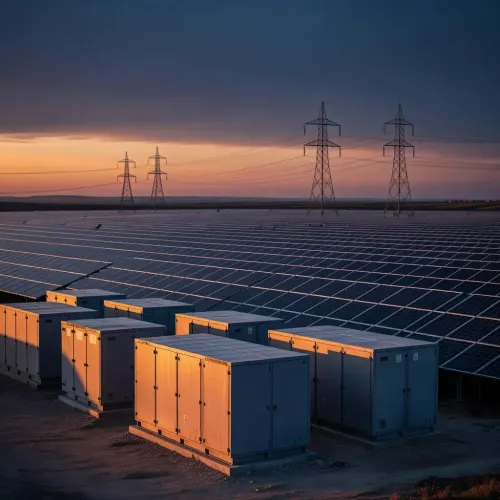
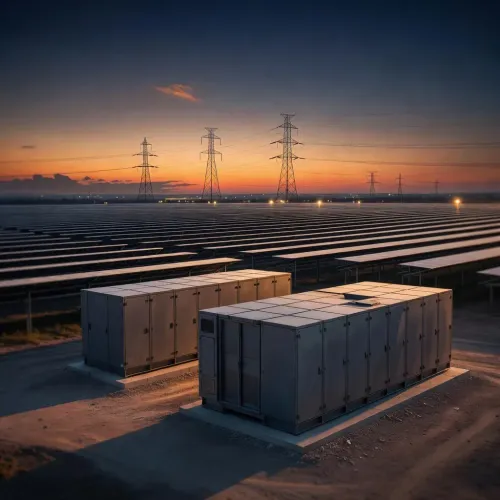
The Cabinet's centrepiece is an ambitious energy storage programme running from 2026-27 to 2030-31, with an outlay of ₹14,500 crore to build 92 gigawatts of storage capacity. The logic is straightforward: renewable energy generates power when the sun shines or the wind blows, not necessarily when the grid needs it. At scale, storage closes that gap — turning India's vast solar and wind buildout into dispatchable, reliable power. This approval signals the government is ready to move from generation targets to grid-integration targets.
Critical Minerals Processing Gets a ₹2,814 Crore Boost
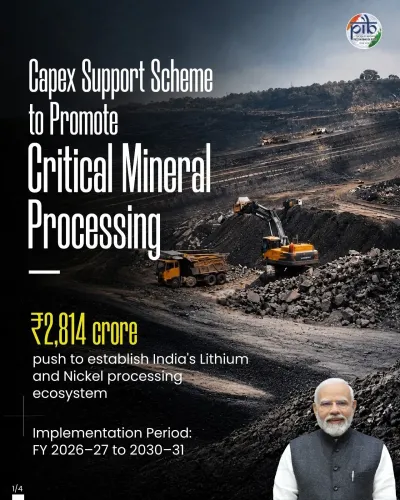
Alongside energy storage, the Cabinet cleared ₹2,814 crore for promoting critical mineral processing domestically. The strategic calculus here is well-established: lithium, cobalt, nickel, and rare earths underpin batteries, semiconductors, and defence systems — and global supply chains for these materials are concentrated in a handful of countries. Encouraging domestic processing reduces import dependence and builds an industrial base for the clean-energy transition. It is a direct bet on economic security as much as environmental goals.
VISTAR Scheme: Modernising India's Statistical Backbone
The Cabinet also approved the VISTAR scheme, designed to modernise India's statistical infrastructure. Reliable, granular, real-time data is the nervous system of modern policymaking — from inflation targeting to welfare delivery. The approval signals intent to overhaul data-collection and dissemination systems so that government decisions rest on sharper foundations. Paswan described this as a step toward a 'modern data framework,' placing it alongside the energy and minerals moves as part of the same governance-upgrade logic.
Fast Track Special Courts Extended for Five More Years
Perhaps the most socially consequential decision: the Fast Track Special Courts (FTSCs) scheme gets a five-year extension. The courts were first created in 2019 under central funding to speed up trials in rape and POCSO cases — crimes against women and children that had accumulated in an overburdened mainstream judiciary. Thousands of cases have moved through this dedicated pipeline since launch. Extending the scheme ensures that institutional momentum is not lost and that survivors continue to have access to swifter justice rather than multi-year waits in a congested docket.
Taken together, the four approvals land at the intersection of energy autonomy, supply-chain resilience, data governance, and judicial delivery — the building blocks the government has repeatedly described as essential to the Viksit Bharat 2047 roadmap. The real test, as always, begins with implementation: how quickly the ₹14,500 crore energy storage programme gets to tender, and whether the VISTAR scheme translates ambition into usable, trusted statistics.
Point of View
Supply-chain strategy (critical minerals), governance plumbing (VISTAR), and judicial delivery (FTSCs) in a single announcement, reinforcing the Viksit Bharat framing as a whole-of-government project. The energy storage approval is particularly significant — moving from generation targets to storage targets marks a maturing of India's renewable policy, acknowledging that gigawatts of solar panels are only as useful as the grid's ability to absorb and dispatch them. The five-year FTSC extension, meanwhile, is a quiet but consequential commitment: it signals that fast-track justice for survivors is now a durable institutional fixture, not a temporary fix. The real variable is execution speed, especially on the ₹14,500 crore energy outlay whose first budgetary tranche falls in 2026-27.
NationPress
5 Nov 2026
Frequently Asked Questions
What did the Union Cabinet decide on 4 November 2026?
The Union Cabinet approved four key decisions: a ₹14,500 crore scheme to build 92 GW of energy storage by 2030-31, ₹2,814 crore for critical mineral processing, the VISTAR scheme for statistical modernisation, and a five-year extension of Fast Track Special Courts.
What is the VISTAR scheme approved by the Cabinet?
VISTAR is a Cabinet-approved scheme aimed at modernising India's statistical infrastructure — upgrading data-collection and dissemination systems so government policy rests on more accurate, timely, and granular information.
Why are Fast Track Special Courts being extended?
Fast Track Special Courts, first set up in 2019 under central funding to speed up rape and POCSO trials, are being extended for five more years to sustain institutional momentum and ensure quicker justice for women and child survivors.
Why is India investing in critical mineral processing?
Critical minerals such as lithium, cobalt, and rare earths are essential for batteries, semiconductors, and defence systems. Domestic processing reduces dependence on concentrated global supply chains and builds industrial capacity for the clean-energy transition.
How does the 92 GW energy storage plan fit India's renewable energy goals?
Energy storage is the missing link in large-scale renewable integration: it allows power generated by solar and wind plants to be stored and dispatched when the grid needs it. The 92 GW target over 2026-31 addresses the grid-reliability gap that grows as renewable capacity scales.