CM Fadnavis: Maharashtra at Centre of Make in India Push
Synopsis
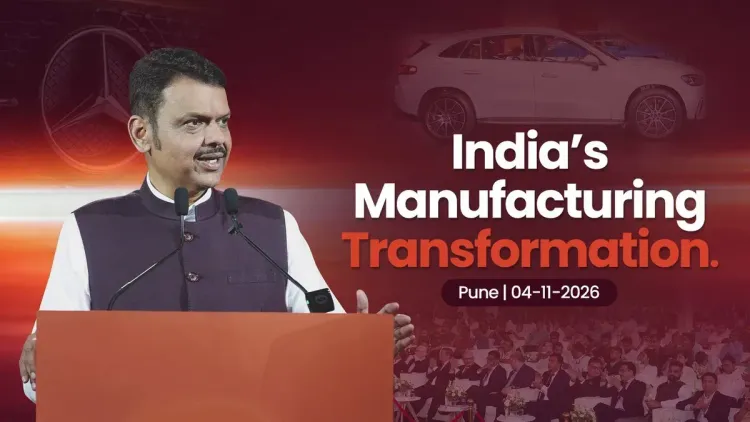
Maharashtra Chief Minister Devendra Fadnavis attended the Mercedes-Benz electric GLC rollout in Pune on 4 November 2026, declaring the state the centrepiece of PM Modi's Make in India transformation. The event underscores Pune's status as India's premier automotive and EV manufacturing corridor.
Key Takeaways
CM Devendra Fadnavis attended the Mercedes-Benz electric GLC rollout in Pune on 4 November 2026 .
Fadnavis declared Maharashtra 'at the centre' of India's Make in India manufacturing transformation.
Mercedes-Benz has an existing manufacturing presence in the Pune region, one of Asia's densest automotive clusters.
Make in India was launched by PM Narendra Modi in September 2014 to boost domestic manufacturing and attract FDI.
Maharashtra competes with Gujarat and Tamil Nadu to attract global OEM and EV investment.
The Pune–Chakan corridor hosts multiple global vehicle manufacturers and a deep tier-one supplier ecosystem.
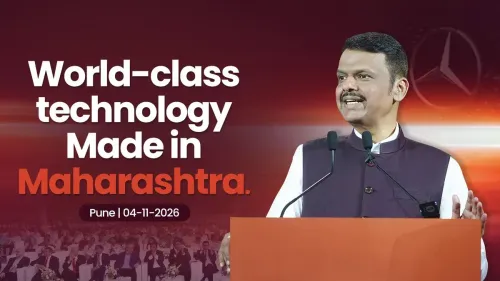
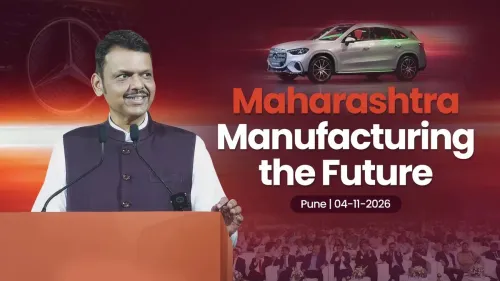
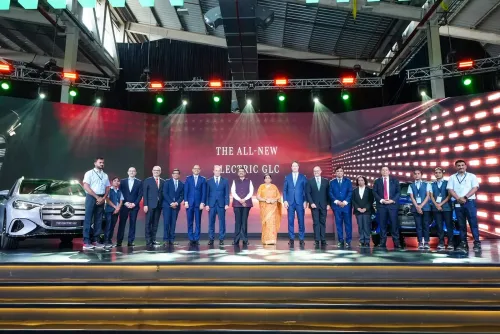
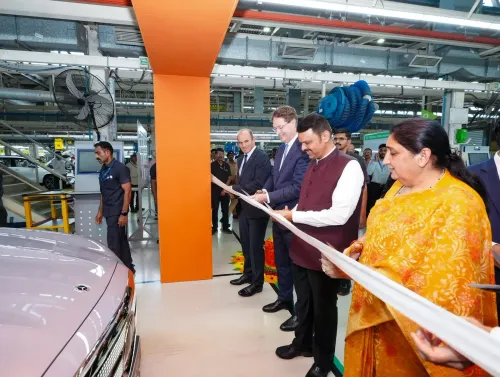
Pune just became a showcase for what India's manufacturing ambition looks like on four electric wheels. Maharashtra Chief Minister Devendra Fadnavis attended the rollout of the Mercedes-Benz electric GLC in Pune on 4 November 2026, using the moment to frame the state as the beating heart of India's industrial transformation.
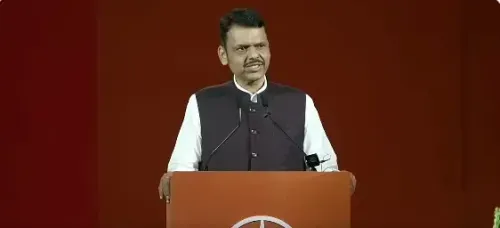
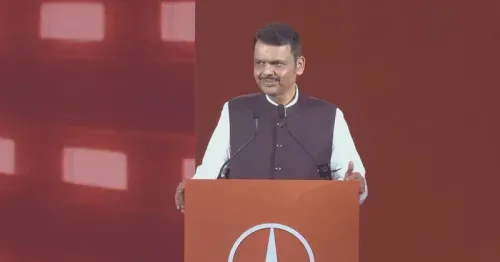
Posting on X, Fadnavis declared: 'Maharashtra is at the centre of the Make in India transformation under the visionary leadership of Hon PM Narendra Modi Ji.' The Marathi portion of his post echoed the same sentiment — 'मेक इन इंडिया'च्या परिवर्तनकारी वाटचालीत महाराष्ट्र देशाच्या केंद्रस्थानी आहे ('Maharashtra is at the centre of the transformative journey of Make in India') — signalling that the message was aimed squarely at a home audience as much as a national one.
Mercedes-Benz in Pune: A German Vote of Confidence
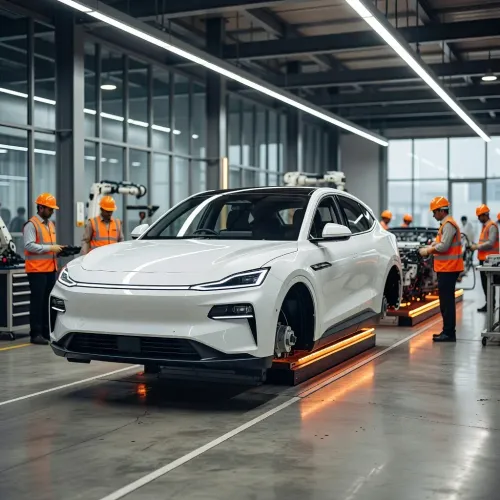
Mercedes-Benz already has an established manufacturing footprint in India, with its operations centred in the Pune region. The electric GLC rollout deepens that commitment, placing a premium German EV squarely within the orbit of India's most storied automotive corridor. Pune and the nearby Chakan industrial belt host multiple global original equipment manufacturers — making it one of Asia's densest clusters of vehicle production.
For the state government, an event of this scale is tangible proof of the investment pipeline it has worked to cultivate. Maharashtra has consistently leveraged state-level incentives and infrastructure upgrades to attract global auto firms, positioning itself as the natural landing pad for manufacturers looking to tap India's fast-growing premium and electric vehicle segments.
Make in India at Twelve: From Slogan to Supply Chain
Prime Minister Narendra Modi launched Make in India in September 2014 with a clear mandate: raise manufacturing's share of GDP, reduce import dependence, and pull global supply chains toward India. Twelve years on, the automotive sector has become one of its most visible success stories. Maharashtra has been a consistent front-runner in that narrative, drawing investment in both conventional and electric mobility.
The EV pivot matters. As global automakers accelerate their electric transitions, states that offer manufacturing depth, skilled labour, and policy clarity are winning the location bets. The Pune region, with its engineering colleges, tier-one supplier ecosystem, and existing OEM infrastructure, checks those boxes.
What the Electric GLC Rollout Signals
A luxury electric vehicle rollout may feel like a niche milestone, but the signal it sends is not niche at all. When a brand like Mercedes-Benz commits to assembling or rolling out an electric model in Pune, it validates the entire supply-chain and policy environment that Maharashtra and the central government have built together. It tells every mid-tier EV component maker, every battery logistics firm, every charging-infrastructure investor that this corridor is open for business at the premium end of the market.
Fadnavis's framing — tying a single car launch to a national manufacturing doctrine — is deliberate politics as much as industrial pride. With Maharashtra's investment climate under constant competitive scrutiny from states like Gujarat and Tamil Nadu, moments like these are claimed loudly and quickly. The Chief Minister is making sure this one lands on the record.
Point of View
The Chief Minister is signalling that Maharashtra's combination of infrastructure, supplier depth, and policy alignment remains the benchmark. The move also reinforces the BJP's narrative of continuity between central manufacturing policy and state-level execution, a messaging dividend the party has consistently harvested since 2014. Expect more such high-visibility industrial appearances as Maharashtra positions itself ahead of the next wave of global EV supply-chain decisions.
NationPress
5 Nov 2026
Frequently Asked Questions
What is the Mercedes-Benz electric GLC and why was it launched in Pune?
The Mercedes-Benz electric GLC is a premium all-electric SUV from the German automaker. It was rolled out in Pune on 4 November 2026, reflecting the city's established role as India's leading automotive manufacturing hub with existing Mercedes-Benz operations in the region.
What is Make in India and when was it launched?
Make in India is a national manufacturing initiative launched by Prime Minister Narendra Modi in September 2014, aimed at increasing manufacturing's share of India's GDP, attracting foreign direct investment, and reducing import dependence across key sectors including automobiles.
Why is Pune considered a major automotive hub in India?
Pune and the nearby Chakan industrial belt host multiple global original equipment manufacturers and a dense tier-one supplier ecosystem, making the region one of Asia's most significant vehicle production clusters with strong engineering talent and infrastructure.
What was CM Devendra Fadnavis's message at the Mercedes EV rollout?
Fadnavis stated that Maharashtra is 'at the centre of the Make in India transformation' under PM Narendra Modi's leadership, using the electric vehicle launch to highlight the state's position as India's premier manufacturing destination.
How is Maharashtra competing with other states for EV investment?
Maharashtra leverages state-level incentives, infrastructure investment, and its existing automotive cluster around Pune and Chakan to attract global EV manufacturers, competing directly with Gujarat and Tamil Nadu for major industrial investment commitments.