Maharashtra CM Fadnavis pitches state as global future mobility hub at Mercedes-Benz EV launch
Synopsis
Maharashtra CM Devendra Fadnavis used the Mercedes-Benz Electric GLC launch at Chakan to reframe his state's industrial identity — from assembly-line giant to global EV and deep-tech innovator. With 650 customer enquiries in 36 hours, a ₹3,200 crore plant, and a 30% EV adoption target by 2030, the pitch is bold. The real question is whether R&D investment and semiconductor ambitions follow the rhetoric.
Key Takeaways
Maharashtra CM Devendra Fadnavis launched the Mercedes-Benz Electric GLC at the Chakan plant, Pune , on 4 November 2026 .
Maharashtra contributes more than 20% of India's total motor vehicle production, centred on the Pune–Pimpri-Chinchwad corridor.
The state's EV Policy targets 30% EV adoption in new vehicle registrations by 2030 .
The Mercedes-Benz Chakan facility represents a ₹3,200 crore investment, directly employing 1,200 people and supporting 18,000 through the wider supply chain.
Around 650 customers reportedly registered interest in the Electric GLC within 36 hours of the launch.
Deputy CM Sunetra Pawar linked the initiative to PM Narendra Modi 's 'Viksit Bharat 2047' vision.
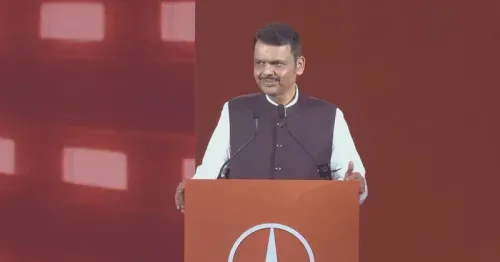
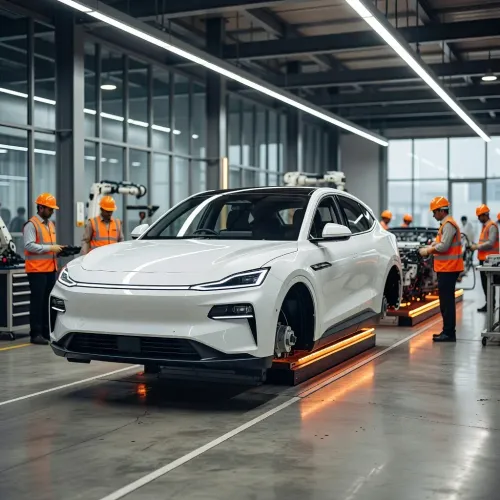
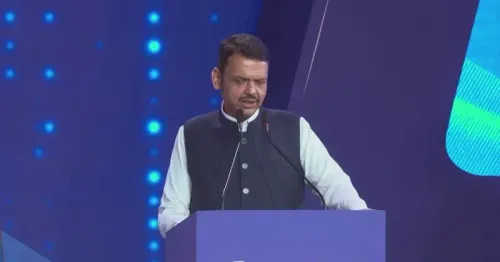
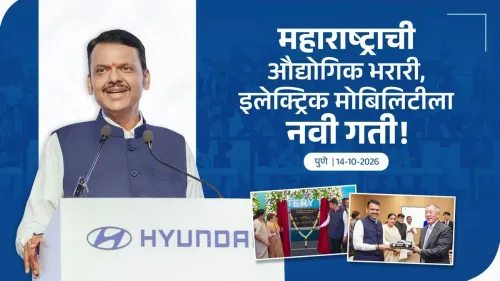
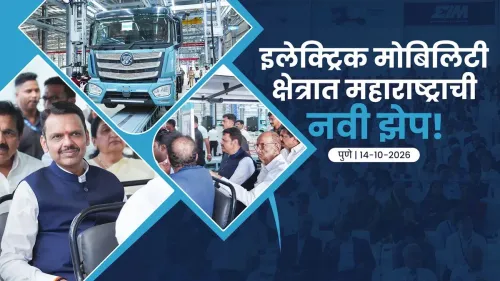
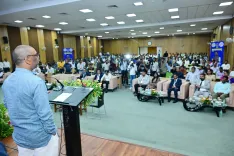
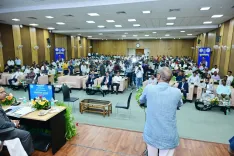
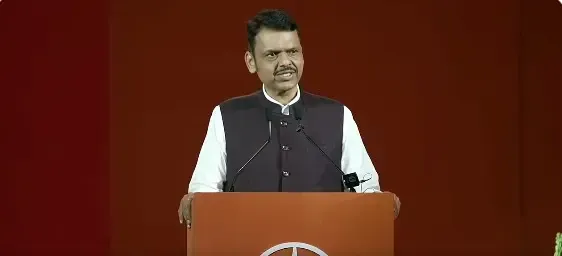
Maharashtra Chief Minister Devendra Fadnavis on Wednesday, 4 November 2026, declared that the state government is working to transform Maharashtra from a national automotive powerhouse into a global hub for future mobility, speaking at the launch of Mercedes-Benz's electric GLC vehicle at the company's Chakan plant near Pune. The event marked a significant moment for India's EV manufacturing ambitions, with the luxury automaker rolling out a locally produced electric model for the first time from its ₹3,200 crore Chakan facility.
From 'Make in Maharashtra' to 'Innovate in Maharashtra'
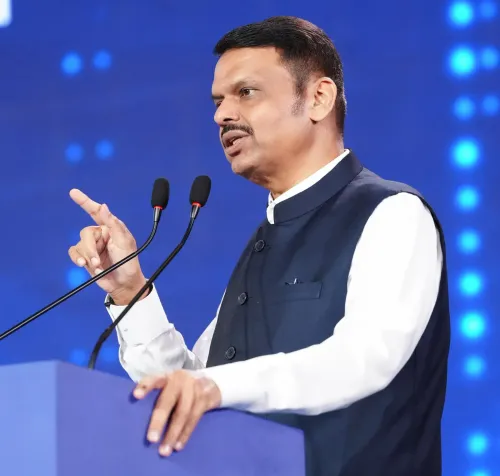
Chief Minister Fadnavis outlined a strategic shift in the state's industrial identity, moving beyond vehicle assembly toward leadership in electric vehicles (EVs), battery technology, power electronics, semiconductors, artificial intelligence, automobile software, design, and R&D. 'The state's ambition is not limited to vehicle assembly alone but extends to achieving global leadership in electric vehicles, battery technology, power electronics, semiconductors, artificial intelligence, automobile software, design, and research and development,' he said.
The Chief Minister urged Mercedes-Benz to use the Chakan plant as a manufacturing base for Asian and global markets, while also prioritising Maharashtra for future battery technology, software engineering, and mobility research investments.
Maharashtra's Automotive Weight and EV Targets
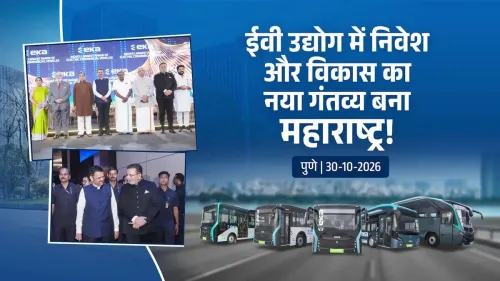
Maharashtra already contributes more than 20 per cent of India's total motor vehicle production, anchored by the sprawling industrial clusters of Pune and Pimpri-Chinchwad. Under the state's Electric Vehicle Policy, a target of 30 per cent EV adoption in new vehicle registrations has been set for 2030. Supporting infrastructure — including fast-charging stations along highways, sustainable mobility corridors on the Mumbai-Pune Expressway and Samruddhi Mahamarg, and battery recycling programmes — is already being rolled out.
Fadnavis also pointed to upcoming infrastructure as a connectivity enabler: the Navi Mumbai International Airport, the proposed Pune-Purandar Airport, and Vadhavan Port are all expected to deepen Maharashtra's links to global markets.
Mercedes-Benz Chakan Plant: Jobs and Market Response
The Mercedes-Benz Chakan facility, backed by an investment of ₹3,200 crore, directly employs around 1,200 people and supports employment for nearly 18,000 individuals through supplier networks and the broader service sector. The launch of the Electric GLC — within a decade of the plant's expansion — was described by Fadnavis as a testament to the state's industrial and technological maturity. Notably, around 650 customers reportedly expressed interest in the Electric GLC within just 36 hours of its unveiling.
Santosh Iyer, Managing Director of Mercedes-Benz India, provided an overview of the company's three-decade presence in the country and acknowledged the state government's consistent support. Senior Mercedes-Benz Group leadership — including Martin Brudermuller (Chairman, Supervisory Board), Ola Kallenius (Chairman, Board of Management and Global Head), and Jorg Burzer (Member, Board of Management and CTO) — also addressed the gathering.
Deputy CM Sunetra Pawar Ties Initiative to National Vision
Deputy Chief Minister Sunetra Pawar, also serving as Guardian Minister of Pune, described the commencement of localised EV production as 'a critical milestone in the state's industrial development.' She linked the initiative to Prime Minister Narendra Modi's 'Viksit Bharat 2047' vision, framing Maharashtra's EV push as a building block of national economic transformation. She also invoked the vision of former Deputy Chief Minister, the late Ajit Pawar, whose efforts to advance world-class EV manufacturing in Pune district, she said, are now being realised.
Pawar separately urged global industrial groups to partner with the state on water conservation, groundwater research, and water security in drought-prone regions of Maharashtra.
What Comes Next
With a 30 per cent EV adoption target locked in for 2030, Maharashtra's ability to attract battery technology and semiconductor investments — not just vehicle assembly — will determine whether this vision translates into lasting industrial leadership. The global electric vehicle market is intensifying, and India's window for manufacturing-led entry remains open but time-bound. How quickly the state can build R&D depth alongside its production base will be the defining test.
Point of View
But Fadnavis's pivot from 'Make' to 'Innovate' is a harder promise to deliver. The gap between vehicle assembly — where the state already excels — and genuine semiconductor and AI-led R&D leadership is wide, and no specific investment commitments or timelines for those higher-value segments were announced on Wednesday. The 30% EV adoption target by 2030 is ambitious given India's current charging infrastructure gaps and purchase price barriers, particularly outside metro corridors. The Mercedes-Benz launch is a credible anchor event, but whether it catalyses the deep-tech supply chain Fadnavis envisions will depend on policy incentives that go beyond rhetorical ambition.
NationPress
4 Nov 2026
Frequently Asked Questions
What did Maharashtra CM Devendra Fadnavis announce at the Mercedes-Benz Electric GLC launch?
CM Fadnavis declared Maharashtra's intent to evolve from a national automotive manufacturing hub into a global centre for future mobility, covering EVs, battery technology, semiconductors, AI, and automobile software. He made the remarks at the launch of the Mercedes-Benz Electric GLC at the Chakan plant in Pune on 4 November 2026.
What is Maharashtra's EV adoption target under its Electric Vehicle Policy?
Maharashtra has set a target of 30 per cent EV adoption in new vehicle registrations by 2030. The policy also includes fast-charging infrastructure on highways, sustainable mobility corridors along the Mumbai-Pune Expressway and Samruddhi Mahamarg, and battery recycling initiatives.
How significant is the Mercedes-Benz Chakan plant to Maharashtra's economy?
The Chakan plant represents a ₹3,200 crore investment by Mercedes-Benz and directly employs around 1,200 people, while supporting employment for nearly 18,000 through supplier networks and the service sector. The plant has now launched locally produced electric vehicles within a decade of its expansion.
How did the market respond to the Mercedes-Benz Electric GLC launch?
Around 650 customers reportedly expressed interest in the Electric GLC within just 36 hours of its unveiling, according to CM Fadnavis, suggesting strong early demand for the locally produced luxury EV.
How does Maharashtra's automotive standing compare nationally?
Maharashtra accounts for more than 20 per cent of India's total motor vehicle production, with major clusters in Pune and Pimpri-Chinchwad. The state government is now seeking to build on this manufacturing base by attracting R&D, software engineering, and battery technology investment to cement a global leadership position.