CM Fadnavis Highlights Hyundai Talegaon, EIM EV Complex in Pune
Synopsis
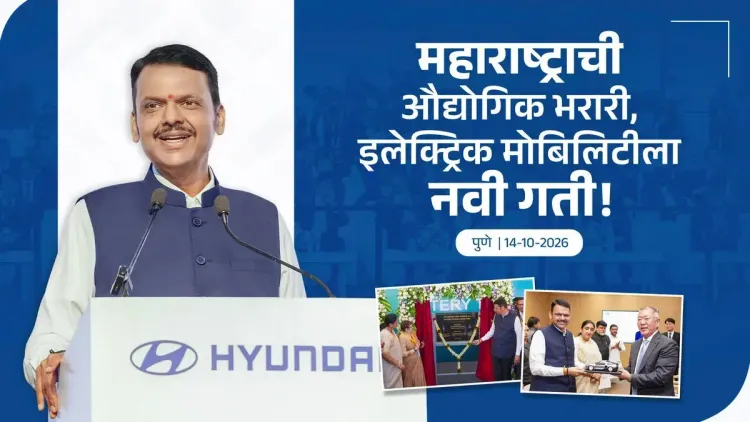
Maharashtra CM Devendra Fadnavis on 14 October 2026 shared highlights from Hyundai's Talegaon project and EIM's Electric Heavy-Duty Commercial Vehicle Complex in Pune, underscoring the state's push for industrial investment, job creation, and electric mobility.
Key Takeaways
CM Devendra Fadnavis visited Hyundai's Talegaon project and EIM's Electric Heavy-Duty Commercial Vehicle Complex in Pune on 14 October 2026 .
Both projects are positioned as drivers of industrial investment, local employment, and supply-chain growth in Maharashtra.
The EIM EHCV Complex targets electrification of heavy commercial vehicles, aiming to cut road-freight emissions and logistics costs.
Maharashtra's EV Policy 2021 and the central government's PLI scheme for automobiles form the policy backbone attracting these investments.
The Pune-Chakan industrial corridor remains Maharashtra's anchor for automotive and EV cluster development.
Employment numbers, commissioning milestones, and supply-chain localisation rates over the next 12–24 months will determine the real-world impact.
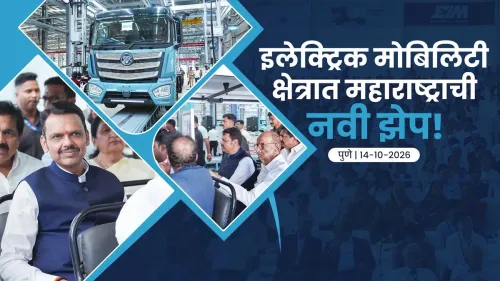
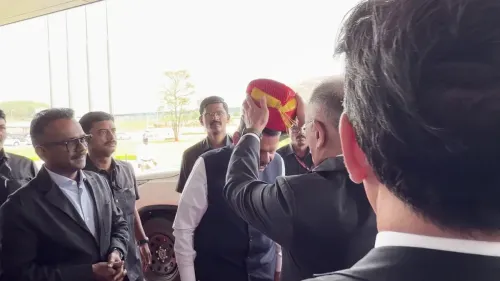
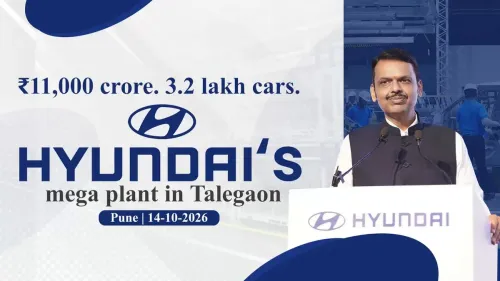
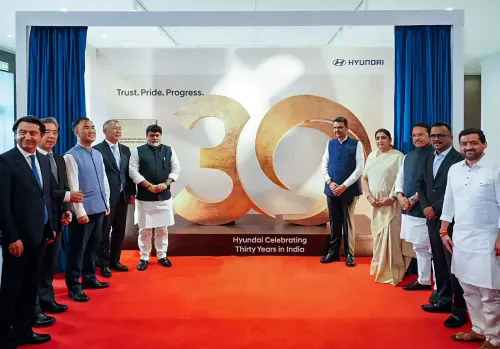
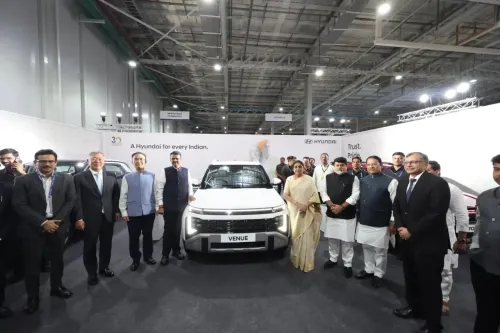
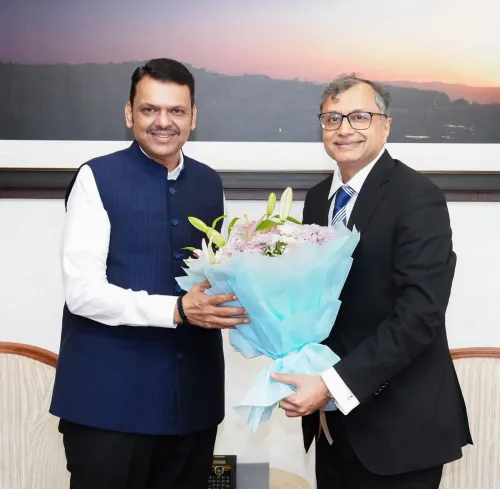
Two industrial projects in Pune are reshaping Maharashtra's manufacturing identity — and Maharashtra Chief Minister Devendra Fadnavis wants the country to take notice. On 14 October 2026, Fadnavis shared glimpses from site visits to Hyundai's Talegaon project and the EIM Electric Heavy-Duty Commercial Vehicle (EHCV) Complex in Pune, framing both as proof points of the state's accelerating industrial and green-mobility ambitions.
Fadnavis described the visits as 'important moments of the day that give a new direction to Maharashtra's development' — spotlighting industrial investment growth, fresh employment opportunities, support for local industry, and the promise of reduced pollution and logistics costs through electric mobility.
Talegaon and Pune: Maharashtra's Automotive Power Corridor
Hyundai, the South Korean automotive giant, has long maintained a manufacturing footprint in India, and its Talegaon project represents a deepening of that commitment in Maharashtra. Talegaon sits within the broader Pune-Chakan industrial corridor, which Maharashtra has historically nurtured as a dense cluster of vehicle makers and component suppliers. Attracting a brand of Hyundai's scale to that corridor is not incidental — it is the result of years of targeted land and policy incentives designed to keep Maharashtra competitive against rival states.
The EIM Electric Heavy-Duty Commercial Vehicle Complex adds a different dimension: not passenger cars, but heavy trucks and commercial vehicles going electric. That segment carries outsized economic weight. Heavy commercial vehicles account for a disproportionate share of India's road freight emissions and fuel costs, meaning electrification there cuts both the carbon bill and the logistics bill for businesses across the supply chain.
The Policy Architecture Behind the Investments
Neither project landed in a vacuum. Maharashtra's Electric Vehicle Policy 2021 laid down incentives for EV manufacturing and charging infrastructure, signalling to investors that the state was serious about the transition. Simultaneously, the central government's Production Linked Incentive (PLI) scheme for automobiles and auto components, notified in 2021, created a national pull for advanced automotive investment — and Maharashtra positioned itself to capture a large share of it.
The pairing of a conventional OEM expansion (Hyundai) with a pure-play EV commercial vehicle complex (EIM) reflects a deliberate hedge: the state courts the established automotive ecosystem while simultaneously building the next one. Local component suppliers, tooling firms, and logistics operators in the Pune region stand to benefit from both tracks.
Jobs, Localisation, and What Comes Next
Fadnavis's post specifically called out 'रोजगाराच्या नव्या संधी' (new employment opportunities) and 'स्थानिक उद्योगांना बळ' (strength for local industries) as direct outcomes. The emphasis on localisation matters: deep supply-chain integration multiplies the job impact far beyond the factory gate, pulling in ancillary manufacturers, logistics firms, and service providers.
The milestones that will define whether the ambition matches the outcome — commissioning timelines, verified employment numbers, and supply-chain localisation percentages — are what to watch over the next 12 to 24 months. State budget allocations specifically targeting heavy-duty EV incentives will signal whether Fadnavis's government is prepared to deepen the policy commitment beyond the ribbon-cutting stage.
Maharashtra has placed its bet on becoming India's EV manufacturing spine. These two Pune projects are the earliest stress-tests of that wager.
Point of View
The state government is betting that cluster density will create a self-reinforcing advantage. The post fits a broader BJP-ruled-state pattern of using high-visibility industry visits to build an investor-confidence narrative ahead of state budget cycles. The real test is whether the incentive architecture — the 2021 EV policy and PLI alignment — translates into verified jobs and localisation depth, not just groundbreaking optics.
NationPress
15 Oct 2026
Frequently Asked Questions
What is the Hyundai Talegaon project in Maharashtra?
The Hyundai Talegaon project is an automotive manufacturing investment by South Korean carmaker Hyundai located in Talegaon, within the Pune-Chakan industrial corridor of Maharashtra. CM Devendra Fadnavis visited the site on 14 October 2026 as part of a broader industrial development showcase.
What is the EIM Electric Heavy-Duty Commercial Vehicle Complex in Pune?
The EIM (EIM) Electric Heavy-Duty Commercial Vehicle Complex is a facility in Pune focused on manufacturing electric heavy commercial vehicles. It aims to reduce road-freight emissions and logistics costs by electrifying the heavy trucking segment.
How does Maharashtra's EV Policy support these projects?
Maharashtra's Electric Vehicle Policy 2021 offers incentives for EV manufacturing and charging infrastructure, creating a supportive environment for investments like the EIM EHCV Complex. Combined with the central PLI scheme for automobiles, it provides both state and national-level financial and regulatory support.
What is the significance of Pune's Talegaon for automotive manufacturing?
Talegaon is part of the Pune-Chakan industrial corridor, one of India's densest automotive clusters. Its proximity to existing suppliers, logistics networks, and skilled labour makes it a preferred destination for vehicle OEMs and EV manufacturers expanding in western India.
How many jobs are expected from the Hyundai and EIM projects in Pune?
Specific employment figures for the Hyundai Talegaon project and EIM EHCV Complex have not been officially confirmed. CM Fadnavis highlighted job creation as a key benefit; verified numbers and supply-chain localisation data are expected to emerge over the next 12 to 24 months as projects progress.