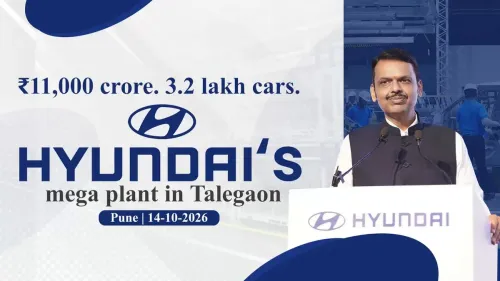
Hyundai Talegaon plant to hit 3.2 lakh units by 2030, CM Fadnavis says
Synopsis
Hyundai's Talegaon plant is not just a factory expansion — it is a $1.5 billion-plus bet on India as a global automotive export base. With capacity set to nearly double to 3.2 lakh units by 2030, AI-powered production lines, and 50-plus local suppliers within 50 km, Maharashtra is positioning itself as the subcontinent's answer to global EV and hybrid supply chain demand.
Key Takeaways
Hyundai Motor India's Talegaon, Pune plant currently has an annual capacity of 1,70,000 units , with plans to scale to 3,20,000 units by 2030 .
Hyundai is investing upwards of $1.5 billion in the facility, one of its most advanced global plants.
More than 50 tier-1 and tier-2 supplier partners operate within a 50-kilometre radius , supporting thousands of jobs.
The plant exports to over 35 countries and produces 1,50,000 engines annually .
Production lines support both ICE and Hybrid models using AI-powered operations and Hyundai's E-FOREST digital platform.
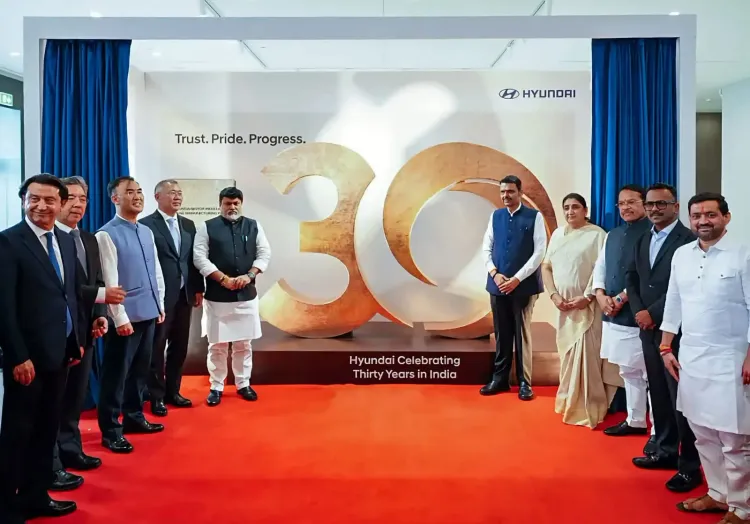
CM Devendra Fadnavis made the remarks marking Hyundai's 30th year of operations in India.
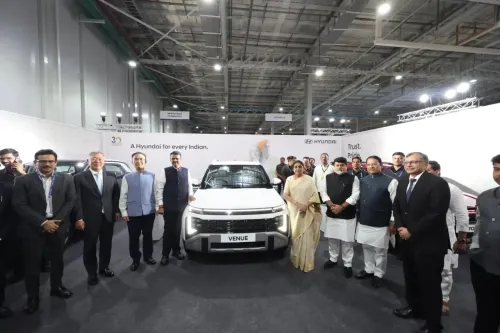
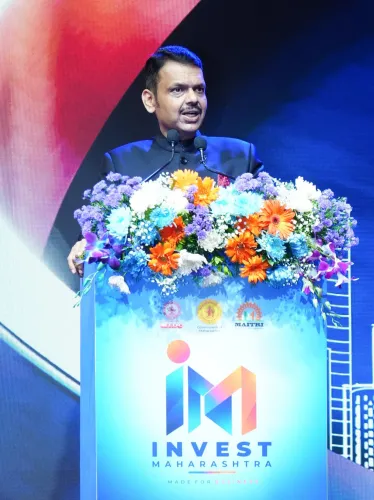
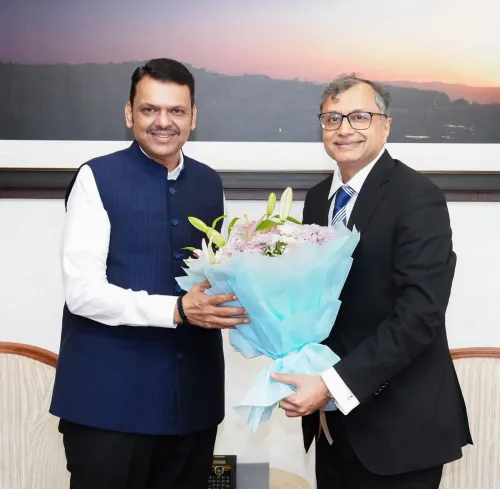
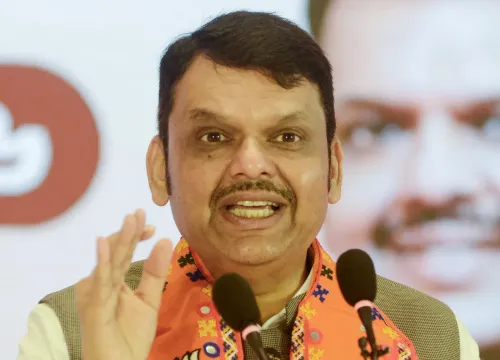
Maharashtra Chief Minister Devendra Fadnavis on Wednesday, 14 October 2026, said that Hyundai Motor India's smart manufacturing facility in Talegaon, Pune, will significantly boost local employment, accelerate industrial innovation, and reinforce Maharashtra's standing as a top-tier automotive hub. His remarks came as the South Korean automaker marked 30 years of operations in India.
Scale and Investment
The Talegaon plant currently operates with an annual installed production capacity of 1,70,000 units, with a roadmap to scale up to 3,20,000 units per year by 2030. Hyundai is committing upwards of $1.5 billion into the facility, making it one of the automaker's most advanced global manufacturing sites. The plant is also equipped to produce 1,50,000 engines annually, according to State Industries Department Principal Secretary P. Anbalagan.
Jobs, Suppliers, and Local Ecosystem
CM Fadnavis highlighted that Maharashtra's investor-friendly policy framework has helped build a dense supplier network, with over 50 tier-1 and tier-2 supplier partners operating within a 50-kilometre radius of the plant — collectively generating thousands of direct and indirect jobs. He commended Hyundai's commitment to deep localisation and advanced skill development within the regional workforce, noting that integration with local tech talent is central to sustainable industrial growth.
Technology and Future-Ready Production
The facility leverages AI-powered operations and a digital factory environment built on Hyundai's E-FOREST platform. Its flexible production lines are designed to support both Internal Combustion Engine (ICE) and Hybrid models, positioning the plant to accommodate next-generation mobility technologies as the industry transitions. Anbalagan described the plant as a catalyst for regional high-tech manufacturing and employment generation.
Export Ambitions and Global Footprint
Fadnavis also spotlighted the plant's export potential, noting that it is expected to play a pivotal role in Maharashtra's emergence as a premier international automotive powerhouse. The Pune facility already exports to over 35 countries, a figure the Chief Minister cited as evidence of the state's growing global manufacturing credentials. This comes amid a broader national push to expand India's automotive export share, where Maharashtra consistently ranks among the top contributor states.
Significance for Maharashtra's Auto Sector
The Talegaon investment adds to an already-strong Pune automotive cluster that includes Tata Motors, Bajaj Auto, and several global Tier-1 suppliers. Notably, Hyundai's expanded footprint arrives as India's passenger vehicle market continues to record consecutive years of strong volume growth, and as automakers race to localise EV and hybrid supply chains ahead of tightening emission norms. The plant's ramp-up trajectory — nearly doubling capacity by 2030 — signals Hyundai's long-term confidence in both domestic demand and export viability from India.
Point of View
But the real story is about timing. Hyundai is doubling down on India precisely when global automakers are scrambling to diversify supply chains away from China and as India's own emission transition accelerates. The $1.5 billion-plus commitment also signals that Hyundai views the domestic market — not just exports — as structurally large enough to justify near-doubling of capacity. What remains to be watched is whether the hybrid-ready production lines translate into genuine localisation of EV components, or whether 'future-ready' stays a marketing qualifier while import-heavy drivetrains continue.
NationPress
14 Oct 2026
Frequently Asked Questions
What is the production capacity of Hyundai's Talegaon plant in Pune?
The Talegaon plant currently has an installed annual production capacity of 1,70,000 units, with a planned scale-up to 3,20,000 units per year by 2030. It also manufactures 1,50,000 engines annually.
How much is Hyundai investing in the Pune manufacturing facility?
Hyundai Motor India is investing upwards of $1.5 billion in the Talegaon, Pune facility, making it one of the automaker's most advanced global manufacturing sites.
How many countries does the Talegaon plant export to?
The Hyundai Talegaon plant exports vehicles to over 35 countries, contributing to Maharashtra's reputation as an international automotive manufacturing hub.
What technologies does the Hyundai Talegaon plant use?
The facility uses AI-powered operations and a digital factory environment based on Hyundai's E-FOREST platform. Its flexible production lines support both Internal Combustion Engine and Hybrid models, making the plant capable of handling next-generation mobility technologies.
What did Maharashtra CM Devendra Fadnavis say about the Hyundai plant?
CM Devendra Fadnavis said Maharashtra's investor-friendly policy ecosystem has enabled the Talegaon plant to boost local employment and industrial innovation. He specifically highlighted the dense supplier network of over 50 partners within 50 km of the plant and the facility's export reach to more than 35 countries.