CM Vijay Lays ₹3,108 Cr Foundation for Chennai Ring Main
Synopsis
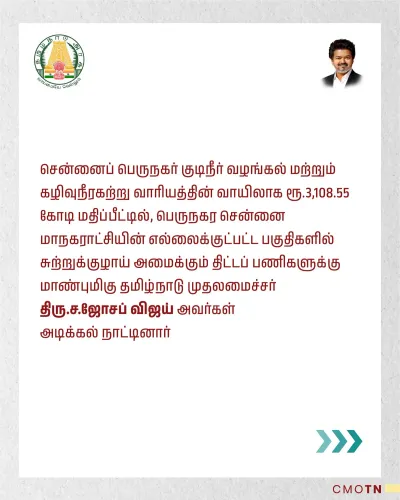
Tamil Nadu Chief Minister C. Joseph Vijay on 14 October 2026 laid the foundation stone for a ₹3,108.55 crore Ring Main System water project across Greater Chennai Corporation limits and reviewed northeast monsoon flood-mitigation works, including a personal inspection of Okkiyam Maduvu in Karapakkam.
Key Takeaways
₹3,108.55 crore Ring Main System project launched via CMWSSB to upgrade drinking water distribution across Greater Chennai Corporation limits.
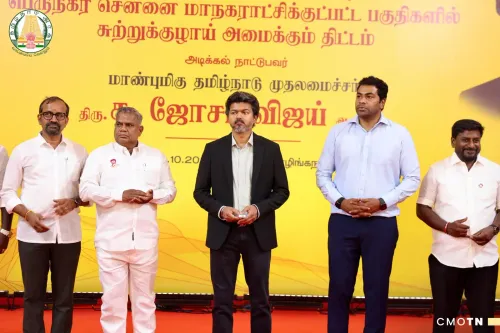
Foundation stone laid at CMWSSB's water pumping station in Sholinganallur, Chennai on 14 October 2026 .
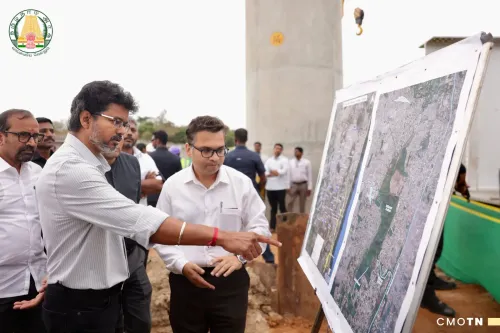
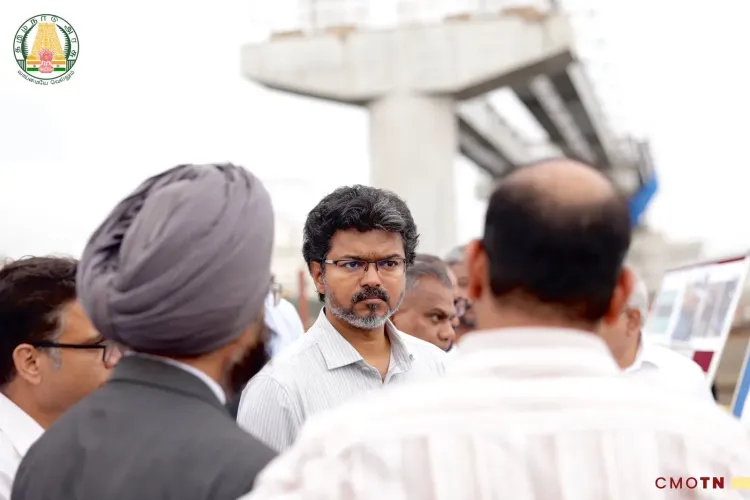
Joseph Vijay personally inspected Okkiyam Maduvu in Karapakkam , a key stormwater buffer ahead of the northeast monsoon.
Multi-department flood-mitigation review covered the Water Resources Department , Highways Department , and Greater Chennai Corporation .
The ring main design aims to eliminate pressure inequities and reduce leakage across the city's distribution zones.
Pre-monsoon reviews of this scale have been standard practice since the devastating 2015 Chennai floods .
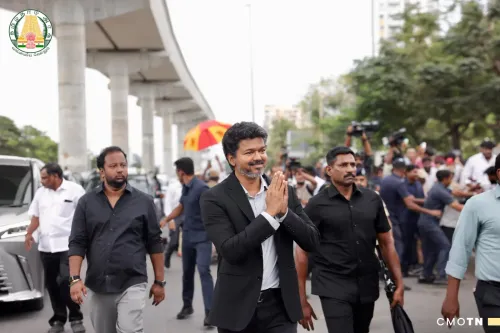
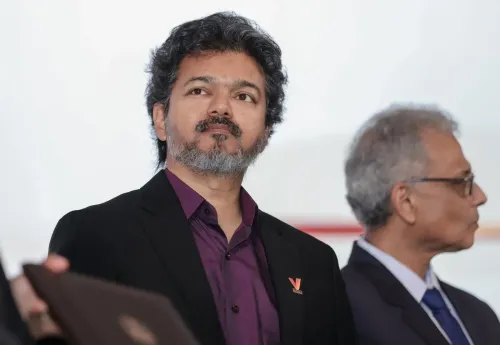
A ₹3,108.55 crore bet on Chennai's water future was placed on 14 October 2026, when Tamil Nadu Chief Minister C. Joseph Vijay laid the foundation stone for the city's ambitious Ring Main System project at the Chennai Metropolitan Water Supply and Sewerage Board's pumping station in Sholinganallur. The same morning, he drove out to Karapakkam to personally inspect Okkiyam Maduvu — the low-lying stormwater basin that stands between millions of Chennaiites and a repeat of the city's worst flood nightmares.
What the Ring Main System will actually do
The Ring Main System is a closed-loop water distribution network designed to deliver drinking water equitably across all zones within the Greater Chennai Corporation limits — eliminating the dead-end pipes that bleed pressure and cause supply inequities across neighbourhoods. At ₹3,108.55 crore, it is one of the largest single-ticket water infrastructure commitments Tamil Nadu has made in recent years, executed through the Chennai Metropolitan Water Supply and Sewerage Board (CMWSSB).
Chennai's water supply story has long been one of patches and stopgaps — the Telugu Ganga scheme, emergency desalination plants, tanker-dependent summers. A functional ring main promises to change the underlying plumbing: reduced leakage, more uniform pressure, and a network robust enough for the city's relentlessly expanding footprint.
Okkiyam Maduvu and the monsoon calculation
Okkiyam Maduvu in Karapakkam is Chennai's most consequential stormwater buffer — a sprawling channel-and-basin system that absorbs runoff from vast catchment areas in the city's southern and southeastern quarters. CM Vijay inspected it directly, a signal that the administration is tracking its capacity and condition ahead of the 2026 northeast monsoon season, which typically intensifies between October and December.
The visit folded into a broader flood-mitigation review involving the Water Resources Department, the Highways Department, and the Greater Chennai Corporation. Post-2015, these multi-department pre-monsoon drills have become near-mandatory: that year's catastrophic floods, which inundated large parts of the city and caused enormous loss of life and property, forced a structural rethink of how Chennai manages stormwater, drainage, and inter-agency coordination.
Why these two moves on the same day matter
Pairing a long-term supply infrastructure launch with a real-time monsoon-preparedness inspection is a deliberate signal — that water in Chennai is being addressed at both ends: the chronic deficit and the seasonal excess. The CMWSSB, the Greater Chennai Corporation, and state departments are visibly pulled into a single frame of accountability.
What happens next will be watched closely: the tendering and zonal rollout of the ring main project across corporation zones, and whether the flood-mitigation preparations hold when the northeast monsoon arrives in earnest over the Coromandel Coast. Chennai has been promised big water projects before. The foundation stone is the easy part.
Point of View
The state signals integrated institutional ownership, which has historically been the weak link in Chennai's water story. The pre-monsoon inspection of Okkiyam Maduvu keeps the optics of executive vigilance alive at a moment when the northeast monsoon's intensity remains unpredictable. Longer term, the ₹3,108.55 crore commitment will be judged not by the foundation stone but by tendering speed, contractor execution, and whether the network reaches under-served peripheral wards that previous schemes left behind.
NationPress
14 Oct 2026
Frequently Asked Questions
What is the Chennai Ring Main System project?
The Ring Main System is a closed-loop drinking water distribution network to be built across Greater Chennai Corporation limits at an estimated cost of ₹3,108.55 crore , implemented through the Chennai Metropolitan Water Supply and Sewerage Board. It is designed to deliver water equitably across all city zones, reduce pressure loss, and cut leakage.
Who laid the foundation stone for the Chennai Ring Main project?
Tamil Nadu Chief Minister C. Joseph Vijay laid the foundation stone on 14 October 2026 at the CMWSSB pumping station in Sholinganallur, Chennai .
What is Okkiyam Maduvu and why did CM Vijay inspect it?
Okkiyam Maduvu is a major stormwater storage and drainage channel in Karapakkam , Chennai, that acts as a critical flood buffer during the northeast monsoon. CM Vijay inspected it to assess flood preparedness ahead of the 2026 monsoon season .
Which departments are involved in Chennai's flood mitigation review?
The review covered the Water Resources Department , the Highways Department , and the Greater Chennai Corporation , among other departments, coordinating pre-monsoon flood mitigation works across the city.
Why does Chennai need a ring main water system?
Chennai's existing water network relies on linear, dead-end pipes that create pressure inequities and high leakage rates. A ring main system creates a looped network ensuring more uniform supply and greater resilience, critical as the city continues to expand rapidly.