CM Vijay lays foundation for Rs 3,108-cr Chennai ring water project

Synopsis
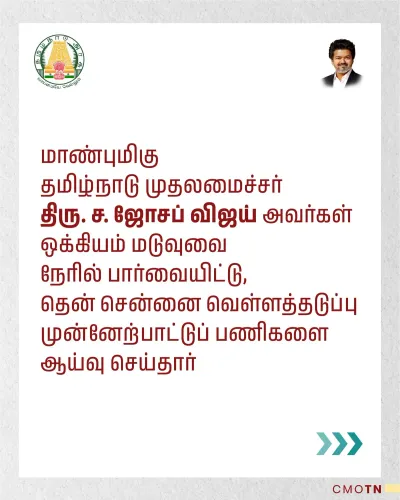
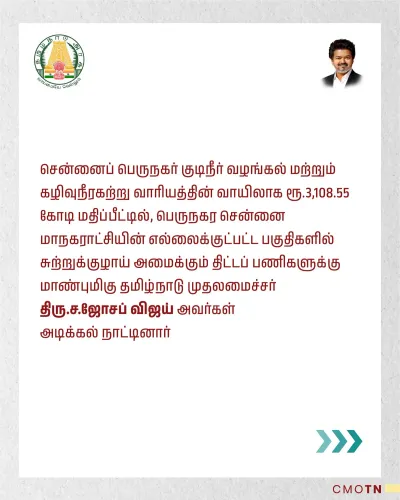
Tamil Nadu CM C. Joseph Vijay laid the foundation stone for a Rs 3,108.55-crore Ring Main water supply network for Chennai on 14 October 2026, then inspected Okkiyam Maduvu at Karapakkam and reviewed multi-department northeast monsoon flood preparations.
Key Takeaways
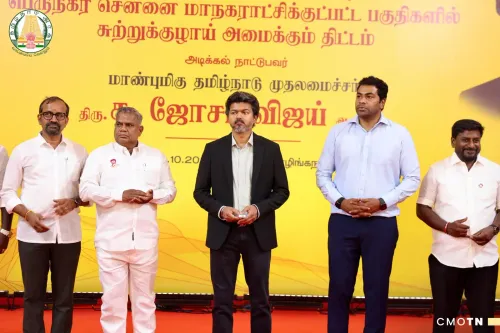
Joseph Vijay laid the foundation stone for the Ring Main System project at the CMWSSB pumping station in Sholinganallur, Chennai on 14 October 2026 .
The project is estimated at Rs 3,108.55 crore and will create a looped water distribution network across Greater Chennai Corporation limits.
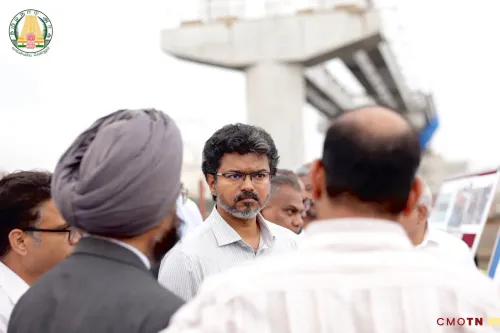
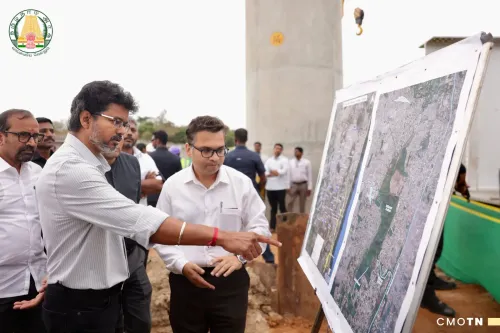
The Chief Minister personally inspected Okkiyam Maduvu in Karapakkam , a key stormwater storage channel central to Chennai's flood management.
Flood mitigation preparedness by the Water Resources Department , Highways Department , and Greater Chennai Corporation was reviewed ahead of the northeast monsoon .
The northeast monsoon typically brings the bulk of Chennai's annual rainfall between October and December , historically triggering urban flooding.
With the northeast monsoon already on Chennai's doorstep, Tamil Nadu Chief Minister C. Joseph Vijay moved on two fronts simultaneously on Wednesday, 14 October 2026 — breaking ground on a multi-thousand-crore water supply overhaul and personally inspecting the city's flood defences before the rains arrive in force.
A Rs 3,108-crore ring network for Chennai's taps
At the Chennai Metropolitan Water Supply and Sewerage Board's pumping station in Sholinganallur, CM Vijay laid the foundation stone for the Ring Main System project, estimated at Rs 3,108.55 crore. The project will be executed through the Chennai Metropolitan Water Supply and Sewerage Board (CMWSSB) and will cover areas within the Greater Chennai Corporation (GCC) limits.
A Ring Main System is a looped water distribution network — unlike a linear grid, it feeds localities from two directions simultaneously, dramatically reducing pressure drops and cutting leakage points. For a city that has long battled erratic supply across its expanded municipal limits, the topology change is significant. The scheme follows a lineage of urban water upgrades stretching back through AMRUT and the earlier JnNURM programme, though this project is routed through state infrastructure.
Okkiyam Maduvu under the Chief Minister's eye
From Sholinganallur, the Chief Minister travelled to Karapakkam to inspect the Okkiyam Maduvu — a critical stormwater storage and drainage channel that sits at the heart of Chennai's eastern flood-management geometry. The water body's capacity and condition directly determine how quickly surge water disperses into the sea during heavy northeast monsoon spells.
Okkiyam Maduvu gained wider public attention after the catastrophic 2015 Chennai floods, which spurred successive action plans for expanded stormwater drains, desilting of water bodies, and tighter inter-departmental coordination. The Chief Minister's on-site visit signals that those commitments remain under active political scrutiny.
Multi-department monsoon drill before October rains intensify
The inspection also served as a coordination review: CM Vijay assessed flood mitigation preparations by the Water Resources Department, the Highways Department, and the Greater Chennai Corporation — the three agencies whose pumps, roads, and drains determine whether Chennai floods or drains during a heavy downpour.
The northeast monsoon, which typically delivers the bulk of Chennai's annual rainfall between October and December, has historically caught the city's infrastructure mid-upgrade. The multi-agency review format, held weeks before peak rainfall, reflects the institutional lesson from 2015: coordination failures between departments are as dangerous as physical infrastructure gaps.
With tenders and construction timelines for the Ring Main System still to be finalised, the real test of the Rs 3,108-crore commitment lies in how quickly contracts move from foundation stone to laid pipe — and whether the flood works reviewed today hold when the monsoon delivers its first serious test.
Point of View
108-crore distribution overhaul and a hands-on monsoon preparedness review — follow a well-established Tamil Nadu playbook of bundling infrastructure launches with pre-monsoon optics. What distinguishes this cycle is the scale: a Ring Main System rewires the fundamental architecture of Chennai's water grid, not merely adds capacity. If tendering and construction timelines hold, the project could mark a structural shift away from Chennai's chronic leakage and pressure problems. The Okkiyam Maduvu inspection, meanwhile, keeps the political pressure on departments whose coordination failures were exposed in 2015 — a lesson successive administrations have cited but incompletely resolved.
NationPress
14 Oct 2026
Frequently Asked Questions
What is the Ring Main System project for Chennai?
The Ring Main System is a looped water distribution network that supplies localities from two directions simultaneously, reducing pressure drops and leakage. Tamil Nadu CM C. Joseph Vijay laid its foundation stone on 14 October 2026, with an estimated cost of Rs 3,108.55 crore, to be implemented through the Chennai Metropolitan Water Supply and Sewerage Board across Greater Chennai Corporation limits.
What is Okkiyam Maduvu and why is it important for Chennai floods?
Okkiyam Maduvu is a major stormwater storage and drainage channel in Karapakkam, Chennai. It plays a central role in dispersing surge water during heavy northeast monsoon rains, and gained prominence after the 2015 Chennai floods highlighted gaps in the city's drainage infrastructure.
How much does the Chennai water supply ring main project cost?
The Ring Main System project is estimated at Rs 3,108.55 crore (approximately Rs 3,108 crore and 55 lakh rupees), to be executed through the Chennai Metropolitan Water Supply and Sewerage Board.
Which departments are handling Chennai's northeast monsoon flood preparations?
The Water Resources Department, the Highways Department, and the Greater Chennai Corporation are the primary agencies undertaking flood mitigation preparations, as reviewed by CM C. Joseph Vijay on 14 October 2026.
When does the northeast monsoon hit Chennai?
The northeast monsoon typically arrives in Chennai from October and delivers the bulk of the city's annual rainfall between October and December, frequently triggering urban flooding in low-lying areas.