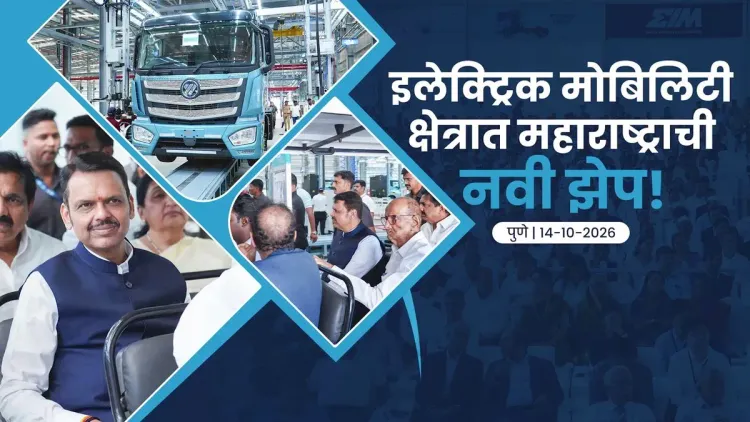
CM Fadnavis Inaugurates EV Heavy Vehicle Plant in Pune
Synopsis
Maharashtra CM Devendra Fadnavis inaugurated Energy in Motion's electric heavy-duty truck assembly plant in Pune on October 14, 2026, and laid the foundation stone for a lithium-ion battery plant, targeting an eventual annual output of 50,000 electric commercial vehicles.
Key Takeaways
Devendra Fadnavis inaugurated EIM's Electric Heavy Commercial Vehicle Assembly Plant in Pune on October 14, 2026 .
Foundation stones were laid for a Lithium-ion Battery Pack Assembly Plant and an Automotive Test Systems LLC Battery Testing Laboratory at the same complex.
The project has a current annual capacity of 5,000 trucks and a long-term target of 50,000 trucks .
The Maharashtra government committed support for charging stations, battery-swapping facilities and supporting infrastructure.
A land-pooling model is being used to make farmers and local communities equity partners in the industrial project.
Deputy CM Sunetratai Pawar and MP Sharad Pawar attended, reflecting cross-party Mahayuti coalition support for the initiative.
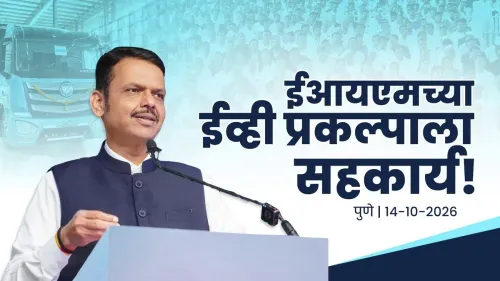
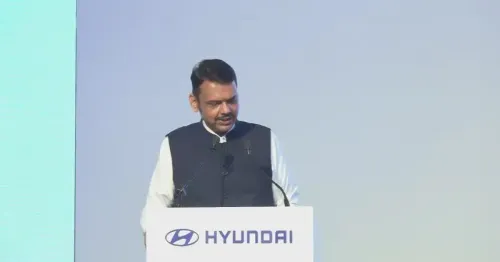
An electric heavy-duty truck rolling off an assembly line in Pune — that image moved closer to reality on Wednesday, October 14, 2026, as Maharashtra Chief Minister Devendra Fadnavis inaugurated Energy in Motion's (EIM) Electric Heavy Commercial Vehicle Assembly Plant and laid the foundation stone for a Lithium-ion Battery Pack Assembly Plant and an Automotive Test Systems LLC Battery Testing Laboratory in the city.
What opened in Pune — and what breaks ground next
Fadnavis took a walkthrough of EIM's Electric Heavy-Duty Commercial Vehicle Complex, examining the company's advanced manufacturing capabilities firsthand. The assembly plant is already operational; the battery plant and testing laboratory are at foundation stage, signalling a phased build-out of an integrated ecosystem under one roof in Pune.
The project carries an annual production capacity of 5,000 trucks and a stated target of 50,000 trucks — a tenfold scale-up that, if achieved, would place it among India's largest dedicated electric commercial-vehicle manufacturing sites. The Chief Minister highlighted the potential of electric vehicles to 'reduce pollution, lower fuel costs and make logistics more efficient.'
From MoU to metal: the August 2025 agreement in action
Fadnavis noted that the project's rapid progress follows an MoU signed in August 2025, framing the inauguration as proof that Maharashtra can translate investment pledges into physical infrastructure within roughly a year. The state has made investment-to-execution speed a calling card since a string of Magnetic Maharashtra summits drew global capital with commitments that critics sometimes questioned would materialise.
The Maharashtra government pledged full support for downstream infrastructure — charging stations, battery-swapping facilities and supporting logistics infrastructure — to ensure the trucks rolling out of the plant have the grid backbone they need. The state's Electric Vehicle Policy of 2021 and the central government's FAME scheme, launched in 2015, provide the broader policy scaffolding for such investments.
The land-pooling model and the farmers behind the factory
One of the more distinctive elements of the project is its land-pooling model, which Fadnavis highlighted as making 'farmers and local communities partners in development.' Rather than displacing agricultural landholders, the model offers them equity or revenue stakes in the industrial project — a framework Maharashtra has been refining to pre-empt the land-acquisition conflicts that have stalled large projects elsewhere in India.
Deputy Chief Minister Sunetratai Pawar and veteran NCP leader and Member of Parliament Sharad Pawar were present at the inauguration, alongside Narendra Murkumbi, MD and CEO of Energy in Motion Ltd. The cross-party presence on the dais — Fadnavis's BJP and the Pawars' NCP faction — underscored the Mahayuti coalition government's attempt to present a united front on economic development.
Why heavy trucks, why now
India's EV transition has so far been led by two-wheelers and passenger cars. Heavy commercial vehicles — the backbone of freight logistics — remain overwhelmingly diesel. Electrifying long-haul and last-mile freight is the harder, higher-stakes challenge: the payoff in fuel savings and emissions cuts is enormous, but the upfront cost, range anxiety and charging infrastructure gaps are steeper. A domestic battery plant co-located with a truck assembly facility is precisely the kind of vertical integration that could start bending those economics.
Fadnavis called for 'encouraging Indian-made batteries, smart battery technology and renewable energy integration' — a pitch that aligns Maharashtra's industrial ambition with the Centre's broader push to reduce dependence on imported battery cells, particularly from China.
Pune now has a factory. The real test is whether 50,000 electric trucks and the charging corridors to support them follow.
Point of View
Building on its 2021 EV policy and a series of investment summits. Fadnavis's emphasis on battery localisation dovetails with New Delhi's strategic priority of reducing dependence on imported cells — a politically and economically resonant alignment. The land-pooling mechanism, if it scales, could become a template for blunting the farmer-versus-industry tensions that have historically derailed large industrial projects across India. The presence of Sharad Pawar at a BJP-led government event signals that the Mahayuti coalition is determined to present economic development as above factional lines, even as assembly election cycles keep political calculations close to the surface.
NationPress
15 Oct 2026
Frequently Asked Questions
What did CM Devendra Fadnavis inaugurate in Pune in October 2026?
Fadnavis inaugurated Energy in Motion's Electric Heavy Commercial Vehicle Assembly Plant and laid foundation stones for a Lithium-ion Battery Pack Assembly Plant and an Automotive Test Systems LLC Battery Testing Laboratory in Pune on October 14, 2026.
What is the production capacity of the EIM electric truck plant in Pune?
The plant currently has an annual production capacity of 5,000 trucks, with a long-term target of 50,000 trucks per year.
What infrastructure support has Maharashtra promised for the EIM EV project?
The Maharashtra government has committed to providing charging stations, battery-swapping facilities and supporting logistics infrastructure to back the project's expansion.
What is the land-pooling model mentioned in the EIM project?
The land-pooling model involves farmers and local communities as equity or revenue partners in the industrial project, rather than acquiring their land outright — a mechanism designed to prevent displacement conflicts.
Which central and state policies support EV manufacturing projects like EIM in Maharashtra?
The central government's FAME scheme, launched in 2015, and Maharashtra's Electric Vehicle Policy of 2021 provide the primary policy and incentive framework for electric vehicle manufacturing investments in the state.