CM Revanth Reddy Orders El Niño Drought Prep Review

Synopsis
Telangana Chief Minister A. Revanth Reddy chaired a high-level review on El Niño and drought risks, ordering Group-1 and Group-2 officers to be stationed at every mandal, mandating real-time field reporting to the Chief Secretary, and directing advance plans to protect drinking water supply and electricity access across the state.
Key Takeaways
Revanth Reddy conducted a senior-official review on El Niño impacts, drought risk, and drinking water and power supply in Telangana.
Officials were ordered to deploy Group-1 and Group-2 level officers to every mandal for continuous ground-level monitoring.
Field situation reports must be fed in real time to the Chief Secretary , with all departments required to coordinate.
Advance plans to prevent deterioration of drinking water supply and electricity were specifically mandated.
Public awareness campaigns on the El Niño phenomenon were also directed as part of the preparedness drive.
The review aligns with national drought-response frameworks used during past El Niño cycles, including the 2015-16 episode.
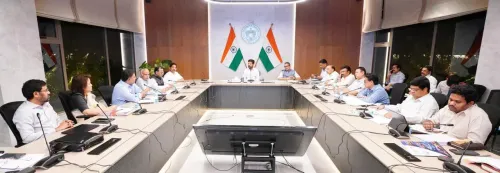
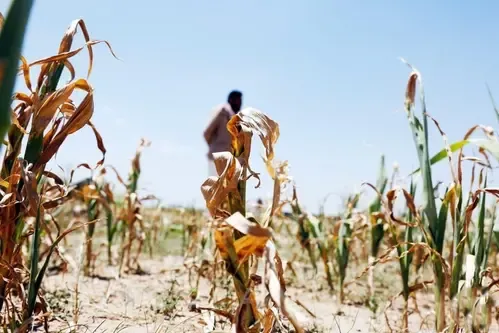
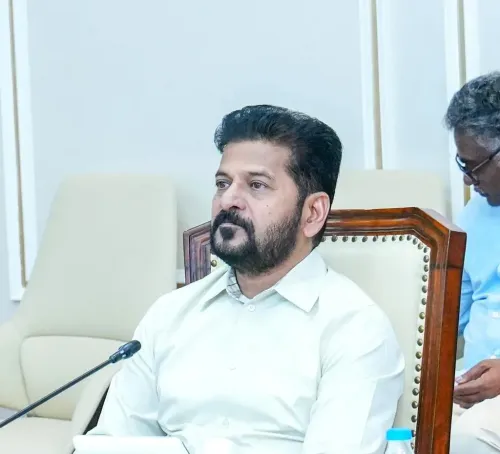
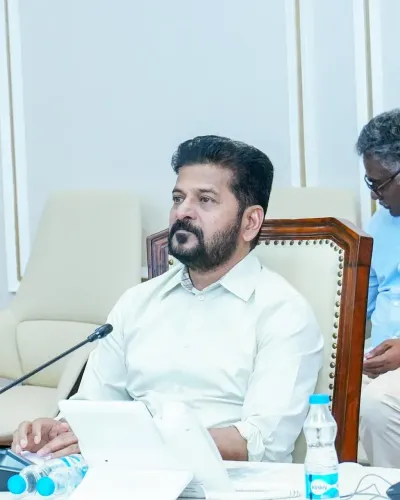
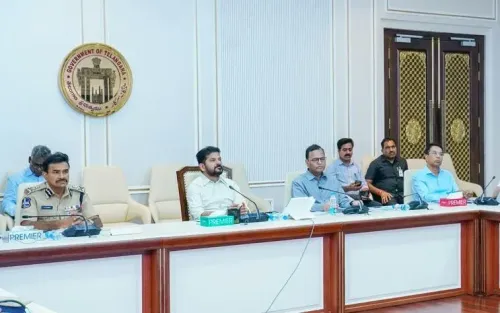
With El Niño threatening to squeeze Telangana's monsoon and push the state toward drought, Chief Minister A. Revanth Reddy convened a high-level review with senior officials to map out pre-emptive action on drinking water, power supply, and field-level coordination.
Posting on X on 15 October 2026, the Chief Minister outlined the directives issued at the meeting: 'I have instructed officials to take advance measures to ensure that electricity and drinking water problems do not worsen. Watertight plans must be drawn up so that people face no difficulties in drinking water supply.'
Group-1 and Group-2 Officers Deployed to Every Mandal
The sharpest operational move announced was the deployment of Group-1 and Group-2 level officers to every mandal across the state. Their mandate: continuous on-ground monitoring of conditions as El Niño effects intensify. Field intelligence is to flow upward to the Chief Secretary in real time, with all departments required to work in coordinated lockstep.
Revanth Reddy also directed officials to run public awareness drives explaining the El Niño phenomenon — an acknowledgement that community preparedness is as critical as administrative machinery when a slow-moving climate stressor takes hold.
Why El Niño Hits Telangana Hard
Telangana, carved out as a separate state in 2014, sits on the Deccan plateau and its agriculture is heavily rain-fed. When El Niño weakens the Indian monsoon — as it is historically associated with doing — the Deccan states are among the first to feel deficient rainfall, falling reservoir levels, and stressed groundwater.
The pattern is well-established: during the 2015-16 El Niño cycle, southern Indian states activated contingency plans following alerts from the India Meteorological Department. Revanth Reddy's review fits squarely into this national playbook, drawing on frameworks from the Ministry of Earth Sciences and the National Disaster Management Authority for coordinated drought response.
Drinking Water and Power — The Two Pressure Points
The Chief Minister specifically named two pressure points: electricity supply and drinking water. Both tend to deteriorate in tandem during drought years — lower reservoir levels reduce hydel generation while simultaneously cutting the water available for municipal supply and irrigation. Getting ahead of both failures at once is the core logic of the pre-emptive review.
Farmers, rural households, and urban residents across Telangana all stand to benefit — or bear the cost — depending on how effectively this preparedness translates into action on the ground. The next concrete signals to watch: IMD seasonal forecast updates and any formal drought notification or contingency fund release from the state government.
The bureaucratic architecture is now in place. Whether it holds when the dry months bite will be the real test.
Point of View
Visible early action serves both policy and political purposes. The mandal-level officer deployment is a notable decentralisation of accountability: it pushes responsibility down the bureaucratic chain in a way that is easy to audit later. The bigger test will be whether inter-departmental coordination — notoriously hard in Indian state governments — actually holds when reservoir levels drop and power-demand peaks collide.
NationPress
15 Oct 2026
Frequently Asked Questions
Why did CM Revanth Reddy hold an El Niño review in Telangana?
El Niño is a recurring climate event that historically weakens the Indian monsoon, raising drought risk across Deccan plateau states like Telangana. CM Revanth Reddy convened the review to order advance measures on drinking water supply and electricity before conditions worsen.
What is El Niño and how does it affect Telangana?
El Niño is an oceanic warming phenomenon that tends to reduce monsoon rainfall over India, particularly over rain-dependent states on the Deccan plateau. Telangana's agriculture and water reservoirs are heavily reliant on monsoon inflows, making the state vulnerable to deficient rainfall years.
What new steps has the Telangana government announced for drought preparedness?
The government has directed deployment of Group-1 and Group-2 level officers to every mandal for continuous monitoring, real-time field reporting to the Chief Secretary, inter-departmental coordination, and public awareness drives on El Niño impacts.
How does Telangana's El Niño response compare to past drought actions in India?
It mirrors preparedness steps taken during the 2015-16 El Niño cycle, when southern Indian states activated contingency plans based on IMD alerts. National frameworks from the Ministry of Earth Sciences and the National Disaster Management Authority guide such state-level reviews.
What should Telangana residents watch for next regarding the drought threat?
Key signals include updated seasonal forecast bulletins from the India Meteorological Department and any formal drought notification or contingency fund release announced by the Telangana state government.